Resistance Band Glute Bridge
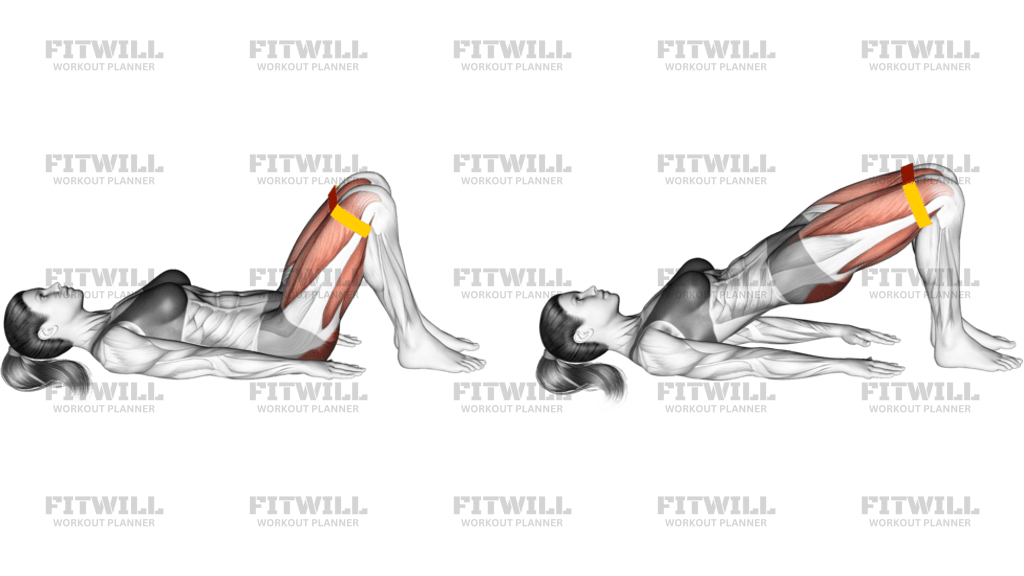
Resistance Band Glute Bridge is a floor-based glute exercise that combines hip extension with outward knee pressure from a loop band. It is useful when you want to train the glutes hard without loading the spine heavily, and it works well as part of a warm-up, accessory block, lower-body session, or home workout.
The band changes the feel of the bridge in an important way: you are not just lifting the hips, you are also keeping the knees gently pressed out so the glutes stay active from the start of the rep to the finish. That makes the exercise especially helpful for teaching pelvic control, glute engagement, and stable knee tracking before heavier squats, deadlifts, or hip thrusts.
A good setup matters more here than it might look. If the feet are too far away, the hamstrings tend to take over. If the ribs flare and the lower back arches, the lift becomes a back extension instead of a glute bridge. The goal is to lie flat with the band above the knees, keep the feet planted, and create tension before the first rep by pressing the knees slightly apart.
Each repetition should feel like a smooth hinge at the hips rather than a bounce. Drive through the heels, lift the hips until the torso and thighs form a strong line, and finish by squeezing the glutes without overextending the lower back. On the way down, keep the band under control and let the hips settle before the next rep so the glutes keep doing the work.
Resistance Band Glute Bridge is a strong choice for beginners because the setup is simple and the load is easy to scale, but it also has value for experienced lifters as activation or high-rep volume work. It can improve glute awareness, reinforce better knee alignment, and add direct glute tension without needing a bench or heavy external load. Keep the movement honest, controlled, and smooth, and it becomes a very efficient lower-body builder.
[ Workout Log & Planner ]
Put your next workout in Fitwill
Keep your plan and training log ready when you are.


Instructions
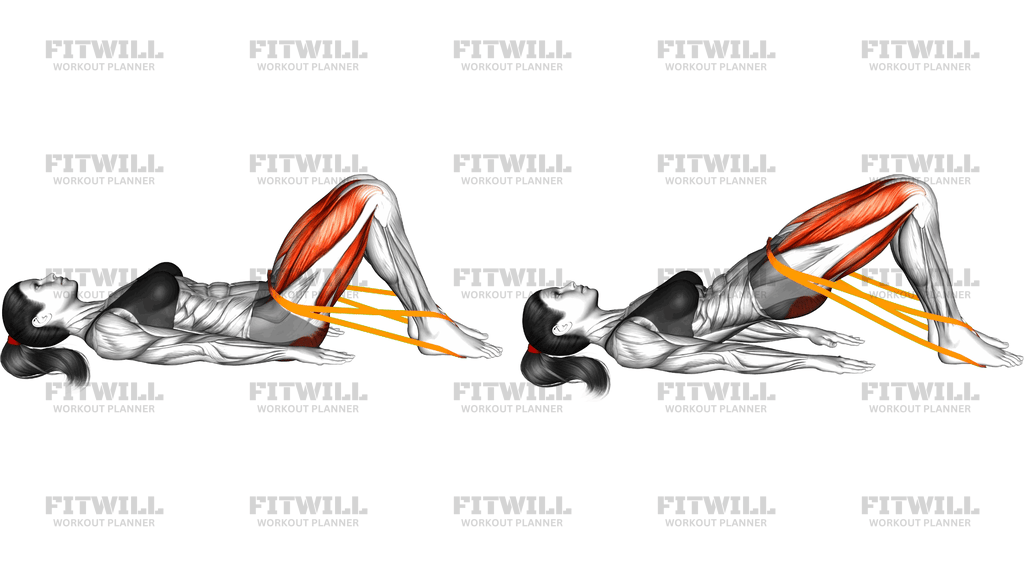
- Lie on your back with your knees bent, feet flat on the floor, and a loop band placed just above your knees.
- Set your feet about hip-width apart and walk them close enough that your shins are roughly vertical at the top of the bridge.
- Rest your arms by your sides with your palms down for support and press your lower back gently toward the floor before you start.
- Push your knees slightly outward into the band so you create tension before the first rep.
- Exhale and drive through your heels to lift your hips off the floor in one smooth arc.
- Keep your ribs down and stop when your shoulders, hips, and knees form a straight line.
- Squeeze your glutes hard at the top while keeping the knees gently pressed out against the band.
- Lower your hips under control until they touch down lightly, then reset the band tension before the next rep.
- Repeat for the planned reps, breathing out as you lift and breathing in as you lower.
Tips & Tricks
- Keep the band above the knees, not around the ankles; the higher placement makes it easier to feel the glutes working through the outward pressure.
- If your hamstrings cramp, move your feet a little closer to your hips and make the bridge shorter rather than forcing more height.
- Do not overarch at the top; the finish should come from glute squeeze, not from flaring the ribs and arching the lower back.
- Think about lightly pulling the kneecaps apart the whole time so the band never goes slack.
- Pause for a second at the top if you want more glute tension; the bridge is more effective when the top position is controlled, not rushed.
- Keep your chin slightly tucked so you do not crane your neck while driving the hips up.
- If the band rolls or digs into your thighs, slow down and reset it before the next set; loose setup usually leads to sloppy reps.
- Use a smaller range if your pelvis rocks side to side, because that usually means the hips are lifting faster than the trunk can stay organized.
- For more challenge, add a longer top hold instead of just adding reps until the bridge turns into momentum work.
Frequently Asked Questions
What muscles does Resistance Band Glute Bridge work?
It primarily targets the glutes, with the hamstrings and core helping stabilize the pelvis and keep the ribs from flaring.
Where should the band sit on Resistance Band Glute Bridge?
Place the band just above your knees. That position makes it easier to keep tension on the glutes without forcing the knees or ankles to do extra work.
How high should I lift my hips in Resistance Band Glute Bridge?
Lift until your shoulders, hips, and knees form a straight line. If you have to arch your lower back to go higher, you have gone too far.
Why do my hamstrings feel Resistance Band Glute Bridge more than my glutes?
Your feet are probably too far from your hips, or you may be pushing through the toes instead of the heels. Bring the feet a little closer and think about driving the floor away through the heels.
Is Resistance Band Glute Bridge good for beginners?
Yes. It is one of the easiest ways to learn glute activation because the floor supports your back and the band gives immediate feedback on knee position.
Should my knees push out against the band the whole time?
Yes, just slightly. Keep gentle outward pressure so the band stays active, but do not force the knees so wide that your hips twist or your feet roll outward.
What is the most common mistake in Resistance Band Glute Bridge?
The most common mistake is turning the movement into a lower-back arch. Keep the ribs down, brace lightly, and finish the lift with the glutes instead.
Can I use Resistance Band Glute Bridge before squats or deadlifts?
Yes. It works well as a warm-up or activation drill because it wakes up the glutes without tiring the nervous system the way a heavy lift can.
How can I make Resistance Band Glute Bridge harder without adding weight?
Use a stronger band, slow the lowering phase, or hold the top position for a count before coming down.