Kneeling Assisted Triceps Dip
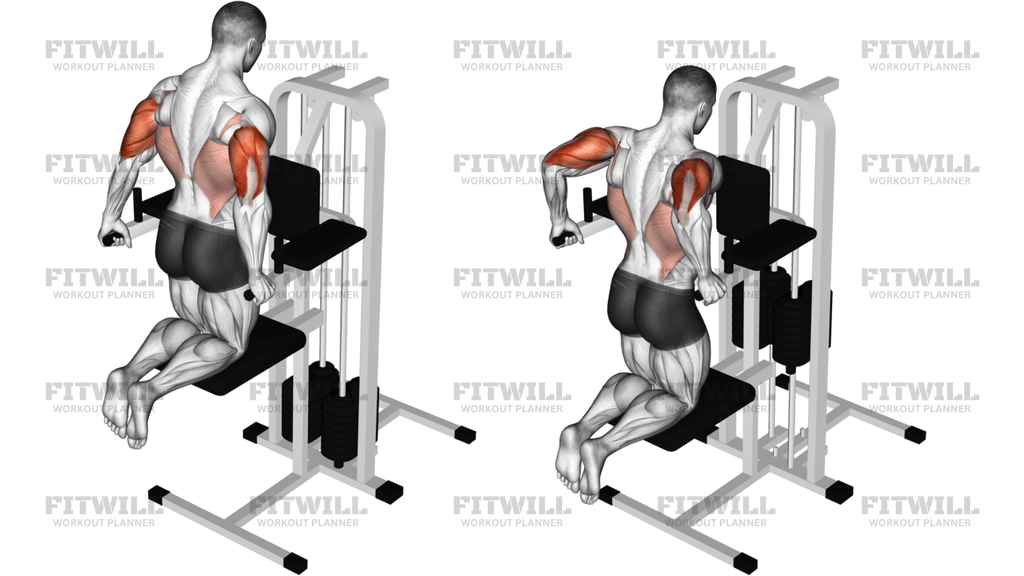
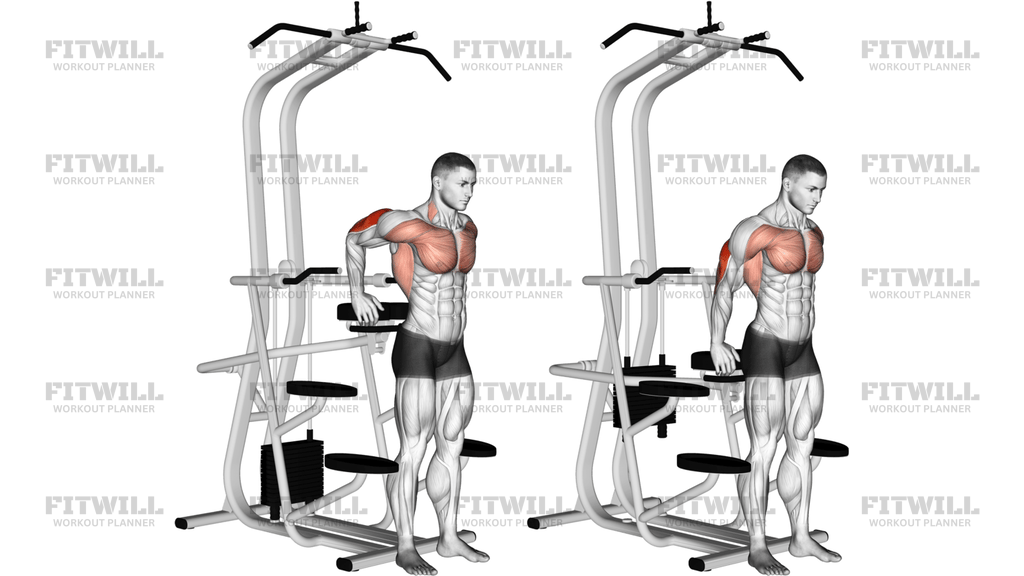
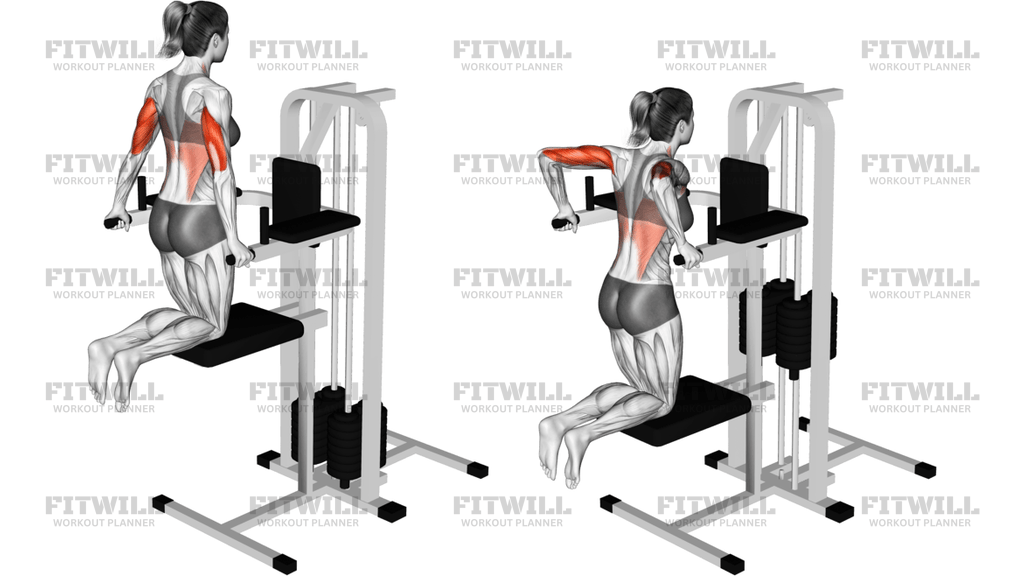
Kneeling assisted triceps dip is a machine-based dip variation that lets you train the triceps with controlled bodyweight support. In this version, your knees rest on the assistance pad while your hands grip the parallel handles, so the machine helps lift part of your bodyweight and makes the press smoother to learn and load. The exercise is most useful when you want a strict arm-focused dip pattern without needing the full strength or stability demands of a free dip.
The main training target is the triceps brachii, with the shoulders, chest, forearms, and midline working to keep the press path clean. Because the movement is performed on a dip station, the setup matters: hand placement, knee contact on the pad, and torso angle all change how much stress lands on the triceps versus the front of the shoulders and chest. A slightly more upright torso usually keeps the emphasis more arm-dominant, which fits the name and image of this exercise.
Start by kneeling on the assistance pad and setting your hands firmly on the bars with straight wrists and stacked shoulders. Lower with control by bending the elbows until your upper arms move into a comfortable depth, then press the handles down until the elbows are fully extended without locking hard. Keep the chest tall, ribs controlled, and shoulders from shrugging forward as you dip. The rep should look smooth and vertical, not rushed or bounced.
This variation works well for beginners, assisted strength work, triceps-focused accessory sets, and higher-rep hypertrophy training. It is also a practical option when you want to groove dip mechanics before progressing to unassisted bodyweight dips. The assistance pad should make the lift manageable, but not so much that you lose the need to control the descent or stabilize through the shoulders and trunk.
The main things to watch are shoulder comfort, elbow tracking, and range of motion. Stop the descent before the front of the shoulder feels jammed, keep the elbows moving mostly back rather than flaring wide, and avoid kicking through the knees to cheat the rep. When the setup is right, kneeling assisted triceps dips give you a strong lockout emphasis and a clear, repeatable way to build pressing strength with less joint stress than heavier free dips.
[ Workout Log & Planner ]
Put your next workout in Fitwill
Keep your plan and training log ready when you are.


Instructions
- Set the assistance pad to a height that lets your knees rest firmly on it while your hands reach the parallel bars without rounding your shoulders.
- Kneel on the pad with your shins behind you, hands wrapped around the handles, wrists straight, chest tall, and shoulders set down away from your ears.
- Start from the top position with your elbows extended and your body steady over the pad instead of hanging into the joints.
- Lower your body by bending the elbows until your upper arms are roughly parallel to the floor or until you reach a comfortable, pain-free depth.
- Keep your elbows tracking back and slightly in rather than flaring wide, and keep your torso mostly upright as you descend.
- Press the handles down to raise your body by straightening the elbows and squeezing the triceps at the top.
- Finish each rep with full elbow extension without snapping the joints or letting the shoulders roll forward.
- Inhale on the way down and exhale as you drive back up.
- After the last rep, keep control of the handles and step off the pad carefully.
Tips & Tricks
- Use just enough assistance to keep every rep smooth; if you have to kick or bounce from the knees, the setting is too hard.
- Keep the wrists stacked over the handles so the press stays strong and you do not fold into the palms.
- A more upright torso usually shifts the effort toward the triceps, while a stronger forward lean brings more chest into the rep.
- Do not drop too deep if your shoulders feel pinched at the bottom; the best range is the deepest pain-free position you can control.
- Lower under a slow, steady eccentric instead of letting the pad take the load at the bottom.
- Think about pushing the bars down and away rather than just straightening the elbows, which helps keep the shoulder blades stable.
- Keep the neck long and the ribs from flaring so the upper body does not turn the dip into a back arch.
- If the lockout feels sloppy, reduce the load or assistance and practice a cleaner top position before adding reps.
Frequently Asked Questions
What does the kneeling assisted triceps dip work most?
It primarily targets the triceps, with the shoulders, chest, and forearms helping stabilize the press.
Why do I kneel on the pad instead of hanging from the bars?
The pad removes part of your bodyweight so you can practice the dip pattern with more control and less joint stress.
How deep should I go on the dip station?
Lower until your upper arms are near parallel or slightly below, but stop before the front of the shoulders feel pinched or unstable.
Should my torso stay upright or lean forward?
A mostly upright torso keeps more of the emphasis on the triceps, which matches this assisted dip variation.
What is the biggest setup mistake on this machine?
Setting the assistance too low or starting with the shoulders shrugged makes the rep unstable and shifts stress away from the triceps.
Can beginners use this exercise?
Yes. The assistance makes it a good dip variation for learning elbow extension and shoulder control before bodyweight dips.
What should I do if my shoulders feel irritated?
Shorten the range slightly, keep the torso more upright, and use more assistance so the bottom position stays comfortable.
How do I progress the kneeling assisted triceps dip?
Reduce the assistance gradually, keep the same control, and only add load when you can maintain a clean descent and full lockout.