Band Assisted Dip Version 2
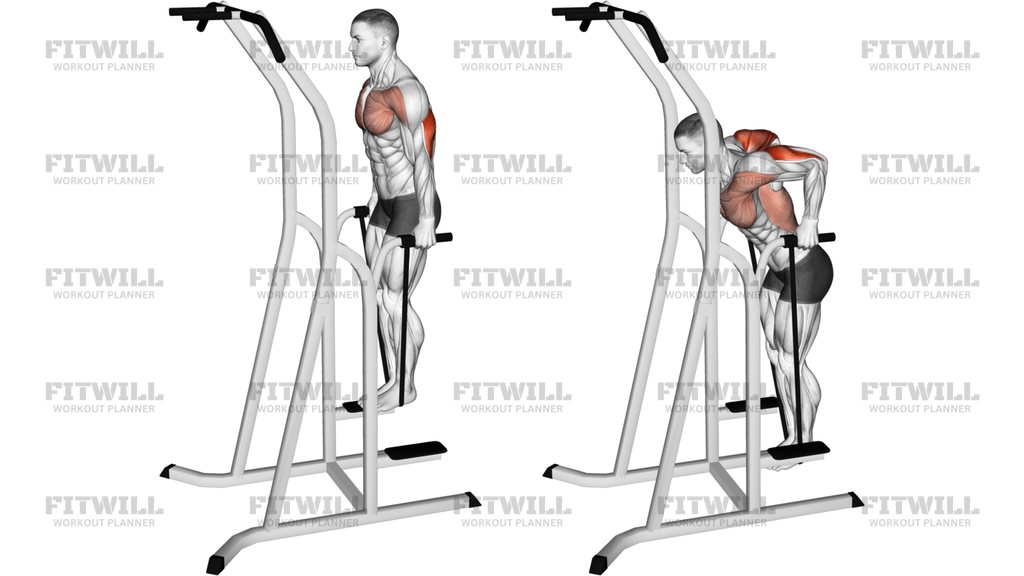
Band Assisted Dip Version 2 is a supported dip variation that lets you practice the dip pattern on parallel bars with a resistance band helping at the bottom. It is useful when you want to build pressing strength, improve dip depth, or accumulate more quality reps than you could manage unassisted. The band changes the feel of the lift, but the goal stays the same: stable shoulders, controlled descent, and a clean lockout.
Most of the work is felt in the triceps, chest, and front shoulders, with the band taking some of your bodyweight so you can train the pattern with better control. That assistance is strongest where the dip is hardest, which makes this version especially helpful for beginners or lifters rebuilding their dip. It is also a practical accessory when you want extra volume without grinding through ugly reps.
Setup matters a lot on this movement. Grip the parallel handles firmly, support your weight with straight arms, and get the band positioned so it helps without throwing your balance off. Keep your shoulders pressed down away from your ears and your torso tall enough that you can control the first inch of the descent instead of dropping into the bottom.
On the way down, bend the elbows and let the chest travel slightly forward while the upper arms stay close enough to your sides to keep the shoulder position organized. Lower until your upper arms are near parallel to the floor or as deep as your shoulders tolerate comfortably, then press through the handles and finish with full elbow extension. Keep the motion smooth and do not bounce out of the bottom, because the band can hide a loss of control if you rush the rep.
Use Band Assisted Dip Version 2 when you want a dip variation that is easier to load, easier to repeat, and easier to scale than a strict bodyweight dip. It fits well in upper-body strength work, accessory training, or a progression toward unassisted dips. The best reps look steady from start to finish: shoulders controlled, wrists stacked, torso consistent, and the band only doing enough help to keep the movement clean.
[ Workout Log & Planner ]
Put your next workout in Fitwill
Keep your plan and training log ready when you are.


Instructions
- Set the band on the dip station and place your knees or feet into the loop so it can assist your bodyweight during the lift.
- Grab the parallel handles beside your hips, straighten your arms, and support yourself at the top with your shoulders down and chest lifted.
- Stack your wrists under your elbows, tighten your midsection, and keep your legs still so the band stays centered.
- Lower yourself by bending the elbows and allowing a slight forward lean through the torso while the upper arms stay close to your sides.
- Descend under control until your upper arms are near parallel to the floor or until your shoulders reach a comfortable depth.
- Press forcefully through the handles, drive the elbows to full extension, and let the band help you out of the deepest part of the rep.
- Keep your shoulders depressed and avoid shrugging as you approach the top so the lockout stays stable.
- Reset at the top with straight arms, steady breathing, and the band still positioned under your knees or feet before the next rep.
Tips & Tricks
- Pick a band that lets you control the bottom position; if you pop up too easily, the band is doing too much of the work.
- Keep your shoulders down before every rep. If they creep toward your ears, the dip station is too heavy or your range is too deep.
- A small forward lean shifts more stress toward the chest, while a more upright torso makes the triceps do more of the pressing.
- Do not kick or swing your legs to start the rep. The band should assist smoothly, not turn the dip into a kip.
- Lower on a steady three-count if you tend to drop fast out of the top and lose position at the bottom.
- Stop the descent as soon as your shoulders lose their packed position, even if your elbows could bend farther.
- Keep your wrists stacked over the handles instead of letting them drift backward, which can make the shoulders feel unstable.
- If the band slides off-center, reset before the next rep instead of trying to save the set mid-motion.
Frequently Asked Questions
What muscles does Band Assisted Dip Version 2 work most?
Band Assisted Dip Version 2 mainly trains the triceps, chest, and front shoulders. The band reduces the load so you can keep the pressing pattern smooth through the hardest part of the rep.
Is Band Assisted Dip Version 2 good for beginners?
Yes, it is one of the better dip progressions for beginners because the band helps most where the dip is hardest. Start with a band that lets you control the bottom without collapsing into the shoulders.
Where should I place the band on Band Assisted Dip Version 2?
Loop the band so it supports your knees or feet under the dip station, depending on how the setup is built. The goal is to stay centered in the band so the assistance feels even on both sides.
How deep should I go on Band Assisted Dip Version 2?
Lower until your upper arms are close to parallel or until your shoulders start to lose position. Going deeper only helps if you can keep the shoulders packed and the descent controlled.
Should my torso stay upright or lean forward?
A slight forward lean is normal and usually makes the dip feel more chest-driven. Staying completely upright shifts more work to the triceps, so choose the torso angle that matches your goal.
What is the biggest mistake on Band Assisted Dip Version 2?
The most common mistake is dropping fast into the bottom and shrugging the shoulders. Keep the descent smooth and stop before the shoulder position breaks.
Can I use Band Assisted Dip Version 2 instead of bodyweight dips?
Yes, it is a solid substitute when strict bodyweight dips are not yet clean or comfortable. It also works well as a bridge toward unassisted reps.
How do I make Band Assisted Dip Version 2 harder over time?
Use a lighter band, slow the lowering phase, or add more reps while keeping the same shoulder position. You can also reduce how much help the band provides by choosing a thinner loop.