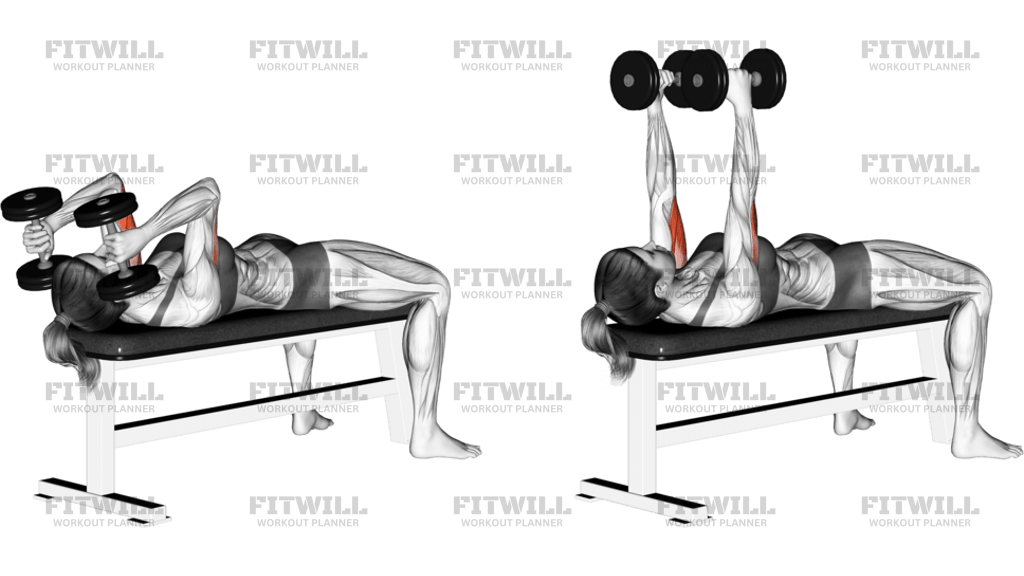
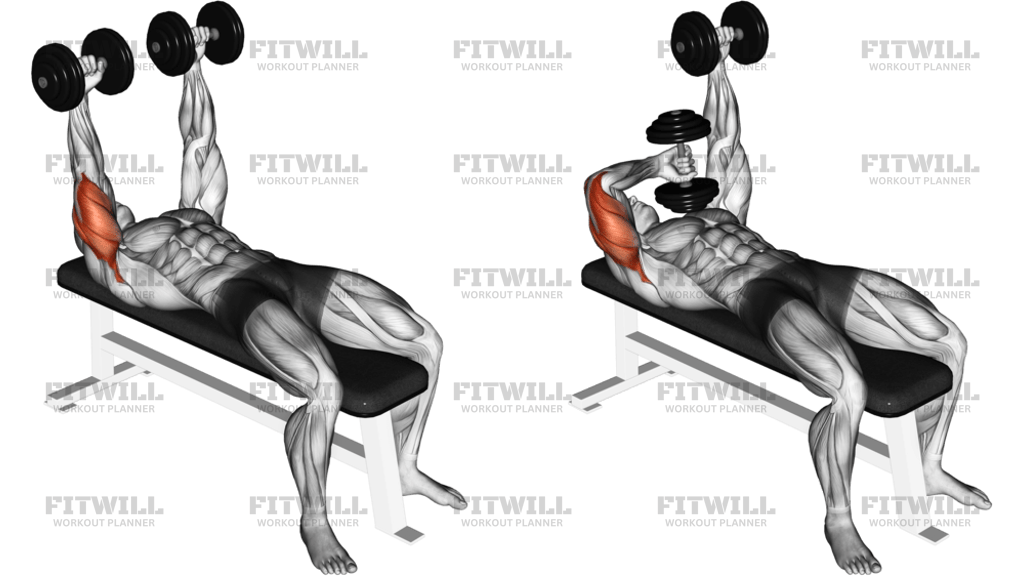
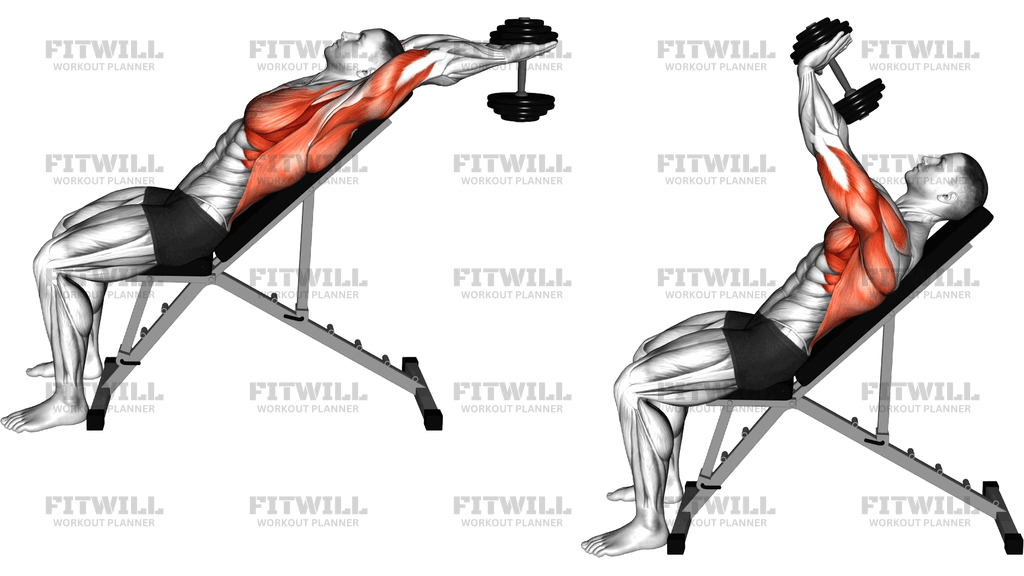
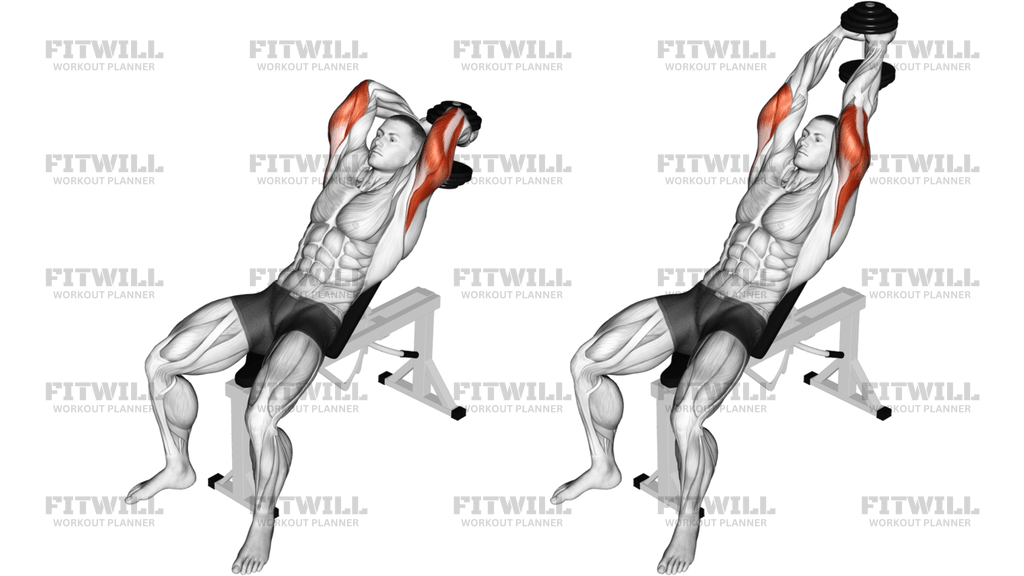
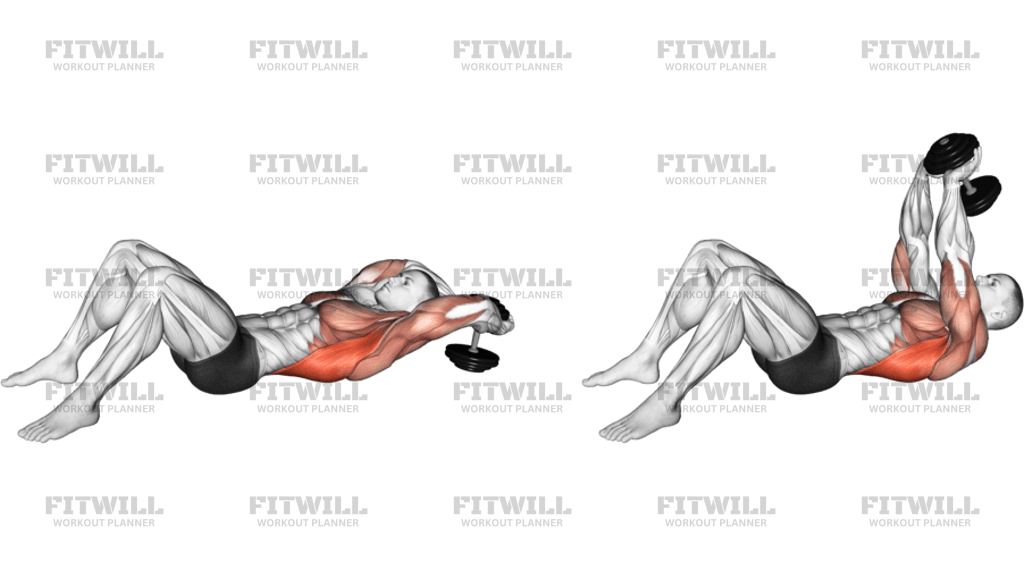
Dumbbell Lying One-Arm Pronated Triceps Extension
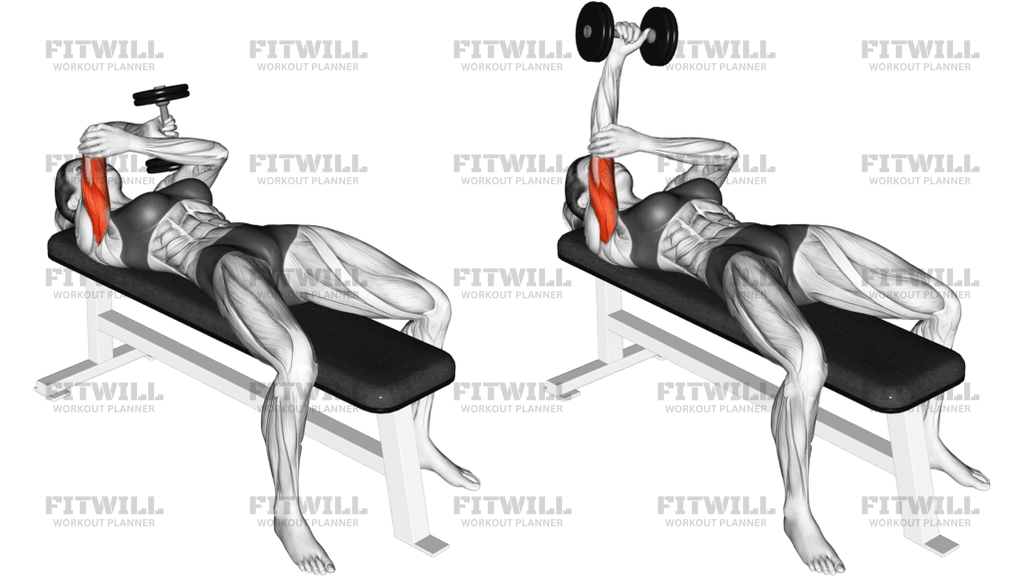
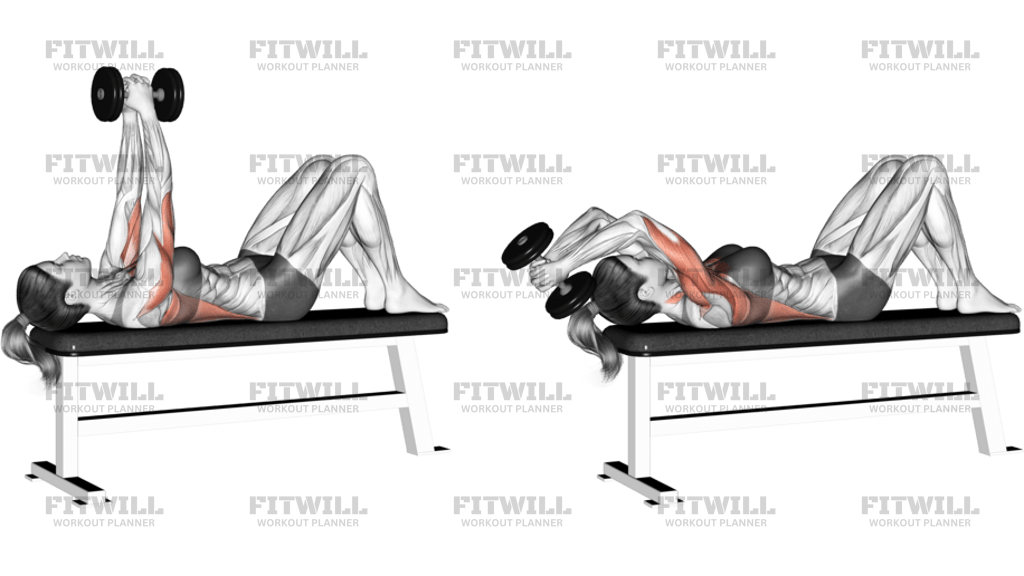
Dumbbell Lying One-Arm Pronated Triceps Extension is a single-arm triceps exercise done on a flat bench with an overhand grip. It keeps the upper arm relatively fixed while the elbow bends and straightens, which makes it a useful choice when you want direct arm work without the assistance and momentum that often show up in standing extensions.
The main job goes to the triceps brachii, especially when you keep the elbow stacked and the wrist firm over the dumbbell. The forearm flexors help keep the grip steady, the front deltoid helps hold the upper arm in place, and the core works to stop the torso from twisting as the arm moves. That combination makes the lift feel simple on paper but demanding when you keep the rep strict.
The setup matters more than people expect. Lie back on a flat bench, plant both feet, and bring the working upper arm into a position where the elbow points up and the dumbbell starts above the shoulder line. The free hand can lightly touch the working upper arm or rest across the body to help you keep the elbow from drifting open. When the shoulder and ribcage stay quiet, the triceps can do the work instead of the chest and torso taking over.
Each repetition should trace a small, controlled arc. Lower the dumbbell toward the forehead or temple by bending only at the elbow, then press it back to the top by extending the arm without snapping into a hard lockout. The descent should be slow and deliberate, because that is where the triceps build tension and where the elbow is most likely to lose position if the weight is too heavy. Exhale as you press up, then reset your ribs and wrist before the next rep.
This exercise is especially useful as an accessory movement for pressing strength, elbow stability, or balanced arm development when one side feels less coordinated than the other. It fits well in hypertrophy blocks, upper-body sessions, or as a lighter triceps finisher after compound pressing. Keep the load modest, the range pain-free, and the bench position stable so the movement stays clean from the first repetition to the last.
Fitwill
Log Workouts, Track Progress & Build Strength.
Achieve more with Fitwill: explore over 9600 exercises with images and videos, access built-in and custom workouts, perfect for both gym and home sessions, and see real results.
Start your journey. Download today!




Instructions
- Lie flat on a bench with both feet planted and hold one dumbbell above the shoulder on the working side using an overhand grip.
- Keep the working upper arm mostly vertical and use the free hand to lightly steady that arm or rest it across your torso.
- Stack the wrist over the elbow, keep the ribcage down, and set your shoulders against the bench before the first rep.
- Bend the elbow to lower the dumbbell in a controlled arc toward the forehead or temple.
- Keep the upper arm still while the forearm moves, and avoid letting the elbow flare away from the shoulder line.
- Pause briefly near the bottom if needed, then extend the elbow to bring the dumbbell back above the shoulder.
- Stop the rep short of a hard elbow snap, keep the wrist neutral, and exhale as you press the weight up.
- Lower the dumbbell back to the start with control, then switch sides or set it down safely beside the bench.
Tips & Tricks
- Use a lighter dumbbell than you would for a two-arm skullcrusher; the one-arm setup magnifies every position error.
- If the elbow keeps drifting, touch the upper arm lightly with the free hand before each rep to remind it to stay vertical.
- Keep the wrist stacked over the handle so the dumbbell does not roll toward the thumb side during the descent.
- Lower toward the temple or outer forehead if the shoulder feels unstable; do not force the dumbbell far behind the head.
- A slower lowering phase usually makes this movement feel better on the elbows and gives the triceps more work.
- Stop just short of a hard lockout if the elbow snaps or clicks at the top.
- Keep the ribs down and the low back quiet so you do not turn the rep into a bench arch.
- If the forearm starts fatiguing before the triceps, reduce the load and shorten the set rather than letting the wrist bend back.
- Alternate sides or match rep counts carefully so the torso does not twist toward the stronger arm.
Frequently Asked Questions
What muscle does Dumbbell Lying One-Arm Pronated Triceps Extension target most?
The triceps are the main target, with extra work from the forearm grip and the front of the shoulder to keep the arm stable.
Why use an overhand grip on Dumbbell Lying One-Arm Pronated Triceps Extension?
The pronated grip changes how the forearm and wrist line up over the dumbbell, which can make the movement feel more stable for some lifters. Keep the wrist straight so the grip does not collapse backward.
How low should the dumbbell go in Dumbbell Lying One-Arm Pronated Triceps Extension?
Lower it toward the forehead or temple with the upper arm still mostly fixed. If the shoulder starts to roll or the elbow drifts, shorten the range slightly.
Should my upper arm move during the rep?
It should stay almost still. A little natural shoulder motion is fine, but the elbow should not swing open or drift far away from the shoulder line.
Is this exercise good for beginners?
Yes, if you start with a very light dumbbell and keep the elbow stacked. Beginners usually need to learn the position first before adding load.
Why does my elbow feel irritated on this movement?
The usual causes are going too heavy, lowering too far behind the head, or snapping into lockout. Reduce the range a little and slow the descent down.
Can I do Dumbbell Lying One-Arm Pronated Triceps Extension on the floor instead of a bench?
Yes, but the floor shortens the bottom range and changes the stretch. A flat bench gives the movement shown here and usually feels smoother for the elbow.
What rep range works best for this exercise?
It usually works well in moderate-to-higher reps, such as 8-15 per side, because the one-arm setup is more about clean tension than heavy loading.