Dumbbell Standing Kickback
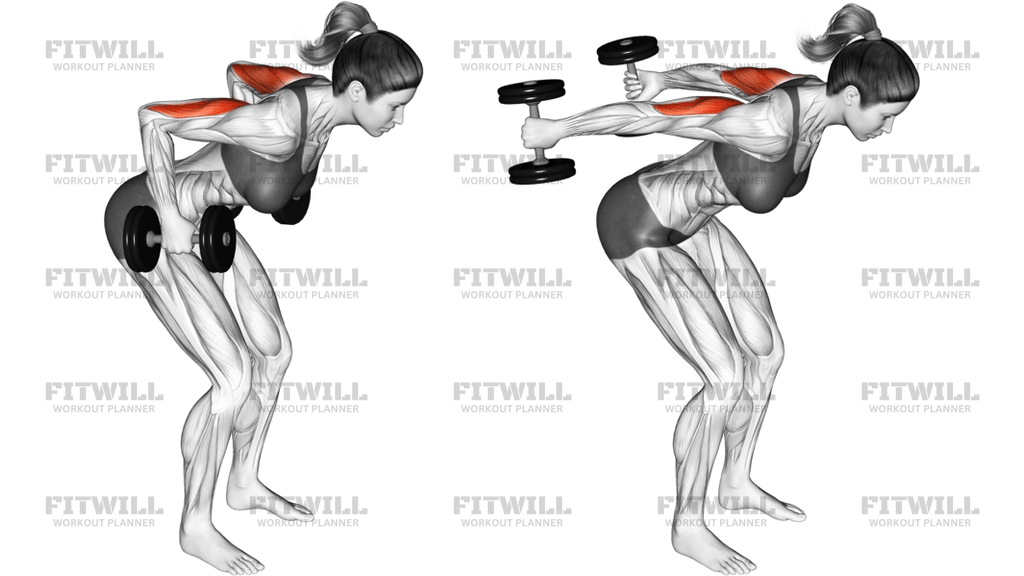
Dumbbell Standing Kickback is a bent-over triceps isolation exercise performed with a hip hinge and a short, strict elbow extension. The torso stays angled forward, the upper arms stay pinned near the ribs, and the forearms swing back only because the elbows straighten. That setup keeps the work where it belongs: on the back of the upper arm instead of on body swing, shoulder drive, or lower-back momentum.
The exercise is most useful when you want direct triceps work without heavy pressing. It fits well after compound pushing movements, during an arm-focused block, or in a lighter accessory session where clean reps matter more than load. Because the resistance is held away from the body while you are hinged over, the leverage gets difficult quickly, so even modest dumbbells can create a strong triceps stimulus.
A good setup is the difference between a clean kickback and a sloppy row with elbow bend. Hinge from the hips, keep the spine long, soften the knees, and let the upper arms settle close to the torso before you start extending. The elbows should point back, not flare wide, and the wrists should stay neutral so the dumbbells remain aligned with the forearms throughout the rep.
At the top of each repetition, the forearm and hand should finish in line with the upper arm without shrugging the shoulder or arching the low back. Lower the dumbbells slowly until the elbow is bent again, then reset the hinge if your torso starts rising. Breathing should stay controlled and quiet: brace before the extension, exhale through the kickback, and inhale on the way back down.
Dumbbell Standing Kickback is a practical choice for developing strict triceps control, lockout strength, and elbow-extension endurance. It is also a useful teaching movement for learning how to fix the upper arm in space while the forearm moves. Keep the range honest, keep the torso still, and stop the set when you can no longer hold the hinge or keep the elbows from drifting.
Fitwill
Log Workouts, Track Progress & Build Strength.
Achieve more with Fitwill: explore over 9600 exercises with images and videos, access built-in and custom workouts, perfect for both gym and home sessions, and see real results.
Start your journey. Download today!




Instructions
- Stand with your feet about hip-width apart and hold a dumbbell in each hand with your palms facing in.
- Hinge at the hips until your torso is angled forward, keeping a long spine, soft knees, and your head in line with your back.
- Let your upper arms settle close to your sides and point your elbows back so the dumbbells hang under your shoulders.
- Brace your core and keep your ribs from flaring as you prepare to move.
- Extend your elbows until your forearms line up with your upper arms and the dumbbells travel straight back behind you.
- Keep your upper arms still while the forearms move; do not swing the weights or shrug your shoulders.
- Squeeze the triceps briefly at the top, then lower the dumbbells slowly until the elbows bend again.
- Reset the hinge if your torso starts to rise, and repeat for the planned number of repetitions.
Tips & Tricks
- Use lighter dumbbells than you would for rows or presses; the bent-over leverage makes this much harder than it looks.
- Think about fixing your upper arms in place and only opening and closing the elbows.
- Keep your wrists straight so the dumbbells stay stacked over the forearms instead of rolling forward.
- If your elbows drift outward, reduce the load and narrow your stance until the upper arms stay tucked.
- Exhale as you straighten the elbows and inhale as the dumbbells return under control.
- A small pause at lockout makes the triceps work harder than a fast, swinging finish.
- Stop the set when your low back starts doing the work or when you can no longer hold the hip hinge.
- Use a mirror or side view to check that your torso angle stays fixed through the whole set.
Frequently Asked Questions
What does Dumbbell Standing Kickback train most?
It primarily trains the triceps, especially the elbow-extension action at the back of the upper arm.
Why do I need to hinge forward for this exercise?
The hip hinge gives your arms room to extend behind you while keeping the upper arms fixed close to the torso.
Should my elbows move during the rep?
Only slightly. The upper arms should stay nearly still while the forearms straighten and bend.
How heavy should the dumbbells be?
Choose a load you can extend without swinging your torso or letting your shoulders creep up.
Why do I feel this in my lower back sometimes?
That usually means the hinge is drifting or the weights are too heavy. Reset the torso angle and lighten the dumbbells.
Can beginners do standing kickbacks?
Yes, but they should start with very light dumbbells and focus on holding the hinge and keeping the elbows pinned.
What is the difference between this and a bench-supported kickback?
The standing version demands more core and hip-hinge control, while a bench-supported version reduces balance and lower-back demand.
Where should I feel the movement the most?
You should feel the back of the upper arm doing the work, not the traps, neck, or low back.