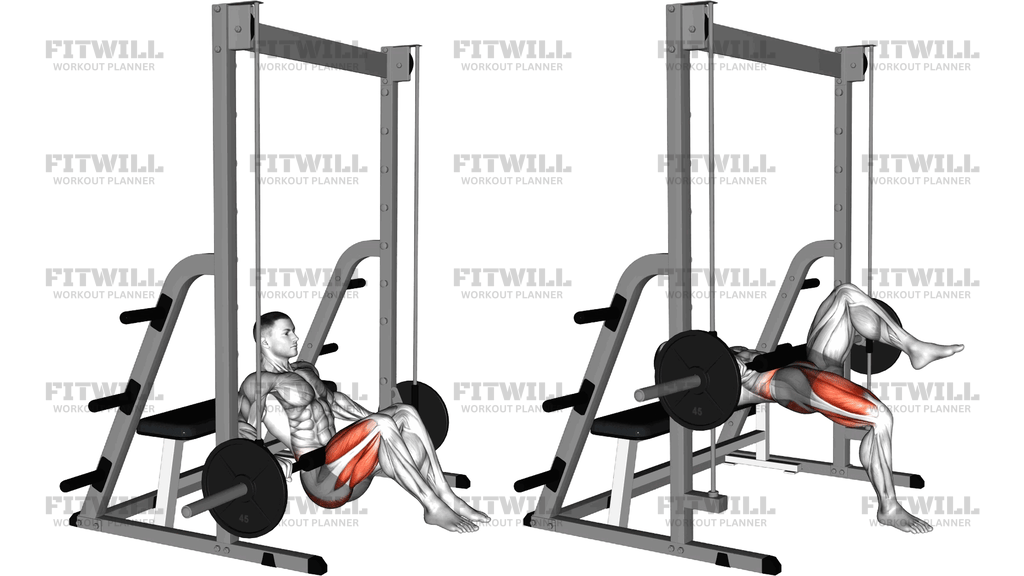
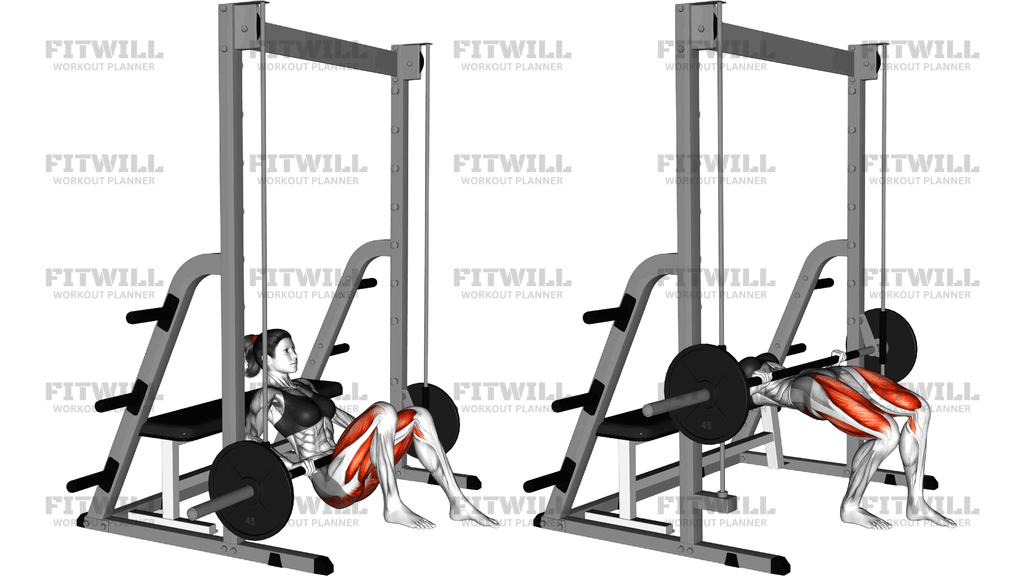
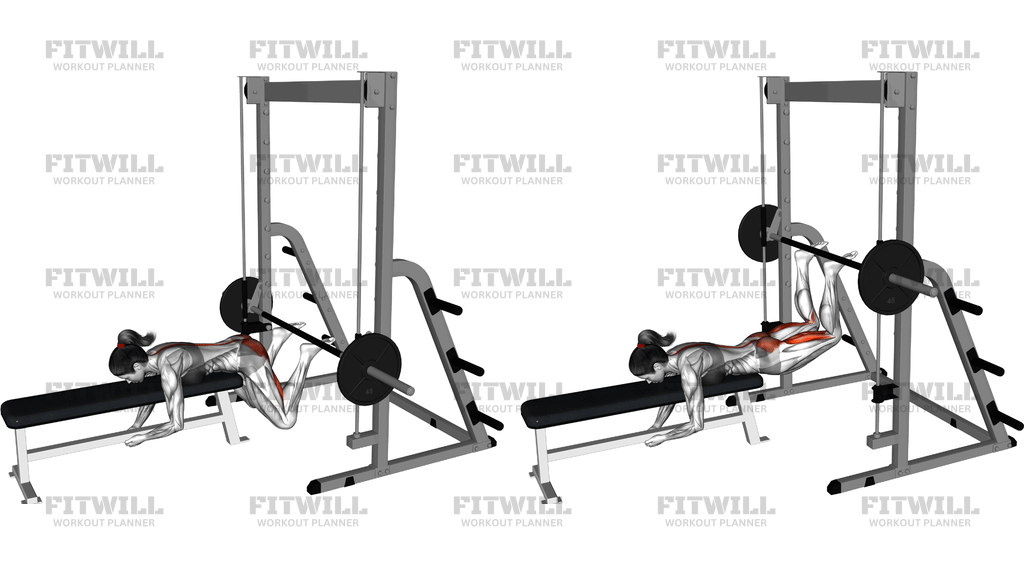
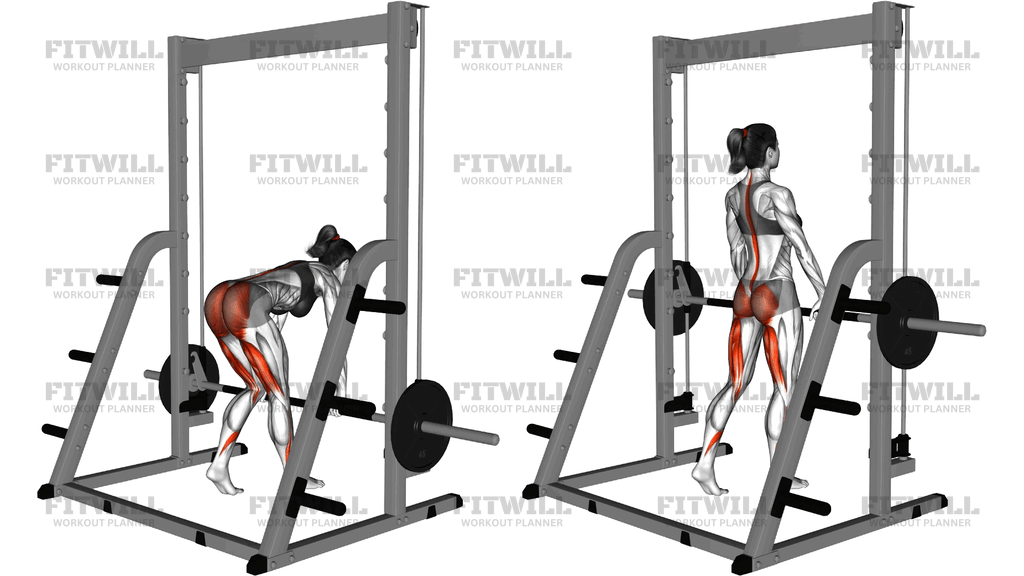
Smith Sumo Squat
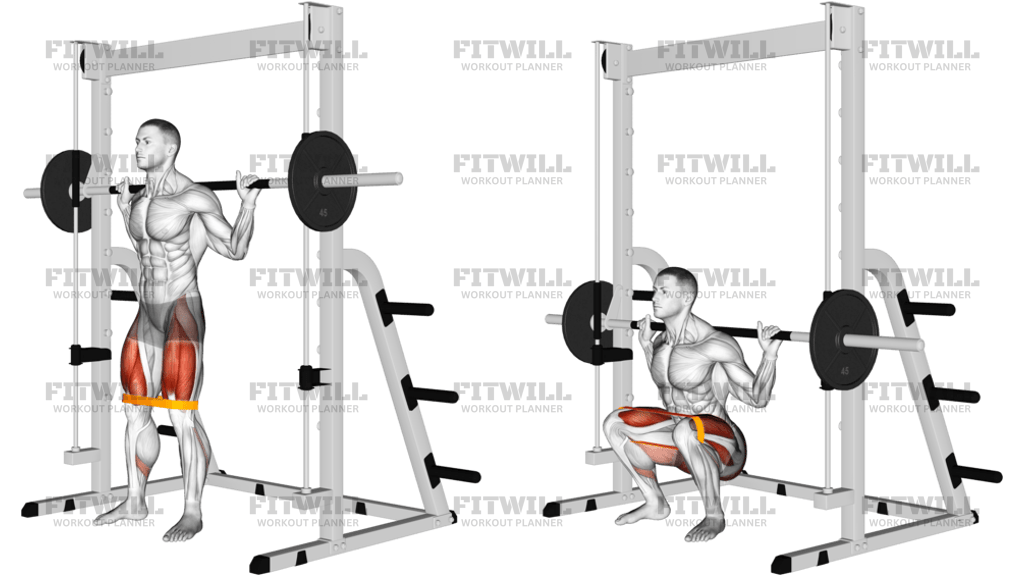
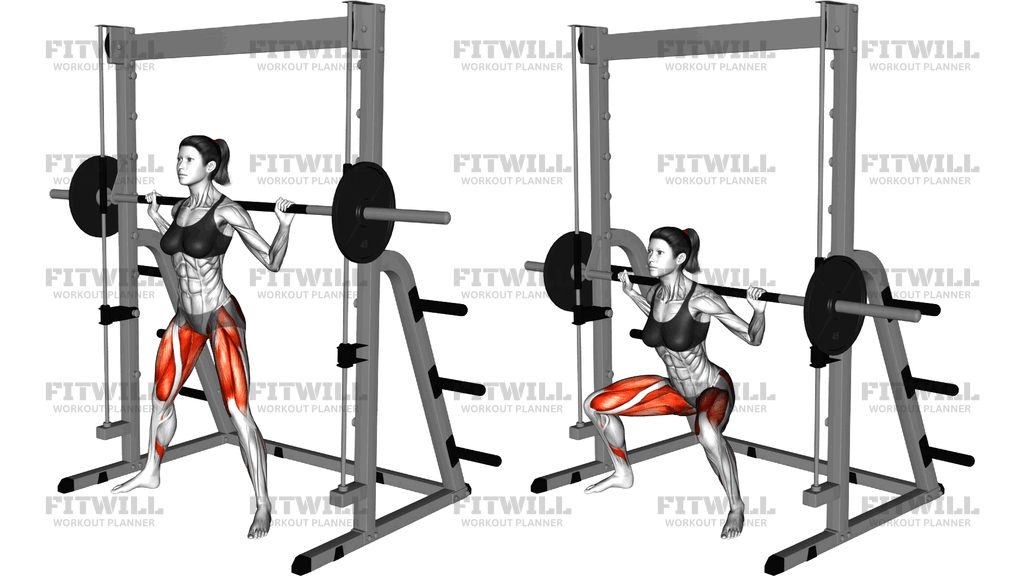
Smith Sumo Squat is a wide-stance squat performed on a Smith machine with the bar resting across the upper back. The fixed bar path lets you focus on stance, knee tracking, and depth without having to balance the load in space. That makes it a useful lower-body strength exercise for people who want to load the hips and legs with more control than a free barbell squat often allows.
The wide stance and turned-out feet shift more work toward the glutes, adductors, and quads while still demanding a strong brace from the trunk. Because the machine guides the bar vertically, your feet usually need to sit slightly forward of the bar so your torso can stay organized and your knees can travel over the toes without the bar pulling you out of position.
Set the bar on the upper traps, not the neck, and choose a stance that lets you descend between the knees with both heels planted. A good rep starts with full-body tension before the descent, then a controlled drop to the deepest position you can own without losing a neutral spine or collapsing the knees inward. The ascent should feel like driving the floor apart while you stand up under the bar.
This movement is commonly used for lower-body strength work, glute-focused training, hypertrophy blocks, and accessory work when balance limits the quality of a free squat. It can be beginner-friendly if the load is light and the range is controlled, but the fixed track also makes bad foot placement more obvious, so setup matters more than people expect.
The main coaching priorities are simple: keep the chest lifted, knees tracking with the toes, and pressure spread through the whole foot. If the bottom position turns into a tuck, lean, or bounce, shorten the range slightly and clean up the setup before adding load. The exercise should feel stable, deliberate, and repeatable from the first rep to the last.
Fitwill
Log Workouts, Track Progress & Build Strength.
Achieve more with Fitwill: explore over 9600 exercises with images and videos, access built-in and custom workouts, perfect for both gym and home sessions, and see real results.
Start your journey. Download today!




Instructions
- Set the Smith bar across your upper traps and stand under it with your feet wider than shoulder-width, toes turned out.
- Grip the bar just outside your shoulders, lift it clear of the hooks, and step your feet slightly forward so the bar sits over your midfoot when you squat.
- Brace your core, keep your chest tall, and point your knees in the same direction as your toes.
- Sit your hips down between your knees while keeping your heels flat and your torso controlled under the fixed bar path.
- Lower until your thighs reach a depth you can hold without rounding your lower back or letting your knees cave inward.
- Pause briefly in the bottom if needed, then drive through your whole foot to stand back up.
- Press your knees out as you rise and keep the bar moving straight up and down in the machine track.
- Finish each rep tall, reset your breath, and return the bar to the hooks only after the final repetition.
Tips & Tricks
- A slightly forward foot position usually works better than standing directly under the bar, because it lets your hips sit back and down without the machine forcing you onto your toes.
- Turn your toes out enough to let your knees track over them; if your stance is too narrow, the bottom position usually feels cramped and unstable.
- Keep pressure across the big toe, little toe, and heel so the squat does not collapse into the toes or rock back onto the heels.
- Do not let the bar ride on your neck; it should stay on the upper traps with the upper back tight enough to create a shelf.
- Stop the descent if your pelvis tucks under hard at the bottom, because the Smith machine will make that compensation more obvious under load.
- Use a controlled tempo on the way down instead of dropping into the hole and bouncing out of the bottom.
- If your knees cave inward, reduce the load and think about spreading the floor apart as you stand up.
- Exhale through the sticking point and reset your brace at the top before the next rep.
Frequently Asked Questions
What muscles does Smith Sumo Squat work?
It mainly targets the glutes, quads, and adductors, with the core and upper back helping keep the torso steady.
Is the Smith machine helping or limiting the squat?
It helps by removing the balance demand, but it also locks the bar path, so your foot placement has to match the machine.
How wide should my stance be?
Wide enough that your knees can track over your toes and your hips can drop between your legs without pinching or rounding.
Where should the bar sit on my back?
It should rest on the upper traps or rear delts, not on the neck, so the upper back can stay tight through the rep.
Why do my feet need to sit slightly forward?
That position helps the bar stay over your midfoot as you descend and gives your hips room to move without fighting the Smith track.
Can beginners use Smith Sumo Squat?
Yes, if they start light, keep the stance comfortable, and stop the set before the lower back or knees start to compensate.
What is the most common form mistake?
Either standing too close to the bar so the knees run into the track, or letting the knees collapse inward on the way up.
How deep should I squat?
Go only as deep as you can keep your heels down, your spine neutral, and your knees tracking cleanly over the toes.