Dumbbell Cossack Squats
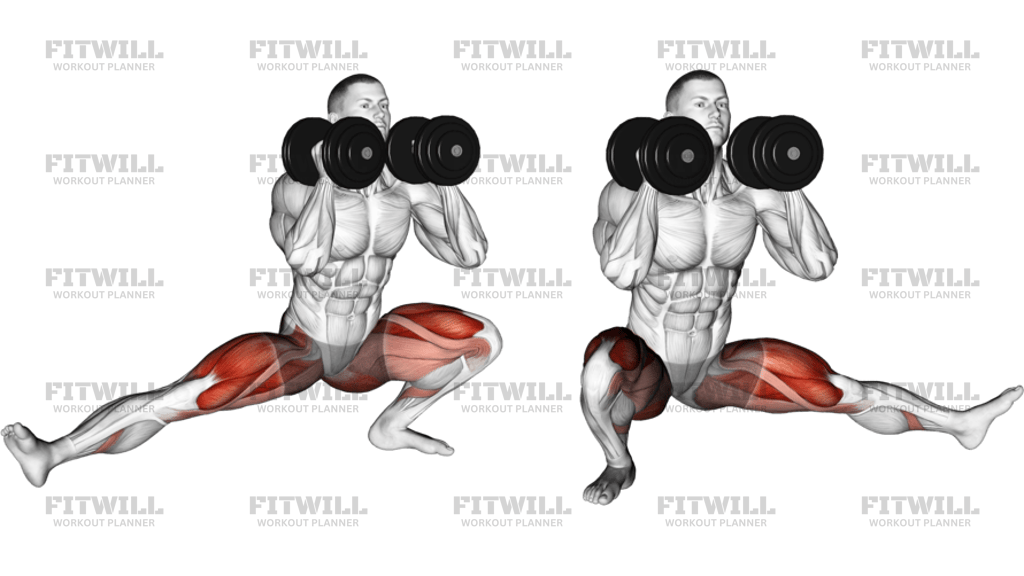
Dumbbell Cossack Squats is a loaded lateral squat variation that trains hip mobility, adductor strength, glutes, quads, and trunk control at the same time. In the shown setup, the dumbbells are held at the shoulders in a front-rack position while you shift from side to side, sinking deeply into one hip and keeping the other leg long and straight.
The main value of the movement is how it builds strength through a wide frontal-plane range. One side works through a deep knee bend and hip flexion, while the opposite leg stays extended so the inner thigh of the straight leg can lengthen and help control the descent. That combination makes the exercise useful for athletes, warmups, lower-body accessory work, and anyone who needs better control in wide stances or side-to-side transitions.
The rack position matters because it keeps the load close to the torso and helps you stay upright as you sit into the working hip. If the dumbbells drift forward or the chest collapses, the rep turns into a reach instead of a controlled squat. A clean repetition starts with an even stance, tall posture, and a deliberate shift of body weight before the knee bends.
At the bottom, the heel of the bent leg stays grounded, the straight leg stays active, and the torso stays as tall as your mobility allows. The goal is not to touch the floor or force an exaggerated depth. The goal is to own the side-to-side shift, keep tension in the working leg and adductors, and return to center without bouncing or twisting.
Use a lighter load than you would for a regular squat, especially if your ankles, hips, or adductors are still adapting to the range. This exercise is best when every rep looks similar: smooth shift, controlled descent, brief pause if needed, and a strong drive back to the middle before you repeat on the other side.
[ Workout Log & Planner ]
Put your next workout in Fitwill
Keep your plan and training log ready when you are.


Instructions
- Stand with your feet wider than shoulder width and hold a dumbbell in each hand at shoulder height, elbows slightly forward like a front rack.
- Turn one foot out and keep the other leg straight, with both heels flat and your chest tall before you start to move.
- Shift your hips toward the bent knee first, then sit down into that side while the opposite leg stays long.
- Keep the bent knee tracking over the toes and let the straight leg slide out with the foot planted or the heel lightly grounded.
- Lower only as far as you can keep the torso controlled and the working foot fully connected to the floor.
- Pause briefly in the bottom if needed, then drive through the bent leg to return to the center without bouncing.
- Reset your stance, shift to the other side, and repeat the same path on the opposite leg.
- Breathe in on the descent, brace at the bottom, and exhale as you push back to the middle.
Tips & Tricks
- Keep the dumbbells parked near the shoulders instead of letting them hang, so your torso stays more upright as you shift laterally.
- Think about sitting back and down into the bent hip, not collapsing sideways at the waist.
- On the straight leg, keep the foot active and the knee extended so you feel a lengthening through the inner thigh rather than a dead passive hang.
- If your heel lifts on the working side, reduce depth or widen the stance slightly before adding load.
- Do not force both sides to look identical if one hip is tighter; match the depth you can control on both legs.
- Use a slow lowering phase so the adductors and glutes control the transition instead of momentum.
- Keep the ribs stacked over the pelvis; over-arching the lower back usually means the rack position is too heavy or the stance is too narrow.
- Choose a lighter pair of dumbbells than you would for standard squats because the lateral range is the hard part here.
Frequently Asked Questions
What muscles do Dumbbell Cossack Squats train?
They load the glutes, quads, adductors, and hips while the core keeps the torso upright in the side-to-side squat.
Can beginners perform this exercise?
Yes, but beginners should start with bodyweight or very light dumbbells until they can keep the bent heel down and the straight leg long.
Why are the dumbbells held at the shoulders?
The front-rack position keeps the weight close to the body and helps you stay more upright while you shift into the working hip.
What should the straight leg do during the squat?
It should stay extended with the foot grounded so you feel a stretch and active tension through the inner thigh, not a collapsed knee or relaxed hip.
How low should I go in the bottom position?
Only as low as you can keep the working heel down, the chest controlled, and the hips from twisting or folding forward.
What is the most common mistake?
Most people lean forward or let the load drift away from the body, which turns the movement into a balance drill instead of a controlled lateral squat.
Is this more of a strength or mobility exercise?
It is both. The wide stance challenges mobility, but the goal is still to produce controlled strength through the full range.
How can I progress Dumbbell Cossack Squats?
Increase depth first, then add load only when both sides stay smooth, upright, and equally controlled.