Smith Chair Squat
Smith Chair Squat is a guided squat variation performed in a Smith machine with the feet set slightly in front of the bar so you can sit back and down as if reaching a chair or box behind you. The fixed bar path makes the exercise easier to control than a free bar squat, but the setup still matters: your feet, torso angle, and depth determine whether the load stays on the quads or drifts into the hips and lower back.
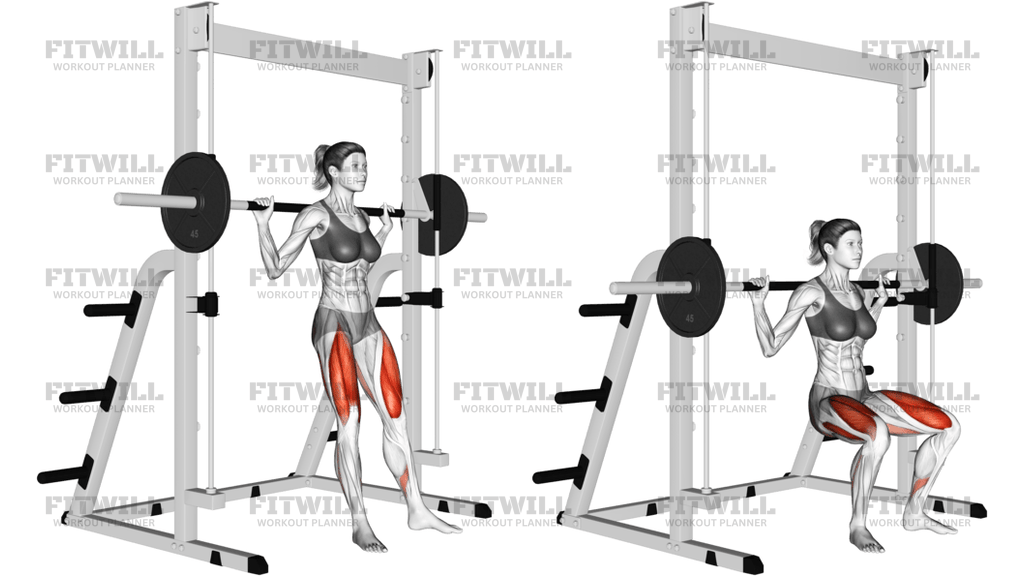
This version of the squat is especially useful when you want a quad-dominant pattern with a more upright torso. In the image, the lifter keeps the bar across the upper back, the feet a little forward of the line of the bar, and the knees tracking over the toes as the hips descend. That position lets the knees travel forward enough to keep tension on the thighs while the machine supports the bar path.
The key is to lower under control until the hips lightly touch the chair, bench, or squat target you are using, then drive straight up through the midfoot and heels without bouncing. Because the bar is guided, it is tempting to relax at the bottom or let the knees cave inward. A clean rep keeps the chest open, the spine neutral, and the knees aligned with the toes from start to finish.
Smith Chair Squat is often used for accessory quad work, hypertrophy sets, or as a safer alternative when free squatting is uncomfortable or too balance-intensive. It can be beginner-friendly if the load is light and the setup is consistent, but the movement still demands control. Use a depth you can own, breathe steadily, and stop the set before your torso folds forward or your heels start to lift.
Fitwill
Log Workouts, Track Progress & Build Strength.
Achieve more with Fitwill: explore over 9600 exercises with images and videos, access built-in and custom workouts, perfect for both gym and home sessions, and see real results.
Start your journey. Download today!




Instructions
- Set the Smith bar across your upper traps or rear delts and stand with both feet slightly forward of the bar so your torso can stay upright.
- Place your feet about shoulder-width apart or a little wider, with toes turned out just enough for your knees to track comfortably.
- Brace your midsection, lift your chest, and unrack the bar before taking one small step to your squat stance.
- Sit your hips down and back as if reaching for a chair, keeping your heels flat and your knees moving in line with your toes.
- Lower until your thighs reach the depth of the chair or box, or until your hips are as low as you can control without losing position.
- Pause briefly at the bottom without relaxing onto the support or letting the bar crash downward.
- Drive up by pushing the floor away through your midfoot and heels while keeping your chest tall and your knees from caving inward.
- Finish each rep by standing tall with the hips and knees extended, then reset your breath before the next descent.
- Rack the bar only after the final rep is complete and you are fully balanced under the hooks.
Tips & Tricks
- The feet should stay slightly in front of the bar path; if they are too far back, your knees may feel jammed and your torso may tip forward.
- Think about sitting down to a chair rather than folding at the waist. A short, controlled descent keeps the movement on the quads.
- Keep pressure across the whole foot, not just the toes. If the heels start to rise, shorten the depth or widen the stance a touch.
- Let the knees travel forward, but keep them tracking in the same direction as your toes so they do not collapse inward.
- Do not bounce off the chair, box, or bottom position. Touch lightly, pause, and reverse with control.
- A slightly higher foot placement can make the squat feel more stable, while a narrower stance usually increases quad demand.
- Use a load that lets you pause cleanly at the bottom without losing the upright torso position shown in the image.
- Exhale as you stand up and reset with a full breath before each rep if you are training for strength or controlled hypertrophy.
Frequently Asked Questions
What does Smith Chair Squat train most?
It mainly trains the quads, with the glutes and adductors assisting as you stand up from the bottom.
Why are the feet set slightly in front of the Smith bar?
That position lets you keep a more upright torso and shift more work onto the thighs instead of turning it into a hip-dominant hinge.
How low should I go on the chair squat?
Lower until your hips lightly touch the chair or box, or until you reach the deepest position you can control without your heels lifting or your back rounding.
Should my knees move forward in this exercise?
Yes, some forward knee travel is normal and helpful here as long as the knees track over the toes and do not collapse inward.
Can beginners use this Smith machine variation?
Yes. The guided bar path makes it easier to learn if you start light and practice the same foot placement every set.
What is the most common mistake with the chair squat setup?
Standing too close to the bar or sitting too far forward makes the rep feel unstable and shifts stress away from the quads.
What should I do if my heels come off the floor?
Shorten the depth, widen the stance slightly, or bring the feet a touch farther forward so you can stay balanced over the midfoot.
Can I use a box or bench behind me?
Yes. A box or bench works as a depth target, as long as you touch it lightly instead of relaxing onto it.