Dumbbell Over Bench Wrist Curl
Dumbbell Over Bench Wrist Curl is a supported forearm isolation exercise that trains wrist flexion with the forearms braced on a bench and the hands hanging just past the pad. The setup matters because the bench removes most body movement from the lift, letting the wrist flexors do the work instead of the shoulders, elbows, or torso.
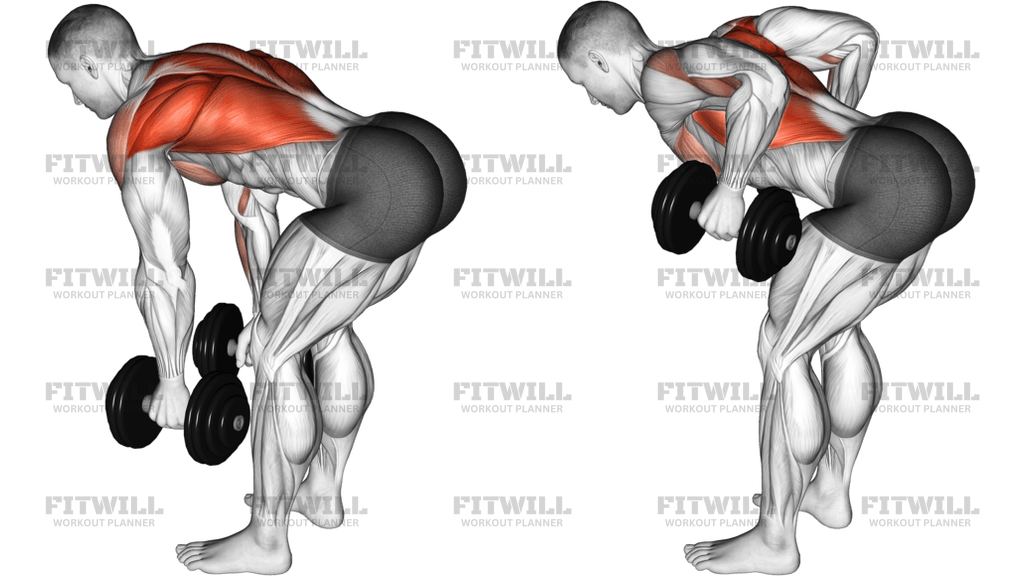
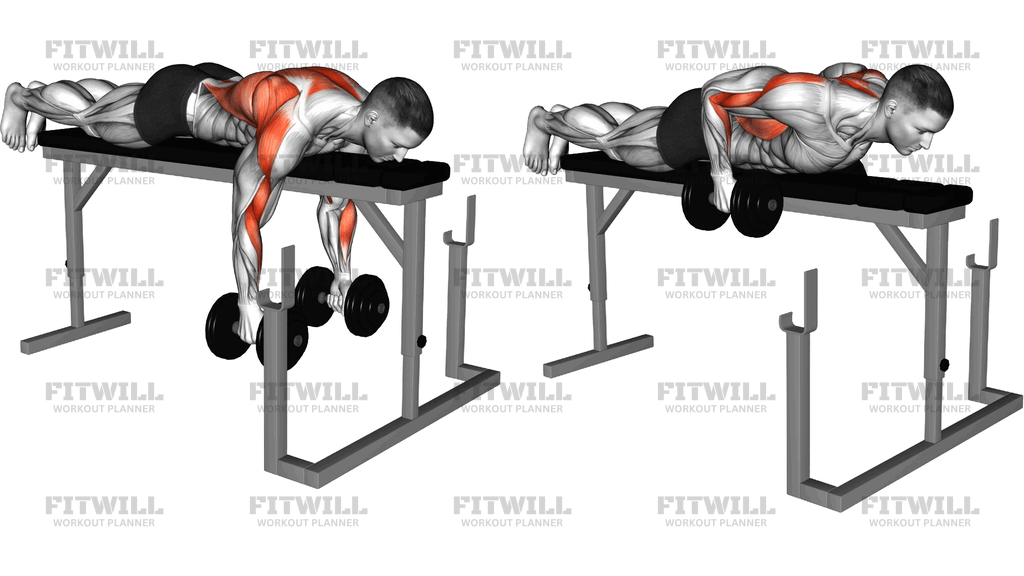
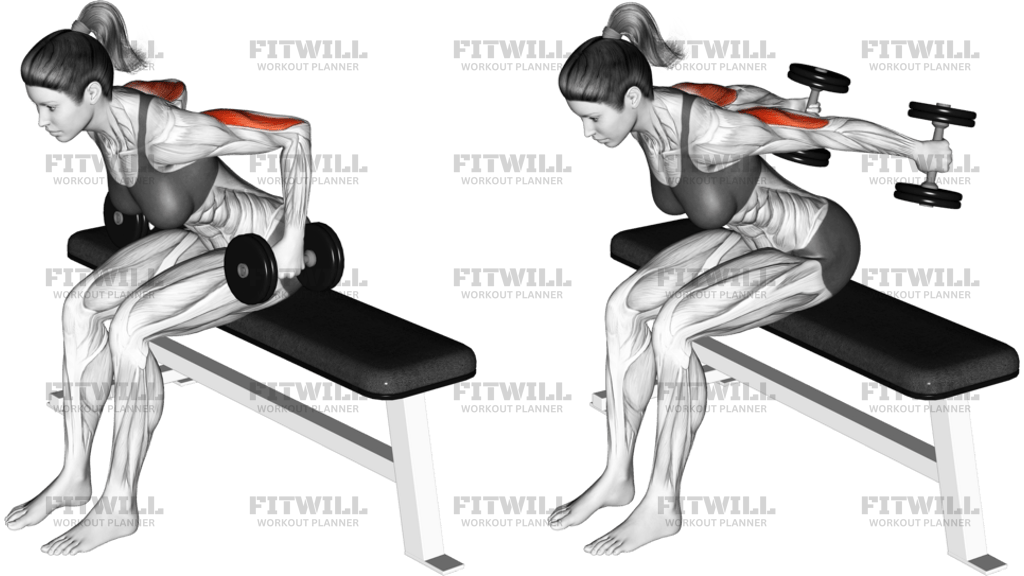
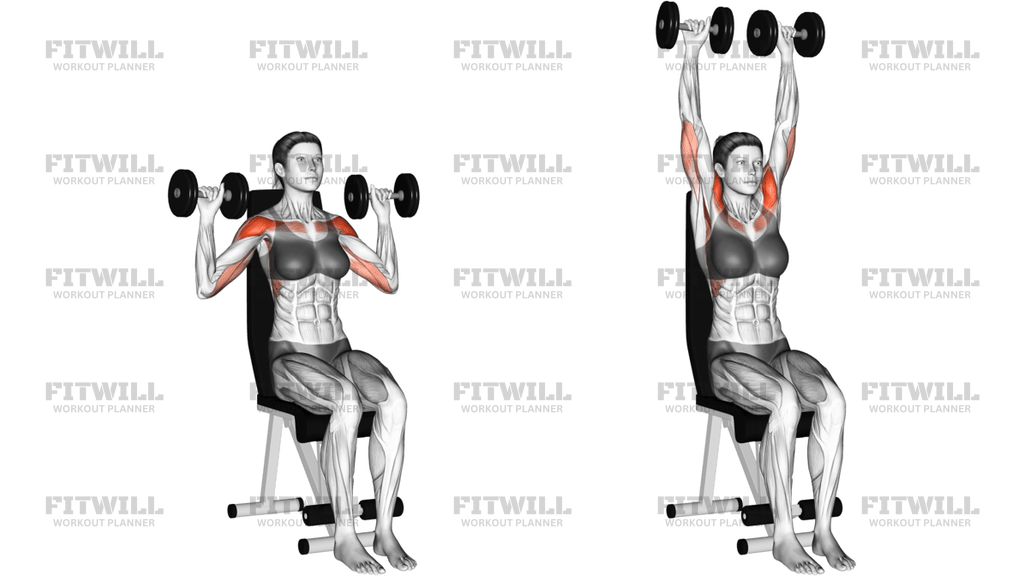
The image shows a kneeling position behind the bench with the forearms planted on the pad and the dumbbells suspended off the edge. From there, the wrists move through a short but demanding arc: lower into the stretched position, then curl the knuckles back toward the forearms without letting the elbows or upper arms take over. That supported setup is what makes the movement useful for direct forearm work.
This exercise is most often used to build grip endurance, forearm size, and wrist strength for lifting, climbing, racket sports, combat sports, or any program that needs stronger hand and forearm support. Because the range is small, the temptation is to chase weight; the better choice is usually a load that keeps the wrists moving smoothly and evenly while the forearms stay anchored on the bench.
Technique is straightforward but easy to cheat. Keep the forearms flat on the pad, place the wrists just off the edge, and let the dumbbells hang fully before you start each rep. Curl through the wrist only, not the elbow, and control the lowering phase so the stretch stays in the forearm rather than pulling the shoulders forward.
If the wrists feel pinched or the dumbbells drift out of line with the forearms, reduce the load and shorten the range slightly until the movement is clean. The exercise should create a focused burn in the underside of the forearm, not sharp joint stress. When done well, it is a precise accessory movement that complements pulling work, pressing work, and general grip training.
[ Workout Log & Planner ]
Put your next workout in Fitwill
Keep your plan and training log ready when you are.


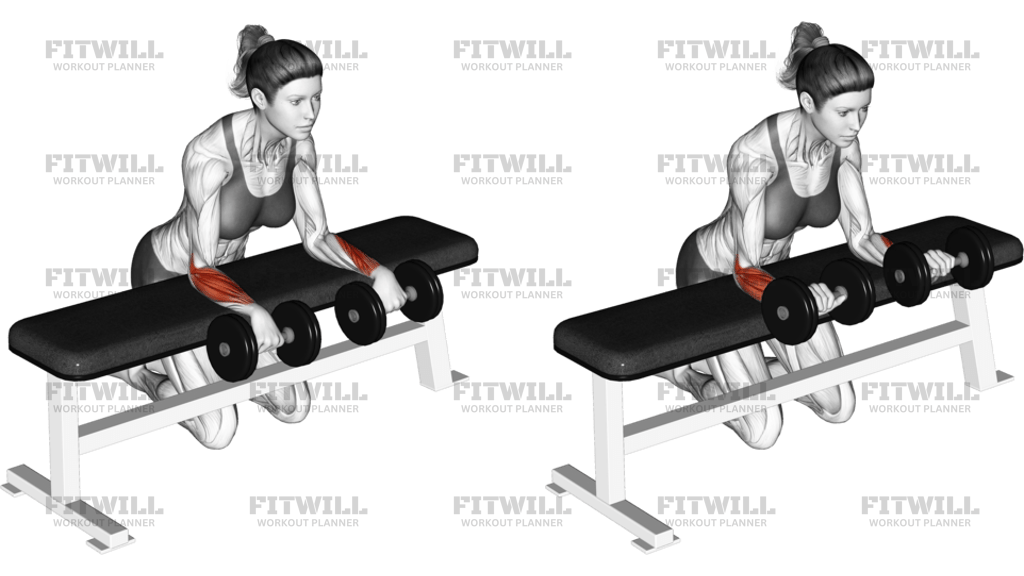
Instructions
- Kneel behind a flat bench and place both forearms on the pad with your wrists just past the edge.
- Hold a dumbbell in each hand with your palms facing up and let the handles hang low in the fingers.
- Keep your elbows and upper arms planted on the bench so only the wrists can move.
- Start with the wrists lowered and the dumbbells hanging under control below the bench edge.
- Curl the dumbbells upward by flexing the wrists until your knuckles move toward your forearms.
- Pause briefly at the top while keeping the forearms and elbows fixed on the pad.
- Lower the dumbbells slowly until the wrists are fully extended again.
- Exhale as you curl up, inhale as you lower, and repeat for the planned reps.
Tips & Tricks
- Use light dumbbells first; this movement has a short lever arm, so tiny changes in load feel much heavier than they look.
- Let the wrists travel just past the bench edge so the forearms stay supported and the dumbbells do not bump the pad.
- Keep the elbows glued to the bench instead of letting them drift forward when the curl gets hard.
- Think about closing the fingers softly while the wrist bends; death-gripping the dumbbells usually steals effort from the forearms.
- Lower the weight slowly to keep tension on the wrist flexors through the stretched position.
- If the range feels sloppy, shorten it slightly and keep the dumbbells lined up with the forearms.
- Stop the set when you start bouncing the torso or shifting your shoulders to help the wrists finish the rep.
- Choose a bench height that lets you kneel comfortably without rounding hard through the lower back.
Frequently Asked Questions
What does the Dumbbell Over Bench Wrist Curl work?
It mainly trains the wrist flexors and the forearm muscles on the palm side of the arm, with the shoulders and core acting as support.
Why do I kneel with my forearms on the bench?
The bench locks the upper arms in place so the movement comes from the wrists instead of from swinging the whole arm.
Should my wrists hang off the bench edge?
Yes. Let the wrists and dumbbells clear the edge so you can lower into a real stretch and curl through the full range.
Can beginners do this exercise?
Yes, as long as they start with very light dumbbells and keep the forearms planted on the pad.
What is the biggest mistake with the bench position?
Letting the elbows slide off the pad or turning it into a shoulder movement instead of a wrist curl.
How heavy should the dumbbells be?
Heavy enough to challenge the forearms, but light enough that the wrists can curl smoothly without the hands shaking or the body shifting.
What should I feel at the top of the rep?
A strong squeeze in the underside of the forearm, with the dumbbells close to the forearms and the elbows still pinned to the bench.
Can I use a barbell or EZ bar instead of dumbbells?
Yes, but dumbbells make it easier to keep each wrist honest and to notice side-to-side differences in control.
Is this exercise safe for sore wrists?
Only if the motion feels smooth and pain-free; if the wrists feel pinched or irritated, reduce the load or skip it for the day.