Dumbbell Bent-Over Row
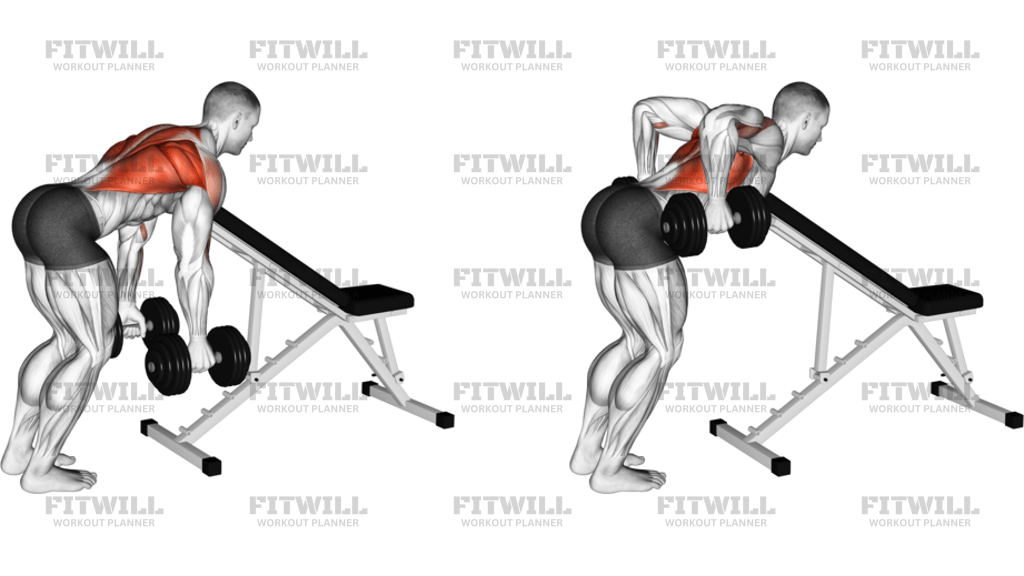
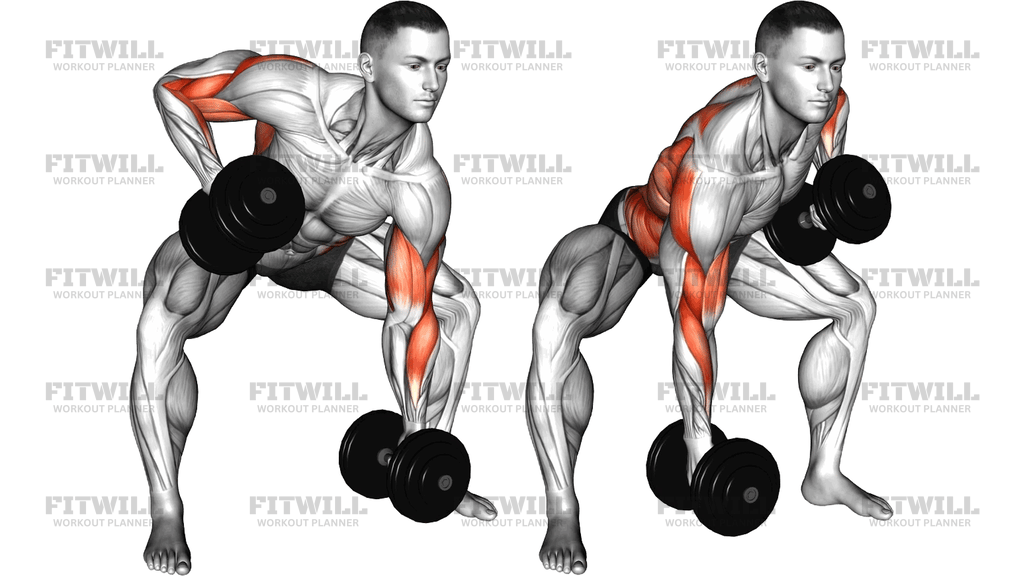
Dumbbell Bent-Over Row is a bent-hip pulling exercise that builds the lats, upper back, rear shoulders, biceps, and forearms while teaching you to hold a strong torso angle under load. Because the chest stays off the bench and the trunk has to stay fixed, the exercise rewards clean positioning and punishes sloppy reps quickly. It is a useful choice when you want back work that carries over to general strength, muscle gain, and better control in hip-hinged positions.
The row starts from a dead-hang under the shoulders and finishes when the dumbbells travel toward the lower ribs or the hip line. That path shifts the emphasis toward the lats and mid-back instead of turning the movement into a shrug or a standing pull. A neutral neck, a flat back, and steady pressure through the feet matter more here than in many other dumbbell exercises because the torso is doing part of the work.
Set up by hinging at the hips with a soft bend in the knees and the torso angled forward until the back is long and stable. Hold a dumbbell in each hand with the arms hanging straight down, then brace before the first pull so the shoulders do not drift forward. The best reps come from a position that you can keep nearly unchanged from the first rep to the last, not from swinging heavier weight.
During each rep, drive the elbows back and slightly in, keeping the dumbbells close to the legs as they rise. Squeeze the shoulder blades without jerking the torso upright, then lower the weights under control until the arms are fully extended and the back feels stretched again. Exhale as you row and inhale on the descent, and if the lower back starts to take over, shorten the set or reduce the load before your hinge collapses.
Dumbbell Bent-Over Row fits well in upper-body strength sessions, back-focused hypertrophy work, and accessory blocks after the main lift. It is especially helpful when you want to train unilateral balance, grip endurance, and scapular control without a machine fixing the path for you. If the hinge position bothers your lower back, a chest-supported row is a sensible substitute, but the bent-over version remains valuable when you can keep the torso angle and pull path honest.
[ Workout Log & Planner ]
Put your next workout in Fitwill
Keep your plan and training log ready when you are.


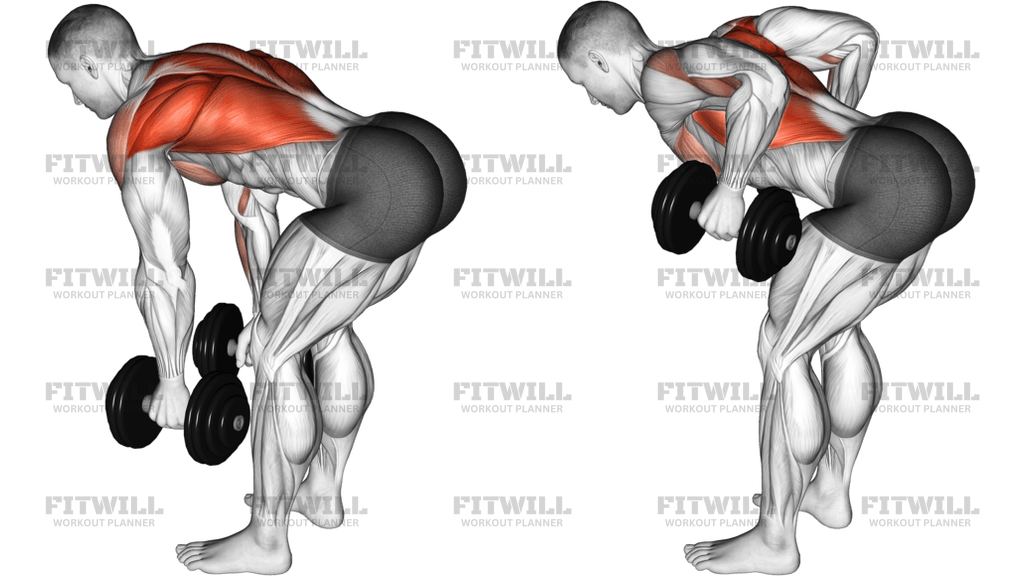
Instructions
- Stand with your feet about hip-width apart and hold a dumbbell in each hand in front of your thighs.
- Hinge your hips back until your torso is tipped forward and your arms hang straight under your shoulders.
- Keep a soft bend in your knees, your spine long, and your neck in line with the rest of your back.
- Brace your midsection before the first pull so your torso stays fixed when the weights leave the floor.
- Pull both elbows back toward your lower ribs or hips while keeping the dumbbells close to your legs.
- Squeeze your shoulder blades together at the top without standing up or shrugging toward your ears.
- Lower the dumbbells slowly until your arms are straight and your shoulders feel a controlled stretch.
- Inhale on the way down, exhale on the pull, and reset the hinge before the next repetition.
Tips & Tricks
- Keep the dumbbells close to your shins and knees; if they drift away from the body, the lower back has to fight the load.
- Think about rowing the elbows toward your back pockets, not lifting the hands toward your shoulders.
- If your torso rises on every rep, the set is too heavy or the hinge is too shallow.
- A brief pause near the top helps the lats and mid-back do the work instead of momentum.
- Do not let the shoulders roll forward at the bottom; keep a small amount of tension before each pull.
- Use a neutral grip if you want to keep the elbows tucked and the wrists quiet.
- If your grip fails before your back does, straps can help you keep the set on the target muscles.
- Lower the weights for at least two seconds so each rep starts from a controlled stretch, not a drop.
Frequently Asked Questions
What muscles does Dumbbell Bent-Over Row work?
Dumbbell Bent-Over Row mainly works the lats, rhomboids, mid-back, rear shoulders, biceps, and forearms. The hips and trunk also work hard to keep the torso angle steady.
How bent over should I be for Dumbbell Bent-Over Row?
Hinge forward until your torso is clearly angled over and your back stays long and braced. You do not need to be perfectly parallel to the floor, but you should be low enough that the dumbbells hang under your shoulders instead of in front of your knees.
Should the dumbbells travel toward my ribs or my hips?
Aim them toward the lower ribs or hip line. That path keeps the elbows tucked enough to hit the lats and upper back without turning the row into an upright shrug.
Is Dumbbell Bent-Over Row good for beginners?
Yes, if the load is light enough to keep the hinge and torso angle steady. Beginners often do better with fewer reps, a slower lowering phase, and a pause at the top.
Why do I feel Dumbbell Bent-Over Row in my lower back?
A little low-back effort is normal because you are hinged forward, but the set should not feel like a back extension exercise. If your torso keeps rising, reduce the weight and shorten the set before your hinge breaks.
Can I do Dumbbell Bent-Over Row one arm at a time instead?
Yes, the single-arm version is a useful variation if you want more support or a longer range. The two-dumbbell version keeps both sides working together and is better when you want a straightforward horizontal pull.
How many reps should I use for Dumbbell Bent-Over Row?
Most people do well with 8 to 15 controlled reps, depending on the goal. Use the lower end for heavier strength work and the higher end when you want more back volume with clean form.
What should I do if my grip gives out first?
Use chalk or straps if the forearms are failing before the back. The goal is to keep the dumbbells moving on a stable hinge, not to turn the set into a grip-only challenge.