Dumbbell Seated Palms Up Wrist Curl
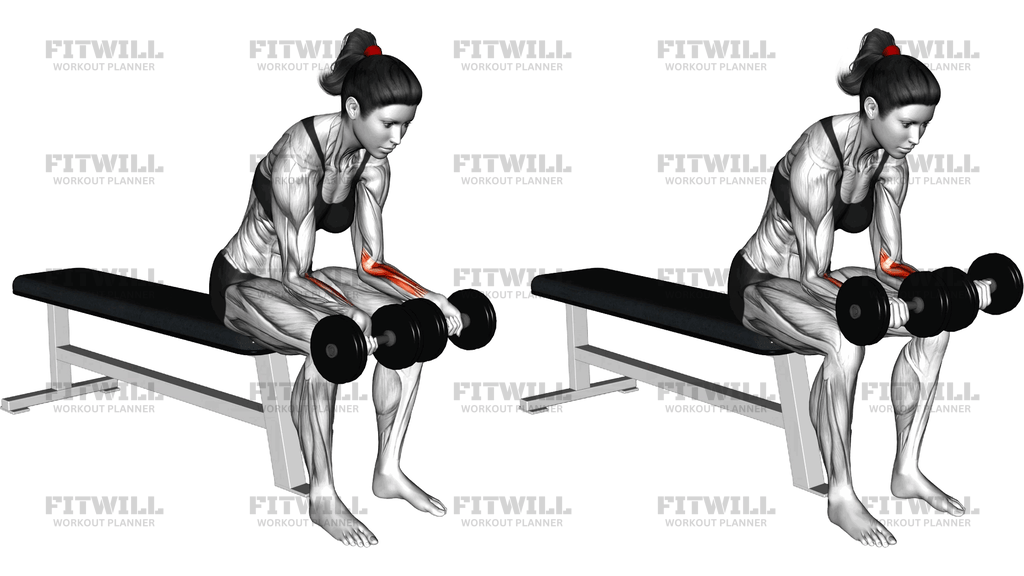
Dumbbell Seated Palms Up Wrist Curl is a seated forearm isolation exercise that trains wrist flexion against the pull of gravity. With the forearms supported on the thighs and the palms turned up, the movement asks the wrist flexors to do the work while the upper arms stay quiet. The image shows a simple setup: sit on a bench, brace the forearms on the thighs, let the dumbbells hang just past the knees, and curl the hands upward through the wrist only.
This exercise is most useful when you want direct forearm work for grip endurance, wrist control, or balanced arm development. The forearm position matters because it limits cheating and keeps the load on the small muscles that flex the wrist. If the elbows drift, the shoulders shrug, or the torso swings, the movement stops being a wrist curl and turns into a loose whole-arm lift. A good rep stays anchored from shoulder to elbow so the wrist joint can move cleanly.
Perform the curl by starting with the wrists slightly extended, then flexing them to bring the knuckles up and the dumbbells toward the forearms. Pause briefly at the top, where the forearm flexors are shortened, and lower slowly until you feel a controlled stretch through the underside of the forearm. The dumbbells should move in a short, deliberate arc. The wrists should not jerk, bounce off the thighs, or collapse into side-to-side deviation.
Use a light enough load to keep the motion strict. This is a small-range accessory movement, so quality matters more than weight. Smooth tempo, steady breathing, and a stable bench setup make the set more effective and much friendlier on the wrists and elbows. It fits well near the end of an upper-body session, after pulling work, or anywhere you want direct forearm volume without much systemic fatigue.
[ Workout Log & Planner ]
Put your next workout in Fitwill
Keep your plan and training log ready when you are.


Instructions
- Sit on the edge of a flat bench with your feet flat on the floor and the dumbbells resting in your hands, palms facing up.
- Lean forward slightly and place the backs of your forearms across the tops of your thighs, with your wrists and dumbbells hanging just past your knees.
- Keep your chest lifted, shoulders down, and elbows pinned in place so only the wrists move.
- Let the dumbbells settle into the lower part of the range with the wrists gently extended and the fingers relaxed but secure.
- Curl the dumbbells upward by flexing your wrists, bringing the knuckles toward the forearms in a short, controlled arc.
- Squeeze at the top for a moment without letting the elbows, shoulders, or torso help the lift.
- Lower the dumbbells slowly until the wrists open back to the starting stretch under control.
- Breathe out as you curl up and inhale as you lower, keeping every repetition smooth and deliberate.
- Repeat for the planned reps, then set the dumbbells down without dropping them or snapping the wrists straight.
Tips & Tricks
- Choose a light load first; wrist curls usually need far less weight than people expect.
- Keep the forearms planted on the thighs so the movement stays isolated at the wrist joint.
- Let the dumbbells roll slightly toward the fingers at the bottom if it feels comfortable, but do not lose control of the grip.
- Avoid curling the elbows upward, because that turns the exercise into a partial arm raise instead of a wrist curl.
- Use a slow lowering phase to build more work in the forearm flexors and to protect the wrists from snapping back.
- Keep the dumbbells moving in the same plane and avoid twisting them side to side during the rep.
- If you feel the front of the elbow more than the forearm, reduce the load and shorten the range until the setup is cleaner.
- Do not bounce the weights off your thighs at the bottom; restart each rep from a controlled stretch.
- Stop the set when your wrists start drifting or the dumbbells begin to wobble.
Frequently Asked Questions
What does the Dumbbell Seated Palms Up Wrist Curl train most?
It mainly trains the wrist flexors in the forearm, especially the muscles that bend the palm toward the underside of the forearm.
Why are the forearms supported on the thighs?
The thigh support keeps the upper arms still and makes the wrist joint do the work instead of the shoulders or elbows.
How far should I lower the dumbbells?
Lower them until the wrists are comfortably extended and you feel a forearm stretch, but stop before the position causes pain or the dumbbells lose control.
Should my elbows move during the curl?
No. Keep the elbows planted on the thighs so the movement stays concentrated at the wrists.
Can I do this one arm at a time?
Yes. Single-arm reps can make it easier to keep the wrist path clean and to notice side-to-side strength differences.
What weight should I use for seated palms-up wrist curls?
Use a very light dumbbell at first. If the forearms cannot control the full lowering phase, the load is too heavy.
What is the most common form mistake?
The biggest mistake is turning the rep into an arm swing by lifting the elbows, shrugging the shoulders, or bouncing the dumbbells off the thighs.
Is this exercise good for grip training too?
Yes. The grip works as a support, but the main goal is still wrist flexion and forearm control rather than a max grip squeeze.