Cable Kickback
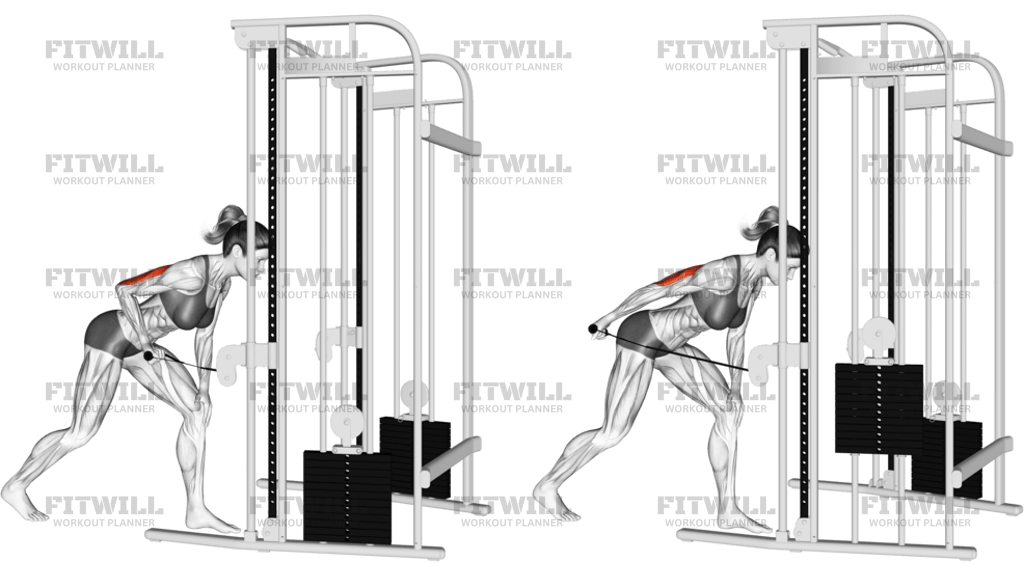
Cable Kickback is a single-arm triceps exercise performed with a low cable and handle attachment while you hinge forward and keep the upper arm fixed beside the torso. The movement isolates elbow extension, so the working arm straightens behind the body while the shoulder stays quiet and the torso remains braced. It is a simple setup, but the details matter: if the elbow drifts, the torso rises, or the wrist bends back, tension leaves the triceps and the set turns into a swing.
The exercise primarily trains the triceps brachii, especially through the hard lockout at the top of the kickback. The forearm, shoulder stabilizers, and core help hold the line of force steady, but they should not take over the rep. In practice, that makes Cable Kickback useful when you want direct arm work with a smooth cable resistance profile and a clear end-range contraction.
The best setup is a staggered stance or split stance with a slight hip hinge, chest angled toward the floor, and the free hand supporting the body on the thigh or machine frame. From there, the upper arm stays close to the ribcage, the elbow starts bent, and the handle sits just below or beside the hip. That position gives you a clean line of pull and keeps the triceps loaded before the rep even begins.
Each repetition should feel like an elbow-only swing from bent to straight. Push the handle back until the arm is fully extended and the triceps are tight, then return slowly until the forearm folds again without letting the shoulder roll forward. The cable should stay under control the whole time, with no body heaving, no shrugging, and no snapping through the top.
Use Cable Kickback as accessory triceps work after your main pressing or arm lifts, or as a lighter isolation movement when you want to spare the elbows and keep tension continuous. It is beginner-friendly when the load stays modest and the hinge is stable, but it also rewards advanced lifters who slow the return, lock the upper arm in place, and stop each rep just short of losing posture. If the lower back starts taking over, the cable is too heavy or the hinge is too loose.
[ Workout Log & Planner ]
Put your next workout in Fitwill
Keep your plan and training log ready when you are.


Instructions
- Set a low pulley on the cable machine and attach a handle.
- Stand facing the machine in a split stance and hinge forward at the hips.
- Place your free hand on your front thigh or the machine for support.
- Hold the handle with the working hand and start with the elbow bent and tucked close to your side.
- Brace your torso and keep your upper arm still, roughly in line with your ribcage.
- Extend the elbow to kick the handle back until the arm is straight behind you.
- Squeeze the triceps at the end of the rep without letting the shoulder roll or the torso rise.
- Lower the handle back under control until the elbow is bent again, then repeat for the planned reps.
Tips & Tricks
- Keep the upper arm glued to your side; if the elbow swings behind the torso, the movement turns into a shoulder extension.
- Use a small amount of torso hinge, not a deep bend that forces you to round your back.
- Choose a handle height and cable path that lets the forearm travel straight back without rubbing the thigh.
- Finish the rep with the elbow straight, but do not hard-lock and jerk the weight stack.
- Let the cable pull the forearm forward on the way down, then stop the return before the shoulder drifts.
- Keep the wrist neutral so the handle stays lined up with the forearm instead of folding back.
- Exhale as you kick back and inhale on the controlled return.
- Use lighter loads if you have to rock your torso or shrug to get the handle moving.
Frequently Asked Questions
What does Cable Kickback train most?
It mainly targets the triceps, especially through the elbow lockout at the back of the rep.
Why is the torso hinged forward instead of standing upright?
The forward hinge keeps the cable line behind you and makes it easier to isolate elbow extension without swinging the whole arm.
Should my elbow move during the kickback?
Only a little at the start and finish. During the rep, the upper arm should stay parked beside the ribcage while the forearm opens and closes.
Where should I feel the cable handle moving?
You should feel the handle travel straight back behind the hip, not out to the side or upward toward the shoulder.
Is this exercise okay for beginners?
Yes, as long as the weight is light enough to keep the hinge steady and the upper arm fixed.
What is the biggest form mistake on Cable Kickback?
The most common mistake is using momentum from the torso or shoulder instead of moving only at the elbow.
Do I need to lock out hard at the top?
No. Straighten the arm fully and squeeze the triceps, but do not snap the elbow or slam the weight stack.
What can I use instead of a cable kickback?
A dumbbell kickback or a triceps pressdown can fill a similar accessory role if a cable station is unavailable.