Cable Bench Press
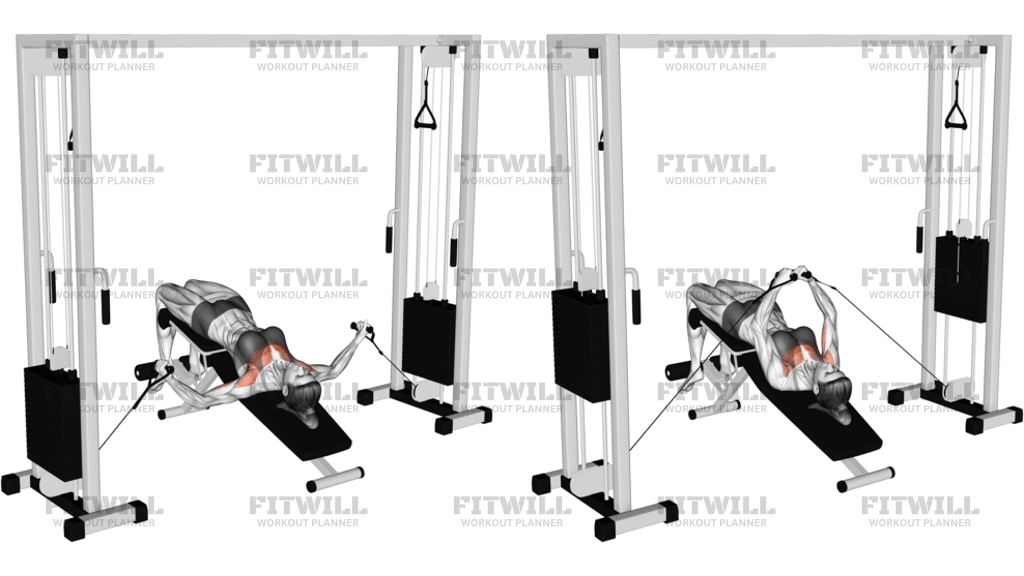
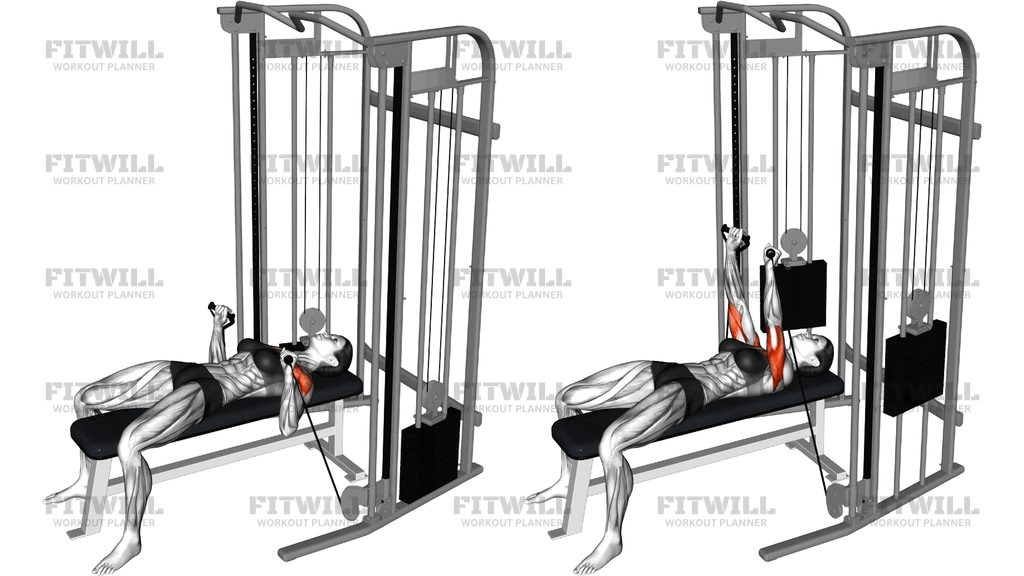
Cable Bench Press is a flat-bench pressing exercise performed inside a cable station with a handle in each hand. It trains the chest with a long, steady line of tension, while the front shoulders and triceps help finish each press. Because the cables keep pulling from the sides, the exercise rewards a controlled setup and a stable torso more than raw momentum.
The bench position matters. Lie centered between the two pulleys so both handles travel evenly, and set the bench far enough forward that the cables stay smooth throughout the rep. Keep your feet planted, your upper back lightly set into the pad, and your wrists stacked over the handles. That stable base lets you press cleanly without losing shoulder position or twisting toward one side.
Cable Bench Press is useful when you want a chest press that stays challenging through the top and bottom of the range. Unlike a barbell bench press, the resistance does not disappear at lockout, so you have to control the return as well as the press. That makes it a strong option for chest-focused accessory work, hypertrophy training, or any session where you want more time under tension without sacrificing joint-friendly mechanics.
Press the handles up and slightly inward in a smooth arc, then lower them until the elbows are back near chest level under control. Keep the shoulders down and away from the ears, and avoid letting the elbows drift so far back that the front of the shoulder feels jammed. The goal is a repeatable pressing path with steady breathing, not a bigger range that forces the bench or lower back to compensate.
This exercise works best when the load matches the machine and your body position. If the stack pulls you forward, the bench is too far back or the weight is too high. If your wrists bend back, your handles are too deep in the palm or the weight is drifting ahead of your forearms. When the setup is right, Cable Bench Press gives you a smooth chest press with clear tension from start to finish.
[ Workout Log & Planner ]
Put your next workout in Fitwill
Keep your plan and training log ready when you are.


Instructions
- Set a flat bench between the two cable stacks so each handle can move in a straight, even path to your chest.
- Lie back on the bench with your feet flat on the floor, shoulders and upper back settled, and your head resting neutral.
- Hold one handle in each hand at chest level with your wrists stacked over your forearms and your elbows slightly below shoulder height.
- Pull your shoulder blades gently back and down so your chest is open without arching your lower back hard.
- Brace your torso, keep your ribs down, and start each rep with the handles just outside the chest.
- Press both handles upward and slightly inward until your arms are nearly straight without locking hard.
- Pause briefly at the top while keeping tension on the cables and your shoulders quiet.
- Lower the handles back under control until the elbows return near chest level and the stretch stays comfortable.
- Breathe out as you press and inhale as you lower, then reset your shoulders before the next rep.
Tips & Tricks
- Set the bench position first; if the handles pull diagonally or unevenly, move the bench rather than forcing the rep.
- Keep the wrists vertical over the handles so the cable line stays stacked through the forearm instead of bending the wrist back.
- Lower until the upper arms are just below chest level, but stop before the front of the shoulder feels pinned or unstable.
- Use a smooth inward arc on the way up, but do not let the handles crash together or lose tension at the top.
- Keep your feet planted and legs active so the torso stays fixed instead of sliding toward the pulleys.
- A moderate load usually works better than a heavy one because the cable resistance stays constant and exposes sloppy control quickly.
- If your shoulders rise toward your ears, reduce the weight and reset the shoulder blades before continuing.
- A slight pause near the bottom can help you own the stretched position without bouncing off the chest.
- Stop the set when one handle starts drifting higher or wider than the other.
Frequently Asked Questions
What muscle does Cable Bench Press target most?
The chest is the main target, with the front shoulders and triceps helping drive the press.
Can beginners perform this exercise?
Yes. It is beginner-friendly if the bench is centered correctly and the load is light enough to keep the handles moving evenly.
Where should the bench sit in the cable station?
Place it so both handles line up with your chest and the cables stay smooth from the bottom of the rep to the top.
Should my elbows flare out during the press?
Keep them slightly below shoulder height and avoid extreme flaring, which can make the front of the shoulder feel crowded.
What should I feel at the top of the rep?
You should feel steady chest tension with the cables still under control, not a hard clank of the handles or a shrug in the shoulders.
Why use a cable version instead of a barbell bench press?
The cables keep tension on the chest through the whole range, which is useful for controlled hypertrophy work and cleaner technique practice.
Can I press one handle at a time?
Yes, single-arm pressing works well if you want to challenge anti-rotation control and keep each side honest.
What is the most common setup mistake?
Setting the bench too far from the pulleys, which makes the handles drift off the right pressing line and forces the shoulders to compensate.