Dumbbell One-Arm Wrist Curl _forearm
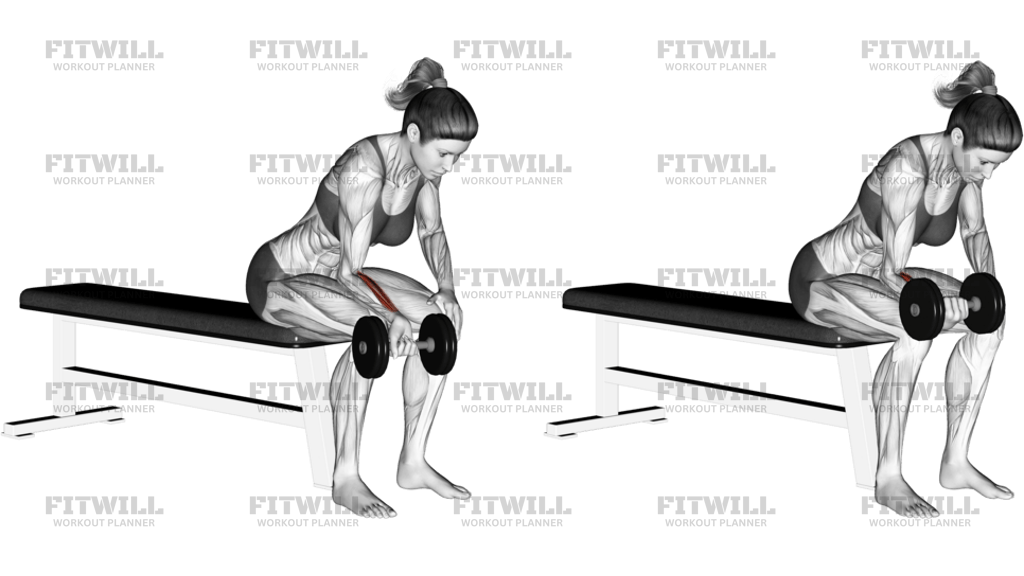
Dumbbell One-Arm Wrist Curl is a seated forearm isolation exercise that trains the wrist flexors through a short, controlled range of motion. In the image, the working arm is braced on the thigh with the palm facing up, which keeps the forearm still while the wrist does the work. That support matters: when the forearm is anchored, you can load the flexors directly without turning the rep into a shoulder, elbow, or torso movement.
This exercise is useful for building forearm size, wrist strength, and the kind of grip endurance that carries over to pulling, rowing, deadlifting, climbing, and racket sports. Because the lever is small and the range is short, the movement responds best to strict execution rather than heavy loading. The working hand should travel only at the wrist joint, while the upper arm stays quiet and the forearm stays planted.
Start with a light dumbbell and sit on a bench with your feet flat and the working forearm resting across the same-side thigh. Let the hand hang just past the knee so the wrist can move freely, then curl the dumbbell by flexing the wrist and letting the knuckles rise toward the forearm. Lower under control until the wrist is extended comfortably, then repeat without bouncing the weight off the bottom.
The setup is what makes the rep honest. If the elbow drifts, the shoulder lifts, or the torso sways, the load shifts away from the forearm flexors and the movement stops being a true wrist curl. Keep the non-working hand available to steady the forearm if needed, and use a smooth breathing pattern so the wrist can stay relaxed at the bottom and decisive at the top.
Use this exercise as accessory work after compound lifts, during an arm or forearm block, or anywhere you want to strengthen the wrist and forearm without fatigue from large whole-body movements. It is beginner-friendly when the load stays light and the forearm support is solid, but it rewards patience: clean reps, a controlled eccentric, and a consistent wrist path will produce far better results than chasing momentum or range that the joint cannot control comfortably.
[ Workout Log & Planner ]
Put your next workout in Fitwill
Keep your plan and training log ready when you are.


Instructions
- Sit on a flat bench with one foot planted and the working forearm resting across the same-side thigh, palm facing up.
- Let the wrist hang just off the knee so the hand can move freely while the forearm stays supported.
- Hold the dumbbell with a relaxed grip and keep the shoulder dropped instead of shrugging toward the ear.
- Lower the dumbbell by opening the wrist until you feel a strong stretch through the underside of the forearm.
- Curl the weight upward by flexing only at the wrist, bringing the knuckles toward the forearm.
- Pause briefly at the top without rolling the elbow or lifting the upper arm off the thigh.
- Lower the dumbbell slowly to the start, keeping tension on the forearm instead of letting the weight fall.
- Breathe out as you curl up and breathe in as you lower back down.
- Finish the set by setting the dumbbell down before changing sides.
Tips & Tricks
- Keep the forearm pinned to the thigh; if the elbow slides forward, the rep stops being a wrist curl.
- Use a smaller dumbbell than you think you need, because the lever arm makes this movement feel heavy quickly.
- Let the wrist travel through a smooth arc instead of snapping the hand up at the top.
- Pause for a beat at the top only if you can keep the forearm still and the grip relaxed.
- Lower the dumbbell under control for at least as long as the lifting phase to keep the flexors working.
- If your fingers start to open or the dumbbell rolls, reduce the load before form breaks down.
- Keep the non-working hand close in case you need to steady the forearm or help reset the grip.
- Avoid leaning your torso back or twisting the shoulder to fake extra range.
- Use higher reps and strict tempo when training forearm endurance or grip support.
- Stop short of any wrist pain on the stretch side; the goal is forearm loading, not joint irritation.
Frequently Asked Questions
What does the dumbbell one-arm wrist curl work most?
It mainly targets the wrist flexors and the muscles on the palm side of the forearm.
Why is the forearm resting on the thigh?
The thigh support isolates the wrist so the forearm can stay still while the hand moves through the curl.
Should my elbow move during the rep?
No. The elbow should stay planted on the thigh so the motion comes from the wrist only.
How heavy should the dumbbell be for this exercise?
Light to moderate is usually enough. If you have to swing, shrug, or lift the forearm, the weight is too heavy.
What is the most common form mistake?
The most common mistake is turning the movement into a shoulder or elbow lift instead of a wrist curl.
Can I do this exercise with both arms at once?
You can, but doing one arm at a time makes it easier to keep the forearm anchored and the wrist path strict.
Where should I feel the stretch?
You should feel it along the underside of the forearm and into the wrist flexors, not sharp pain in the joint.
Is this a good exercise after back or pull day?
Yes. It works well as accessory work after pulling exercises, when grip and forearm endurance are already being challenged.
How many reps should I use?
This movement is usually best in moderate to higher reps with slow control, since the goal is clean forearm tension rather than maximal load.