Dumbbell Reverse-Grip Incline Bench One-Arm Row
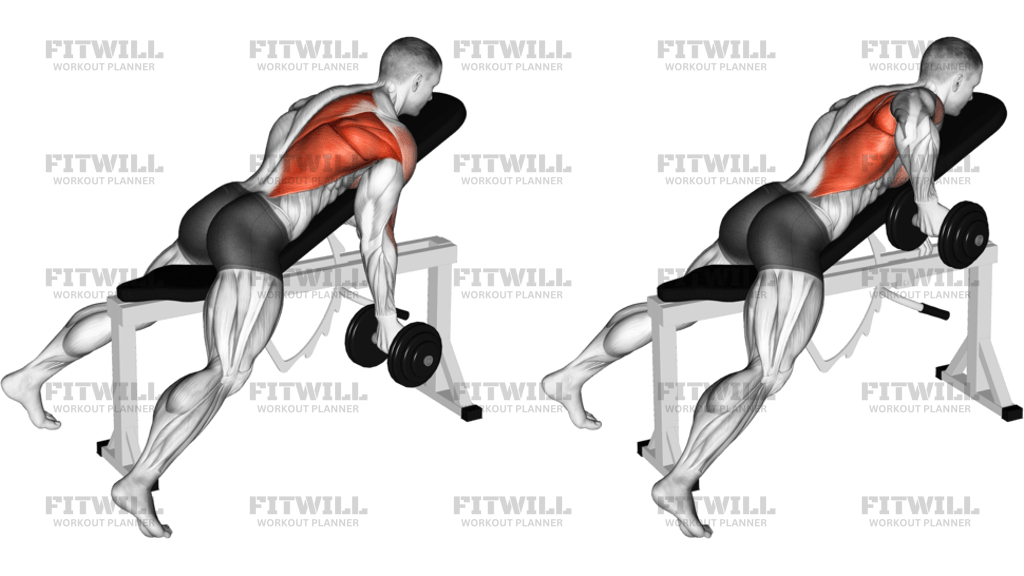
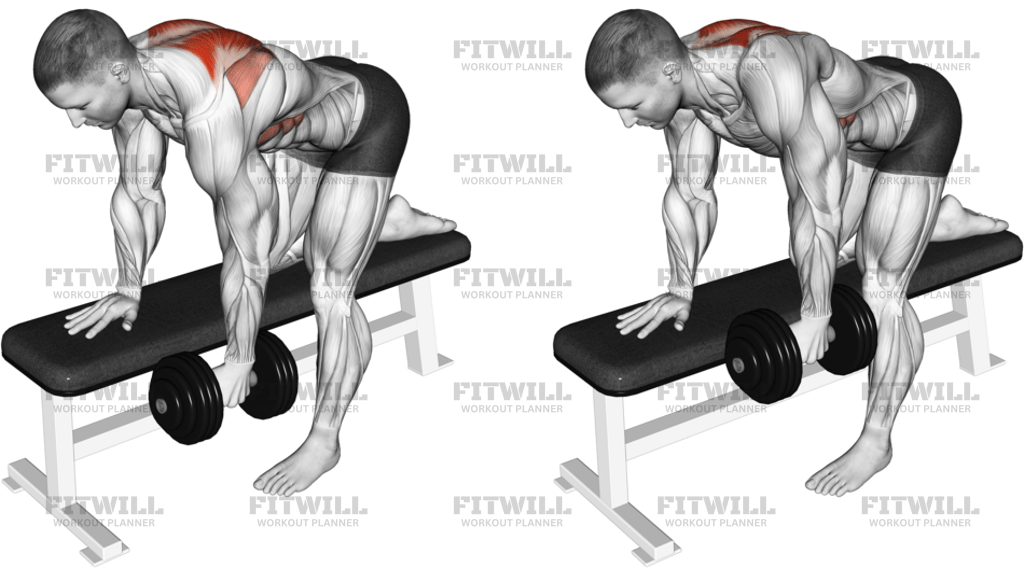
Dumbbell Reverse-Grip Incline Bench One-Arm Row is a chest-supported pulling exercise that uses an incline bench and a single dumbbell to train one side at a time. The reverse, underhand grip changes the shoulder position and lets you keep the elbow tucked while you pull, which makes the rep feel strict and controlled instead of loose and swinging. Because your torso is supported on the bench, the exercise is useful when you want to train the upper back hard without asking the lower back to stabilize the whole load.
The setup matters more here than it does in a standing row. Place the bench at a moderate incline, usually around 30 to 45 degrees, then lie face-down with your chest and upper ribs supported on the pad. Plant the opposite foot wide and stable on the floor so your body does not roll as you row. Let the working arm hang straight down with the palm facing up or forward, and keep the shoulder relaxed at the bottom so you start from a long but controlled reach.
Each repetition should begin by pulling the elbow back toward the hip line rather than curling the dumbbell with the hand. Keep the wrist straight, keep the chest in contact with the bench, and finish when the dumbbell reaches the lower ribs or the side of the torso. A brief squeeze at the top helps the scapula move cleanly, but the rep should still look smooth. On the way down, lower the weight slowly until the arm is extended again and the shoulder blade can move forward without losing position.
This row is a good accessory lift for back development, unilateral balance, and posture work after your main pressing or pulling exercises. It can emphasize the lats, rhomboids, mid-back, rear delts, and biceps while keeping momentum low. Use a load that lets you keep the torso square to the bench, and stop the set if you have to twist your ribs, shrug hard, or turn the movement into a swing. The best version of this exercise feels steady, deliberate, and identical from the first rep to the last.
Fitwill
Log Workouts, Track Progress & Build Strength.
Achieve more with Fitwill: explore over 9600 exercises with images and videos, access built-in and custom workouts, perfect for both gym and home sessions, and see real results.
Start your journey. Download today!




Instructions
- Set an incline bench to about 30 to 45 degrees and lie face-down so your chest and upper ribs are supported on the pad.
- Plant the non-working foot wide on the floor and let the working arm hang straight down with a dumbbell in an underhand grip.
- Keep the wrist straight, the shoulder relaxed, and your torso square to the bench before the first rep.
- Brace your midsection and pull the elbow back toward your hip line instead of curling the dumbbell with your hand.
- Keep the elbow close to your side and draw the weight up until it reaches the lower ribs or the side of the torso.
- Pause briefly at the top while keeping your chest pressed into the bench and your neck long.
- Lower the dumbbell slowly until the arm is nearly straight and the shoulder can reach forward again without twisting.
- Finish the set on one side, reset your position, then repeat on the other side for the planned reps.
Tips & Tricks
- A moderate bench angle usually makes it easier to keep the pull strict; a very steep angle turns the rep into more of a shrug.
- Keep the dumbbell path tucked close to the bench and finish near the lower ribs or hip line, not high toward the shoulder.
- Do not let the chest peel off the pad to chase more range; if you have to twist, the load is too heavy.
- Think about driving the elbow back first and the hand second, which helps keep the reverse grip from turning into a curl.
- Keep the wrist stacked over the forearm so the dumbbell does not roll open at the top of the rep.
- Use a short pause at peak contraction if you want more upper-back tension without adding weight.
- Lower the dumbbell slowly enough that the shoulder blade can glide forward under control, but do not fully relax at the bottom.
- Match the reps and range on both sides before you add load, because the one-arm setup makes imbalances easy to hide.
Frequently Asked Questions
What muscles does the dumbbell reverse-grip incline bench one-arm row work?
It mainly trains the upper back and lats, with the rear delts, rhomboids, traps, and biceps helping during the pull.
Why use an incline bench for this row?
The bench supports your torso so you can row with less body English and more tension on the working side.
Why is the grip underhand or reverse grip?
The underhand grip helps keep the elbow tucked and often makes it easier to feel the lat and lower-rib path of the row.
Where should the dumbbell finish at the top?
For most lifters it should land near the lower ribs or the side of the torso, not up near the armpit or shoulder.
Should my chest stay on the bench the whole time?
Yes. A small amount of shift is normal, but the torso should stay supported so the movement does not turn into a twist.
What is the most common mistake with this row?
People usually shrug, twist open, or turn the pull into a curl instead of driving the elbow back in a straight, controlled line.
Can beginners use this exercise?
Yes. The bench support makes it beginner-friendly if the load stays light enough to keep the torso still and the wrist straight.
What if I feel it too much in my shoulder?
Shorten the range slightly, lower the bench angle, and keep the elbow closer to the ribs so the shoulder does not flare forward.