Lever Bent-Over Row With Chest Support
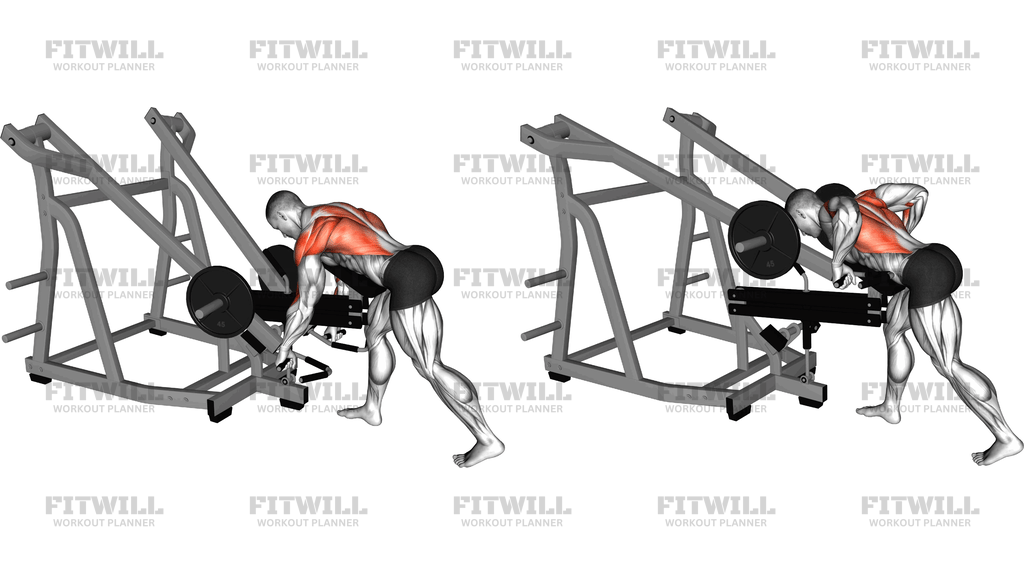
Lever Bent-Over Row With Chest Support is a machine row built for strict back training with almost no body English. The angled pad fixes your torso in place so the movement comes from the upper back, lats, rear delts, and biceps instead of a loose hinge. That makes it a useful choice when you want heavy-enough rowing without turning the set into a lower-back endurance test.
The chest support changes the feel of the row. You can stay braced, keep the ribs down, and focus on pulling the elbows back with a cleaner line of force. It is especially helpful for lifters who want more controlled back volume, beginners learning how to row without swinging, or anyone who needs to spare the spine after deadlifts, squats, or free-weight rows.
Set the pad so your chest can press firmly into it while your arms reach the handles without your shoulders collapsing forward. Grip the neutral handles, plant your feet in a stable stagger or shoulder-width stance, and keep your neck long. At the start of each rep, let the shoulder blades reach forward slightly, then drive the elbows back until the handles arrive near the lower ribs or upper waist.
The pause at the top matters because that is where the shoulder blades finish retracting and the back has to do the work, not momentum. Lower the weight under control until the arms are nearly straight and the upper back gets a full stretch, but stop before the shoulders roll forward or the chest comes off the pad. Exhale as you pull, inhale as you return, and keep the reps smooth rather than jerky.
Lever Bent-Over Row With Chest Support fits well in back-focused sessions, hypertrophy blocks, or any workout where you want a hard row without the technique breakdown that often comes from unsupported hinges. Use a load that lets you keep the pad contact, elbow path, and brief squeeze identical on every rep. If your shoulders shrug, your hips leave the pad, or the handles drift too high, the set is too heavy or the machine is set up poorly.
[ Workout Log & Planner ]
Put your next workout in Fitwill
Keep your plan and training log ready when you are.


Instructions
- Set the chest pad so your sternum and upper abdomen can press firmly into it while your arms reach the handles at the bottom of the stroke.
- Plant your feet in a stable stagger or shoulder-width stance and keep a soft bend in your knees so you can stay glued to the pad.
- Grab the neutral handles with straight wrists, let your shoulders reach forward slightly, and keep your neck long.
- Brace your trunk against the pad, then start the pull by driving your elbows back instead of yanking with your hands.
- Pull the handles toward your lower ribs or upper waist and keep your chest in contact with the pad.
- Squeeze your shoulder blades together for a brief pause at the top without shrugging your shoulders.
- Lower the handles slowly until your arms are almost straight and you feel a controlled stretch across the back.
- Exhale as you pull, inhale as you lower, and keep the tempo smooth on every rep.
- Reset your stance and reduce the load if you cannot keep the same chest contact and elbow path.
Tips & Tricks
- Match the pad height to your torso so the handles finish near your lower ribs; if the machine sits too high, the row turns into a shrug.
- Keep the elbows slightly tucked so the pull finishes through the lats and mid-back instead of turning into a rear-delt flare.
- Think about bringing the handles back with your elbows, not your hands; that keeps the biceps from taking over early.
- Pause for a beat at the top to remove momentum and make the chest-supported position do its job.
- Use a slower lowering phase than the pull so the shoulders stay packed and the back stays under tension.
- If the front of the shoulders feel pinched, shorten the range slightly and keep the ribs from collapsing into the pad.
- A light staggered stance helps many lifters stay stable, but the back foot should not drive the torso away from the pad.
- Stop the set when your shoulders start to shrug or your lower back has to help finish the rep.
- Choose a load that lets every rep touch the same points on the pad and machine handles.
Frequently Asked Questions
What muscles does Lever Bent-Over Row With Chest Support train most?
It mainly trains the lats, rhomboids, mid traps, rear delts, and biceps, with the chest support reducing how much the lower back has to stabilize.
Is Lever Bent-Over Row With Chest Support good for beginners?
Yes. The pad removes a lot of balance demands, so beginners can learn a cleaner rowing path without swinging or overusing the lower back.
Where should I pull the handles on Lever Bent-Over Row With Chest Support?
Aim the handles toward your lower ribs or upper waist. Pulling too high usually turns the rep into a shrug and reduces back tension.
Should my chest stay on the pad the whole time?
Yes. Keeping your chest planted on the pad is what makes Lever Bent-Over Row With Chest Support a strict row instead of a loose hinge row.
How wide should my elbows be on Lever Bent-Over Row With Chest Support?
Keep them slightly tucked, with only a small flare if the machine path requires it. Extreme flaring usually shifts the work away from the lats and into the rear delts.
What if I feel Lever Bent-Over Row With Chest Support in my shoulders instead of my back?
Lower the load, keep your shoulders down, and stop the pull when the handles reach your lower ribs. If the range is too deep or the machine is set too high, the shoulders often take over.
Can I use a full stretch on the return of Lever Bent-Over Row With Chest Support?
Yes, but only until the shoulders reach a controlled forward reach. Once the chest starts leaving the pad or the upper back rounds hard, the stretch is too far.
How is Lever Bent-Over Row With Chest Support different from a regular bent-over row?
The chest pad removes most of the torso sway and low-back demand, so the set becomes more about upper-back and lat tension than about holding a hinge under fatigue.