Cable Hip Abduction Toe Out
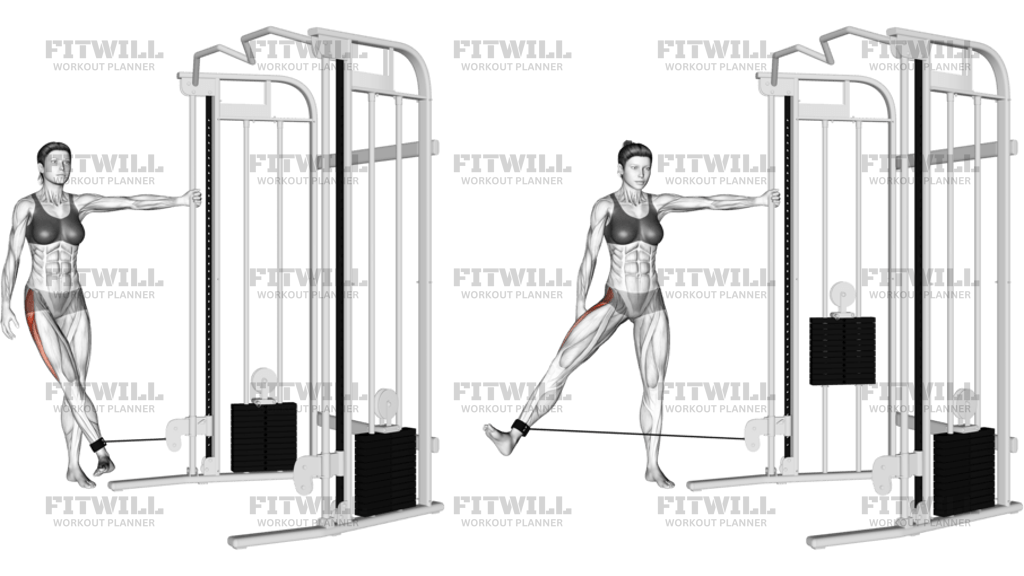
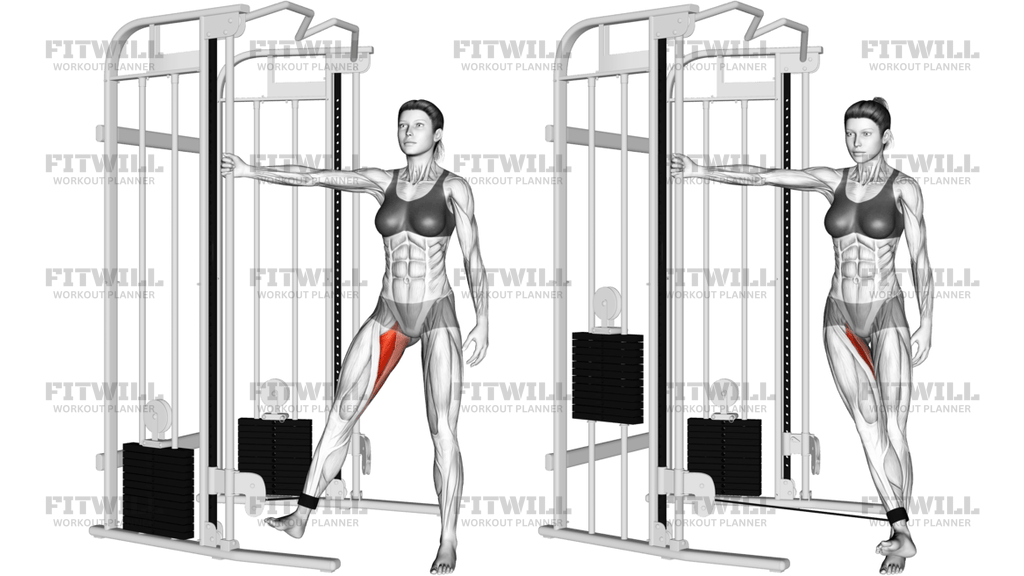
Cable Hip Abduction Toe Out is a standing cable exercise for the outer hips that uses a low pulley and ankle attachment to train the leg as it moves away from the body. The toe-out setup slightly changes the line of pull, so the movement asks for more attention to hip position, pelvic control, and where you start the rep. It is useful when you want to build the glutes and hip stabilizers without turning the set into a swinging leg raise.
The exercise works best when the support side stays quiet and the working leg does the moving. A firm hand on the tower, a soft knee on the standing leg, and a tall torso help keep the pelvis level while the cable leg opens out to the side. When the setup is wrong, the rep usually turns into trunk lean, hip hike, or a rushed kick that shifts the load away from the outer hip.
The toe-out angle should be small rather than exaggerated. Point the toes only slightly outward, then lift the cable leg out and a little back with the heel leading so the hip does the work instead of the low back or momentum. The best reps feel smooth, controlled, and repeatable, with a brief pause at the top and a slow return that never lets the stack yank the leg back in.
Cable Hip Abduction Toe Out fits well as an accessory exercise in lower-body strength work, glute-focused sessions, warm-ups, or rehab-style training when the goal is to sharpen hip control rather than chase heavy loading. It can be beginner-friendly because the range is easy to scale and the cable gives clear feedback, but the light load should still be chosen carefully so the pelvis does not twist and the standing side does not collapse.
Treat each side separately and give both sides the same stance, cable tension, and tempo. If the outer thigh or front of the hip takes over, shorten the range and slow the lowering phase until the glute-driven path feels clean. Cable Hip Abduction Toe Out is a small movement on paper, but it is most effective when the body stays organized enough to make every rep look the same.
[ Workout Log & Planner ]
Put your next workout in Fitwill
Keep your plan and training log ready when you are.


Instructions
- Clip the ankle strap to the low pulley and stand sideways to the stack with the working leg farthest from the machine and your support hand holding the upright.
- Step out until the cable has light tension, keep the standing knee softly bent, and stack your ribs over your hips.
- Turn the working foot slightly out so the toes point a little away from straight ahead, then set the pelvis level before you start.
- Let the cable leg begin close to the standing leg without leaning your trunk into the tower.
- Brace your midsection and drive the strapped leg out to the side, leading with the heel rather than flicking the foot.
- Keep the toes only slightly turned out as the leg travels so the hip opens without twisting your torso.
- Lift until the pelvis starts to hike or the torso wants to sway, then pause for a moment in the open position.
- Lower the leg slowly back toward the start and keep tension on the cable instead of letting the stack pull you back.
- Reset your stance, finish the reps on one side, then switch sides and match the same range and tempo.
Tips & Tricks
- Keep a light hold on the tower so the support arm steadies you without helping the leg swing.
- A small toe-out angle is enough; if you turn the foot too far, the rep often becomes a twist instead of a pure abduction.
- Lead with the heel and keep the toes from pointing sharply up, which helps the outer hip stay in control.
- Stop the lift when the standing hip starts to rise instead of forcing extra height.
- Use a shorter range if your torso leans away from the machine or the cable leg starts to cross in front of the body.
- Lower the leg slower than you lift it so the working side stays loaded through the return.
- Choose a load that lets the cable move smoothly; if the stack jerks, the resistance is too heavy for this pattern.
- Keep the standing foot planted and avoid rolling onto the outside edge as the cable pulls you sideways.
- Exhale as the leg opens and inhale on the controlled return to keep the trunk from tightening up.
Frequently Asked Questions
What muscles does Cable Hip Abduction Toe Out work?
It mainly targets the outer hips and glutes, especially the hip stabilizers that help the pelvis stay level. The standing leg and core also work to keep you from leaning into the tower.
Can beginners do Cable Hip Abduction Toe Out?
Yes, as long as the load is light enough to keep the torso still and the cable leg moving smoothly. Start with a short range and only open the leg as far as you can keep the pelvis square.
Why do I turn the toe out on Cable Hip Abduction Toe Out?
A slight toe-out angle changes how the hip opens and can make the outer glute feel more engaged. Keep it subtle, though, because an exaggerated turnout usually turns the rep into a twist.
How far should I lift the cable leg?
Lift only until the pelvis starts to hike or the torso wants to drift away from the machine. For this exercise, a cleaner half-range is better than forcing a high leg swing.
Should I lean my torso during Cable Hip Abduction Toe Out?
No. Keep the ribs stacked over the hips and use the hand on the tower only for balance, not to pull yourself into the movement.
What is the biggest mistake on this exercise?
The most common mistake is swinging the leg and letting the body drift sideways. Slow the return down and keep the standing foot rooted so the cable stays honest.
Do I need a cable machine, or can I swap Cable Hip Abduction Toe Out for something else?
A cable machine with an ankle strap gives the cleanest tension, but a banded standing abduction can work if you need a home variation. The key is still the same: stable torso, level pelvis, and controlled sideward hip motion.
Why do I feel this in my standing leg?
Some work in the standing leg is normal because it has to hold you upright while the cable pulls sideways. If it takes over completely, reduce the load or shorten the range until the cable leg is doing the main job.