Resistance Band Hip Thrust
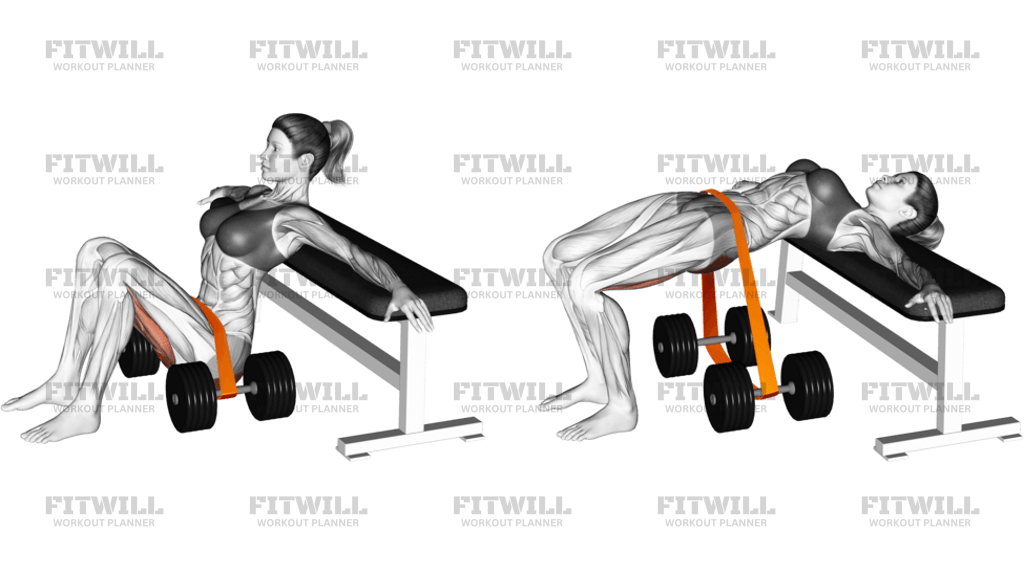
Resistance Band Hip Thrust is a glute-focused bridge variation performed with the upper back supported on a bench and a resistance band adding tension across the hips. It is a practical strength and hypertrophy exercise for building the glutes with less spinal loading than many standing lifts, while still asking the core and hamstrings to hold the torso and pelvis steady.
The setup matters because the bench position, foot placement, and band placement decide whether the rep feels like a clean hip extension or a low-back compensation. Your shoulder blades should rest near the edge of the bench, your feet should stay planted, and the band should sit securely across the hip crease without slipping. When the feet are placed well, the top position usually leaves the shins close to vertical and the torso in a straight line from shoulders to knees.
A good Resistance Band Hip Thrust starts from a braced bottom position, then finishes with the hips driven up by the glutes rather than by arching the ribs and lower back. The lift should feel smooth and deliberate: push through the heels and midfoot, keep the chin tucked, and finish each rep by squeezing the glutes hard at lockout. The return should be controlled so the band stays under tension and the hips do not drop suddenly.
This exercise is useful as an accessory on lower-body days, a glute-builder when you want a more portable option than barbells or machines, or a warm-up pattern before squats, deadlifts, and lunges. It can also help lifters who want to reinforce hip extension without bouncing through the lower back. The band should add resistance without changing the path of the rep; if it rolls, pinches, or pulls the hips off line, reset the setup before continuing.
Use lighter band tension if you are learning the movement or if your pelvis tucks and your lower back starts doing the work at the top. Stop the set when you can no longer keep the bench contact, foot pressure, and hip line consistent. Clean reps with a strong glute squeeze are more valuable here than forcing a bigger range or chasing fatigue with sloppy lockouts.
Fitwill
Log Workouts, Track Progress & Build Strength.
Achieve more with Fitwill: explore over 9600 exercises with images and videos, access built-in and custom workouts, perfect for both gym and home sessions, and see real results.
Start your journey. Download today!




Instructions
- Sit on the floor with your upper back against the edge of a flat bench and place the resistance band securely across the crease of your hips.
- Bend your knees and plant your feet flat about hip-width apart so your shins will be close to vertical at the top of the lift.
- Rest your shoulder blades on the bench, lightly hold the bench edges with your hands, and tuck your chin to keep your neck long.
- Brace your abdomen and press through your heels and midfoot to lift your hips off the floor.
- Drive your hips up until your torso forms a straight line from shoulders to knees without arching your lower back.
- Squeeze your glutes hard at the top and keep the band centered across your hips.
- Lower your hips slowly until they are just above the floor, keeping tension on the band and pressure through your feet.
- Reset your breath and foot placement, then repeat for the planned number of repetitions.
Tips & Tricks
- Keep the bench edge under your shoulder blades, not under your neck or midback, so the torso can pivot cleanly.
- Place the band high enough on the hips that it stays flat instead of biting into the pelvis on every rep.
- If your knees drift far forward at the top, walk your feet a little farther from the bench to bring the shins back toward vertical.
- Do not finish by flaring your ribs; the top should come from hip extension, not a hard lumbar arch.
- A one-second squeeze at lockout helps the glutes do the work and reduces bouncing off the bottom.
- If you feel the hamstrings cramping, shorten the range slightly and check that your feet are not tucked too close to the bench.
- Keep pressure through the whole foot, especially the heel and outer midfoot, so the hips rise instead of the torso rocking.
- Use a lighter band if the setup twists your pelvis or pulls one hip higher than the other.
- Exhale as you drive up and inhale as you lower so your ribs stay stacked over the pelvis.
- Stop the set when the band starts sliding or the lower back takes over the top position.
Frequently Asked Questions
What muscles does Resistance Band Hip Thrust work most?
It mainly targets the glutes, with the hamstrings and core helping stabilize the pelvis and torso.
Is Resistance Band Hip Thrust beginner friendly?
Yes. A light band and bodyweight-only setup make it a good way to learn hip extension before moving to heavier thrust variations.
Where should the band sit during Resistance Band Hip Thrust?
The band should stay centered across the crease of the hips so it adds tension without slipping toward the stomach or thighs.
How high should I lift my hips in Resistance Band Hip Thrust?
Lift until your shoulders, hips, and knees make a straight line. If you keep going by arching your lower back, the glutes usually stop doing most of the work.
Why do my hamstrings take over in this exercise?
Your feet may be too close to the bench or you may be finishing with the hips instead of the glutes. Move the feet slightly farther out and focus on squeezing the glutes at the top.
Can I use Resistance Band Hip Thrust instead of a barbell hip thrust?
Yes, it is a solid lighter variation for home training, warm-ups, or higher-rep accessory work when you want less external load.
What should I do if the band keeps sliding during the set?
Reset it higher on the hips, make sure it lies flat, and check that your bench and foot pressure are even before you start the next rep.
Should I pause at the top of Resistance Band Hip Thrust?
A brief pause is useful because it makes the glutes finish the rep instead of letting momentum or a quick bounce hide poor control.