Resistance Band Elevated Glute Bridge
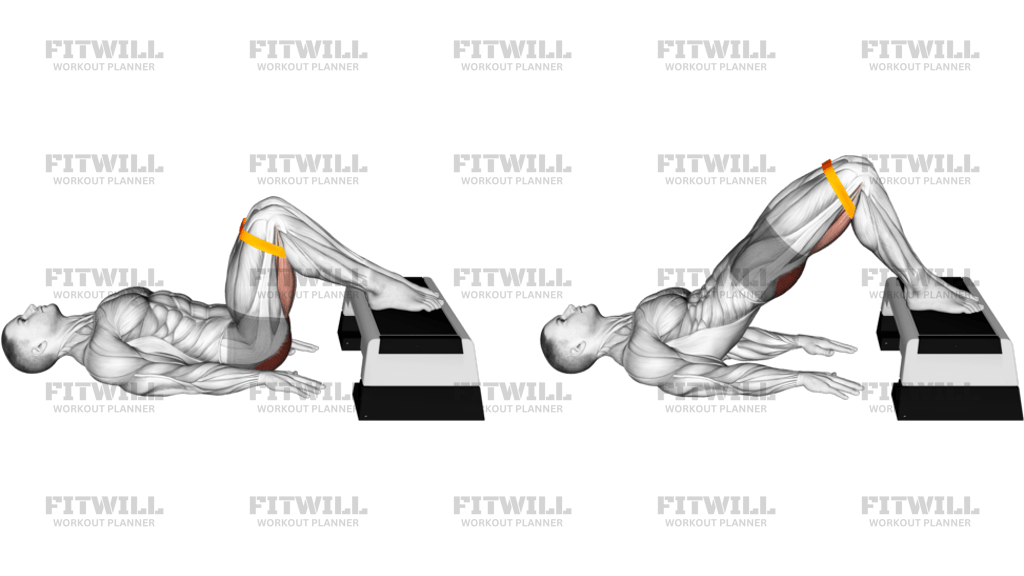
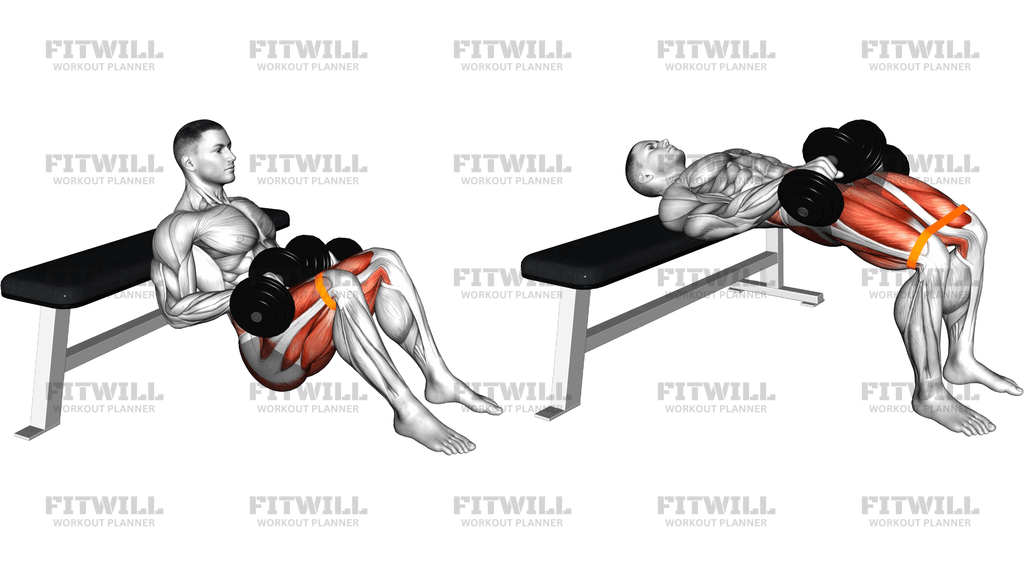
Resistance Band Elevated Glute Bridge is a glute-focused bridge variation where the feet are elevated on a bench or step and a band above the knees adds outward tension. The elevated foot position lets the hips travel through a slightly longer range than a floor bridge, which can make the top squeeze more demanding and bring the hamstrings and core into the job as stabilizers.
This movement is useful when you want simple lower-body strength work without loading the spine heavily. It is especially effective for lifters who need better hip extension, stronger glute lockout, or more control around the pelvis and ribs. The band matters because it keeps the thighs active and reminds the knees to stay aligned instead of collapsing inward as fatigue sets in.
The setup should be precise before the first rep. Lie on your back with your shoulders and upper back on the floor, place both feet on the bench or step, and position the band just above the knees. Your heels should stay planted, your feet should stay about hip-width apart, and your knees should track in line with the toes so the glutes can drive the motion instead of the low back taking over.
Each repetition starts by bracing lightly, then driving the hips upward until the torso and thighs form one strong line. At the top, the glutes should finish the rep, not a hard arch through the lower back. Lower under control and keep tension in the band so the knees do not cave in as the hips descend. That controlled return is important because it keeps the work on the glutes rather than letting momentum and a loose pelvis finish the set for you.
Resistance Band Elevated Glute Bridge fits well in warm-ups, accessory blocks, activation work, and home sessions where you want targeted glute training with minimal equipment. It is also a practical option for beginners who need a clear bridge pattern before progressing to heavier loaded hip thrusts. The safest reps are the ones where the pelvis stays level, the rib cage stays down, and every rep looks the same from start to finish.
Fitwill
Log Workouts, Track Progress & Build Strength.
Achieve more with Fitwill: explore over 9600 exercises with images and videos, access built-in and custom workouts, perfect for both gym and home sessions, and see real results.
Start your journey. Download today!




Instructions
- Lie on your back with your shoulders and upper back on the floor, and place both heels on a bench or step about hip-width apart.
- Loop the resistance band just above your knees and let your knees track over your toes with light outward pressure on the band.
- Set your arms on the floor beside you, tuck your chin slightly, and keep your ribs down before you start the first rep.
- Exhale and press through your heels to lift your hips until your torso and thighs form a straight line.
- Squeeze your glutes at the top while keeping the band pulled apart and your lower back from over-arching.
- Pause for a brief count at the top if you can keep the pelvis level and the knees steady.
- Lower your hips under control until your glutes are just above the floor and the band is still under tension.
- Reset your feet and band position if needed, then repeat for the planned number of reps before carefully stepping off the bench.
Tips & Tricks
- Keep the band just above the knees, not on the kneecaps, so the outward tension stays on the hips.
- If your hamstrings cramp early, move your feet slightly farther from your hips on the bench and reduce the top hold.
- Drive through the whole heel, not the toes, so the hips extend instead of the quads dominating the rep.
- Stop the lift when your torso and thighs are in line; going higher usually turns the set into a low-back arch.
- Think about curling the tailbone up at the top to finish with the glutes rather than flaring the ribs.
- Keep the knees pressed out just enough to keep the band moving; forcing them too wide can twist the hips.
- Use a slower lowering phase than lifting phase to keep tension on the glutes and band.
- If one hip rises first, narrow your focus to even pressure through both heels before adding more resistance.
Frequently Asked Questions
What muscles does Resistance Band Elevated Glute Bridge work most?
The main emphasis is on the glutes, with the hamstrings and core helping to stabilize the hips and keep the pelvis from tipping.
Why are my feet elevated in Resistance Band Elevated Glute Bridge?
Putting the feet on a bench or step increases the range of hip extension and usually makes the top squeeze feel more demanding than a floor bridge.
Where should the band sit on this exercise?
Place the band just above the knees so it encourages the thighs to stay active without rubbing on the knee joint.
Should I feel Resistance Band Elevated Glute Bridge in my hamstrings?
Some hamstring work is normal, but the rep should still finish with the glutes. If the hamstrings take over, move the feet slightly farther away and shorten the top pause.
Can beginners do Resistance Band Elevated Glute Bridge?
Yes. Start with a light band and a short range of motion, and focus on keeping the ribs down and the knees steady before adding more resistance.
How high should I lift my hips?
Lift until your shoulders, hips, and thighs are in one line. If you need to arch your lower back higher than that, the set is too high.
What is the biggest form mistake in this movement?
Letting the knees cave inward and finishing with a low-back arch instead of a glute squeeze are the two most common errors.
Can I use Resistance Band Elevated Glute Bridge as a warmup?
Yes, it works well as a warmup or accessory exercise because it teaches hip extension and glute activation without heavy spinal loading.