Resistance Band Hip Thrusts
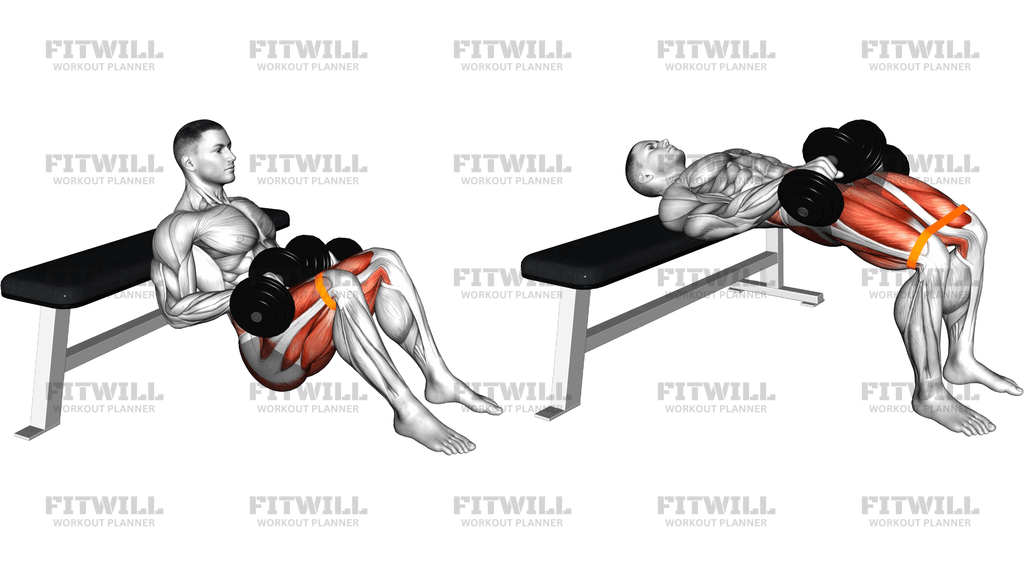
Resistance Band Hip Thrusts is a bench-supported glute exercise that uses band tension to make the top half of the hip drive more demanding. With the upper back anchored on a bench and the feet planted on the floor, the movement trains strong hip extension while asking the trunk to stay organized. It is a simple-looking exercise, but the setup matters a lot: if the shoulders are not resting correctly on the bench or the feet are too far away, the rep quickly turns into a lower-back movement instead of a glute-driven thrust.
The band changes the feel of the exercise by increasing resistance as the hips move toward lockout. That means the cleanest repetitions usually come from a controlled start, a firm brace, and a strong squeeze at the top rather than from swinging the hips or bouncing off the bottom. When the rep is done well, you should feel the glutes doing most of the work while the hamstrings and core help keep the pelvis stable.
This exercise is useful in glute-focused strength sessions, lower-body accessories, warmups, and hypertrophy work where you want a clear hip extension pattern without loading the spine heavily. It can be a good option for beginners because the bench position and range of motion are easy to learn, but the band still makes the top position honest. The goal is not to rush through a lot of reps; it is to repeat the same strong setup, same hip path, and same lockout every time.
Good hip thrust mechanics are easy to spot. The ribs stay down, the chin stays slightly tucked, the knees track in line with the toes, and the hips finish by squeezing the glutes rather than arching the lower back. If the band slips, the knees cave in, or the pelvis tilts forward at the top, the load or foot position is probably off. Small adjustments usually fix the movement quickly and make the exercise much more effective.
Used correctly, Resistance Band Hip Thrusts is a practical way to build stronger glutes, better hip control, and cleaner extension mechanics without needing a barbell. The rep should feel powerful but controlled, with a clear pause at the top and a slow return to the floor. That combination makes it a reliable choice when you want glute tension, posture control, and repeatable form.
[ Workout Log & Planner ]
Put your next workout in Fitwill
Keep your plan and training log ready when you are.


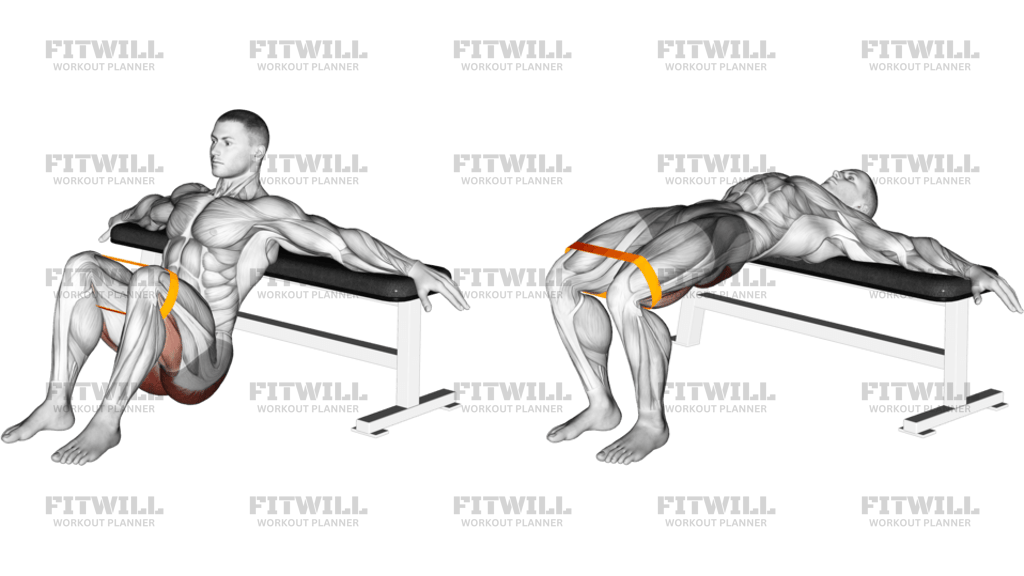
Instructions
- Sit on the floor with your upper back just below the shoulder blades resting on the bench edge, feet flat and about hip-width apart, knees bent roughly 90 degrees.
- Place the resistance band in the setup being used so it adds tension through the hip drive, then hold the bench behind you for stability.
- Tuck your chin slightly, keep your ribs down, and brace your core before the first rep.
- Press through your heels and midfoot to drive your hips upward.
- Keep your knees tracking over your toes as you lift.
- Raise your hips until your shoulders, hips, and knees form a straight line without arching your lower back.
- Squeeze your glutes at the top and pause briefly before lowering.
- Lower your hips slowly until they are just above the floor, then reset and repeat.
Tips & Tricks
- If the bench edge feels too high on your back, slide forward until the shoulder blades are supported but the neck can stay relaxed.
- Set the feet so your shins are close to vertical at the top; feet too close shifts the work toward the quads, and feet too far can pull on the low back.
- Keep the chin slightly tucked so you do not flare the ribs when you lock out.
- Finish the rep by squeezing the glutes, not by arching the lumbar spine.
- Use a brief pause at the top to remove bounce and make the band tension count.
- Choose a band tension that lets you keep the hips level instead of twisting side to side.
- Exhale as you drive up and inhale as you lower under control.
- Stop the set when the knees begin to cave inward or the pelvis starts tipping forward.
Frequently Asked Questions
What muscles do Resistance Band Hip Thrusts work?
They mainly target the glutes, with the hamstrings, adductors, and core helping stabilize the hips through the rep.
How is this different from a glute bridge?
The upper back is elevated on a bench, so the hips travel through a larger range of motion and the lockout is usually more demanding.
Where should the band sit?
It should stay centered in the setup you are using so the resistance stays even and does not pull the hips off line.
How high should I lift my hips?
Lift until your shoulders, hips, and knees line up, then stop before the lower back takes over.
Why do I feel this in my lower back?
That usually means the ribs are flaring or the hips are overextending at the top. Keep the chin tucked and finish with a glute squeeze instead of a back arch.
Can beginners do this exercise?
Yes. Start with bodyweight or light band tension and learn the bench setup before adding more resistance.
Why do my knees cave inward during the rep?
The stance may be too narrow or the band may be too challenging. Set the feet hip-width apart and drive the knees in line with the toes.
What should I change if the band slips on my hips?
Use a more stable band setup or lighter tension so you can keep the hips level and the rep smooth.