Resistance Band Side Lunge
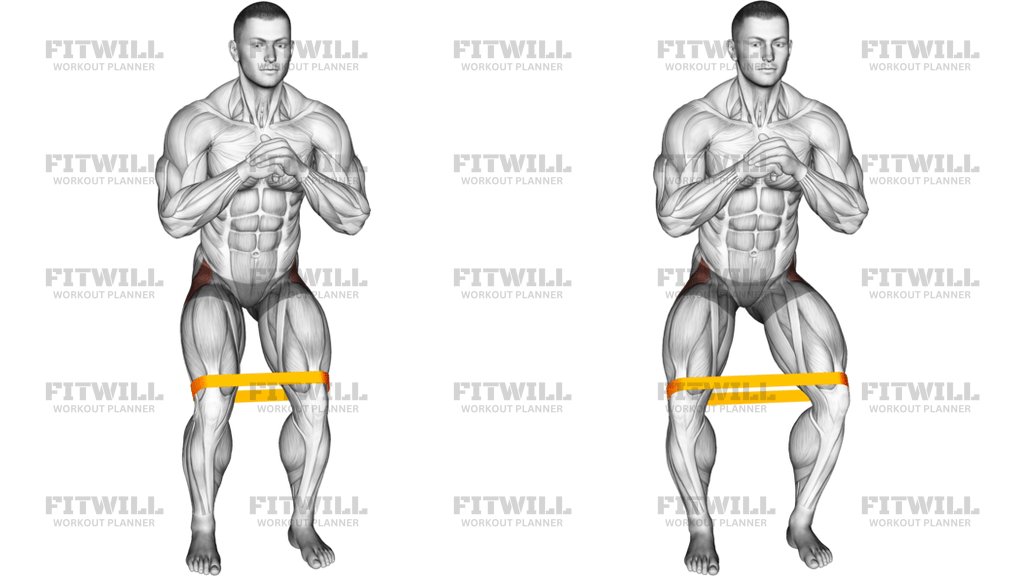
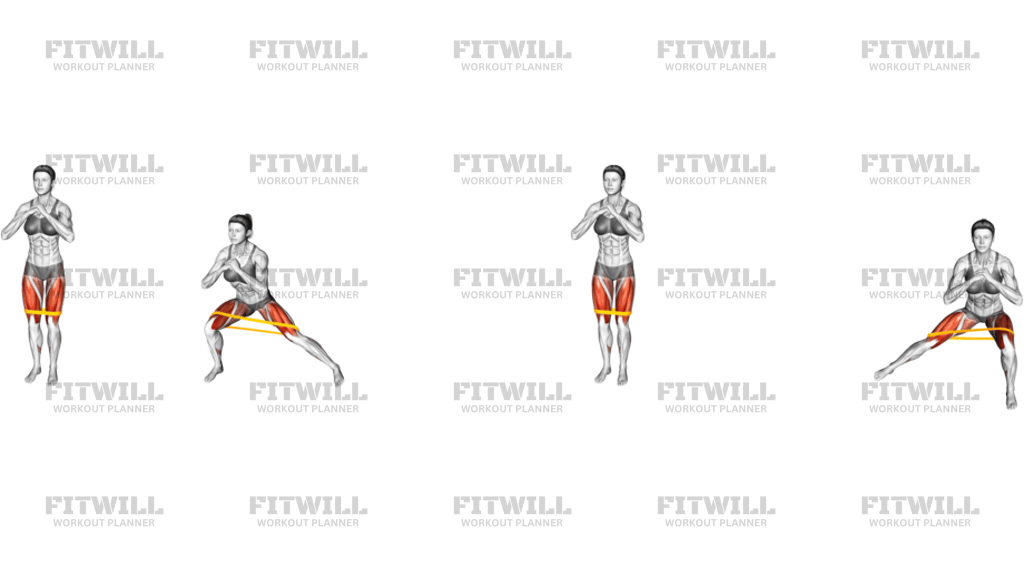
Resistance Band Side Lunge is a lower-body lateral lunge variation that uses a band around the thighs to add constant outward tension while you step, sit, and return with control. The exercise trains side-to-side strength, hip stability, and thigh control in a pattern that is especially useful when you want the legs to work through a wider stance instead of a straight-ahead squat or hinge.
The band changes the feel of the movement right away. As soon as you step out, you have to keep the knees from collapsing inward and keep the hips organized over the feet. That makes the drill useful for the quads, inner thighs, glutes, and the smaller muscles around the hips that help you stay aligned during lateral work. It is a practical choice for warm-ups, accessory work, and lower-body sessions where clean position matters as much as effort.
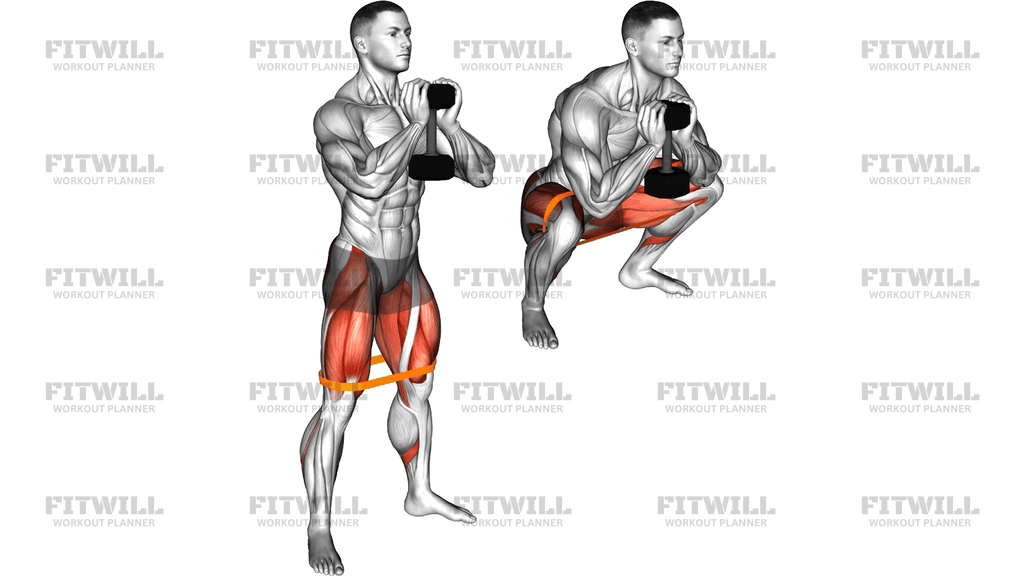
The setup is simple but important. The band sits just above the knees, the feet start about shoulder width or a little wider, and the toes point slightly out so the knees can track naturally. From that base, step to one side, send the hips back, and lower into the side lunge while keeping the planted foot flat and the chest tall. The working knee should bend in line with the toes rather than drifting inward, and the opposite leg should stay longer to give you the side-to-side stretch.
On the way back up, push through the bent leg and bring the body back to center without snapping the hips forward or losing tension in the band. The return should look controlled and balanced, not rushed. A good rep feels smooth from start to finish, with the torso steady, the knees controlled, and the band actively pressing the thighs apart the whole time.
Use this movement when you want a lateral pattern that challenges both strength and control. It works well in pre-workout activation, accessory circuits, and lower-body conditioning because it exposes side-to-side asymmetry quickly. If one hip collapses, one knee caves, or one side feels much tighter than the other, shorten the step and reduce the band tension until the rep stays clean and repeatable.
[ Workout Log & Planner ]
Put your next workout in Fitwill
Keep your plan and training log ready when you are.


Instructions
- Loop the band just above your knees and stand tall with your feet about shoulder width or slightly wider.
- Turn your toes slightly out and keep your weight balanced through the whole foot before you move.
- Brace your trunk, lift your chest, and press your knees gently outward against the band.
- Step one foot out to the side into a wide stance while the other foot stays planted.
- Send your hips back and sit into the stepping leg until that knee bends over the toes.
- Keep the opposite leg longer, the heel down, and both feet flat on the floor.
- Push through the bent leg to return to center while keeping the band under tension.
- Reset your stance before the next rep and switch sides as programmed.
Tips & Tricks
- Place the band just above the knees so it gives clear outward tension without sliding down the thighs.
- Keep the stepping foot turned only slightly out; if it flares too much, the knee often loses its tracking line.
- Think "hips back, chest up" so the rep stays a side lunge instead of turning into a forward fold.
- Let the non-working leg stay long rather than locking hard, which helps you feel the stretch without twisting the pelvis.
- Press the working knee gently into the band from start to finish so the hips stay active instead of collapsing inward.
- Keep the working heel down; rising onto the toes usually shifts the load away from the bent leg.
- Use a shorter step if you cannot keep the trunk steady or the knee lined up with the toes.
- Stop the set if the pelvis tilts, the torso leans far forward, or the band starts rolling up your legs.
Frequently Asked Questions
What muscles does Resistance Band Side Lunge work most?
It mainly works the thighs, especially the quads and inner thighs, while the glutes and hip stabilizers help control the side-to-side position.
Should the band sit above the knees or lower on the legs?
Above the knees is usually best because it keeps the resistance visible and helps prevent the band from slipping during the lunge.
How wide should my stance be for the side lunge?
Start a little wider than shoulder width so you can sit into one hip without crossing the feet or losing balance.
Why does my knee cave inward during this exercise?
The stance is usually too narrow, the band is too light, or you are not actively pressing the knee out against the band.
Can beginners use Resistance Band Side Lunge?
Yes. A light band and a shorter side step make it much easier to learn the position before adding more range or tension.
How low should I go in the bottom position?
Go only as low as you can while keeping the working knee lined up with the toes and the torso steady.
Is this exercise more of a strength move or a mobility drill?
It is both, but the band makes it especially useful for controlled strength and hip stability work.
How can I make the exercise harder without changing the movement?
Use a stronger band, pause in the bottom position, or slow the return to standing while keeping the knees aligned.