Cable Narrow Chair Stand Up
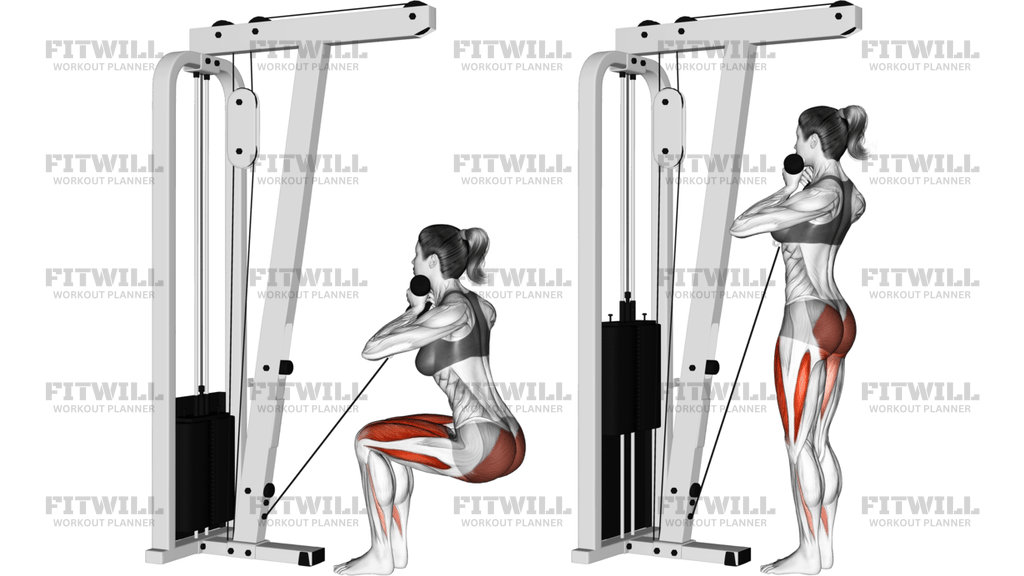
Cable Narrow Chair Stand Up is a cable-loaded sit-to-stand pattern done from a chair with a narrow stance and a handle held close to the chest. It trains the hips and legs to produce force from a seated position, while the cable adds a forward pull that makes you stay organized through the trunk, shoulders, and pelvis. The exercise is most useful when you want a controlled lower-body movement that still feels practical and athletic instead of machine-bound.
The narrow foot position shifts more demand toward the quads and glutes, but the real skill is keeping the torso stacked while you rise. The low cable anchor should create steady tension without jerking you forward, so the handle stays close to the upper chest and the ribs do not flare. If you lose posture at the start, the repetition turns into a lunge, a heave, or a partial stand instead of a clean chair stand.
Use the chair height to keep the movement honest. A higher seat makes the exercise easier and helps beginners learn the path; a lower seat increases the work and exposes weak points in leg drive and hip control. The best repetitions start with both feet planted, knees tracking over the toes, and pressure spread through the whole foot before you begin to rise. That setup lets you stand up by driving the floor away instead of pulling yourself up with the arms.
On the way up, keep the chest tall, drive through the midfoot and heel, and finish with the hips fully extended before letting the cable bring you back under control. On the way down, hinge slightly at the hips, sit back to the chair, and touch down softly instead of collapsing. Breathe out as you stand and inhale as you lower so the torso stays braced without getting rigid.
This movement fits well in lower-body accessory work, home-style strength sessions, rehabilitation-style progressions, or as a lower-impact way to train sit-to-stand strength. It is especially helpful when you want to rehearse getting up from a chair with better control, more symmetry, and less momentum. Keep the load modest and the rep quality high; the exercise should feel smooth, deliberate, and repeatable from the first rep to the last.
Fitwill
Log Workouts, Track Progress & Build Strength.
Achieve more with Fitwill: explore over 9600 exercises with images and videos, access built-in and custom workouts, perfect for both gym and home sessions, and see real results.
Start your journey. Download today!




Instructions
- Place a chair in front of the low cable so you can sit with the handle line pulling from slightly in front of you.
- Sit on the chair with your feet about hip-width or slightly narrower, flat on the floor, and your shins close to vertical.
- Hold the handle at the upper chest with both hands, keep your elbows in front of your ribs, and sit tall before each rep.
- Brace your abdomen, keep your ribs stacked over your pelvis, and lean only slightly forward from the hips.
- Drive through your heels and midfoot to stand up from the chair without yanking on the handle.
- Keep the knees tracking in line with the toes as you rise and finish tall with the hips fully extended.
- Pause briefly at the top without over-arching your lower back or shrugging the shoulders.
- Lower yourself back to the chair under control, hinge at the hips, and touch down softly before the next rep.
- Repeat for the planned reps, keeping the same seat height, stance width, and cable tension each time.
Tips & Tricks
- Choose a chair height that lets you stand without bouncing off the seat; lower seats make the movement much harder.
- Keep the handle close to your chest so the cable does not pull your torso forward as you stand.
- Think about pushing the floor away instead of pulling with your arms.
- If your knees cave inward, reduce the load and use a slightly wider narrow stance until the path is clean.
- Keep your feet flat from start to finish; rising onto the toes usually shifts too much work away from the hips.
- Lower under control instead of dropping onto the chair, because the eccentric phase is part of the exercise.
- Do not let the cable twist your torso; both shoulders should stay square to the machine.
- Use a load that lets you stand up smoothly for every rep without rocking or using a big head-start.
- Exhale as you stand and finish the rep before you breathe again if the cable load makes bracing harder.
Frequently Asked Questions
What muscles work most during Cable Narrow Chair Stand Up?
The main work comes from the quads and glutes, with the core and upper back helping you stay upright against the cable pull.
Can beginners perform this exercise?
Yes. A taller chair and a light cable load make it a good entry-level sit-to-stand variation.
Where should I hold the cable handle?
Keep the handle close to the upper chest so the cable stays controlled and does not drag your shoulders forward.
What is the most common mistake with this chair stand-up?
People usually pull with the arms or let the torso collapse forward instead of driving up from the legs.
Should my feet stay narrow the whole time?
Yes, but not so narrow that you lose balance. Hip-width to slightly narrower usually works best.
Does the cable help or resist the stand-up?
It adds a constant line of tension from the machine, so you have to control the torso instead of letting momentum do the work.
How low should the chair be?
Start with a chair height that lets you stand smoothly, then lower it only when you can keep the same posture and control.
Is this more of a squat or a rehab-style stand-up?
It is a controlled sit-to-stand pattern that can serve either purpose depending on the load, chair height, and rep tempo.