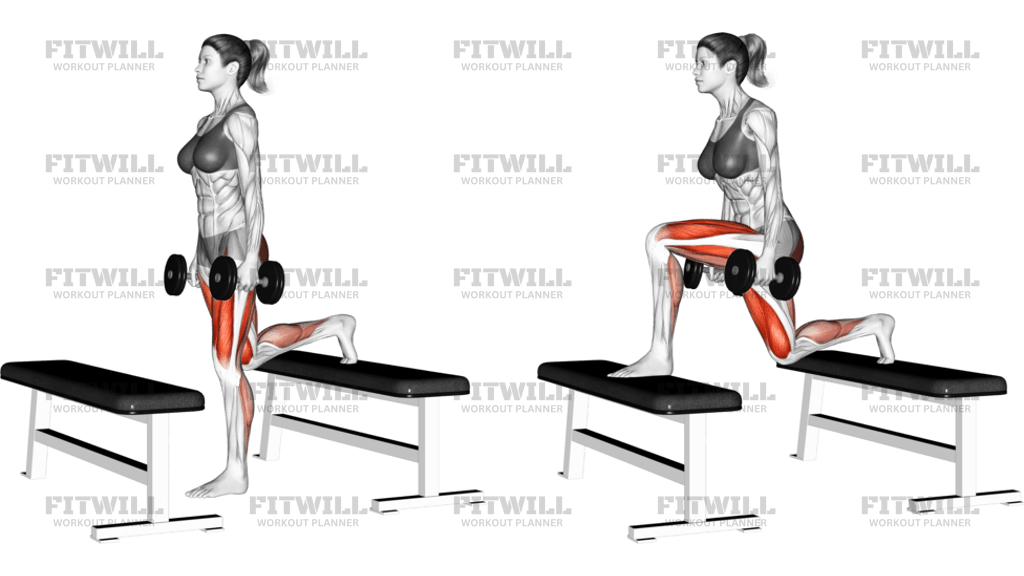
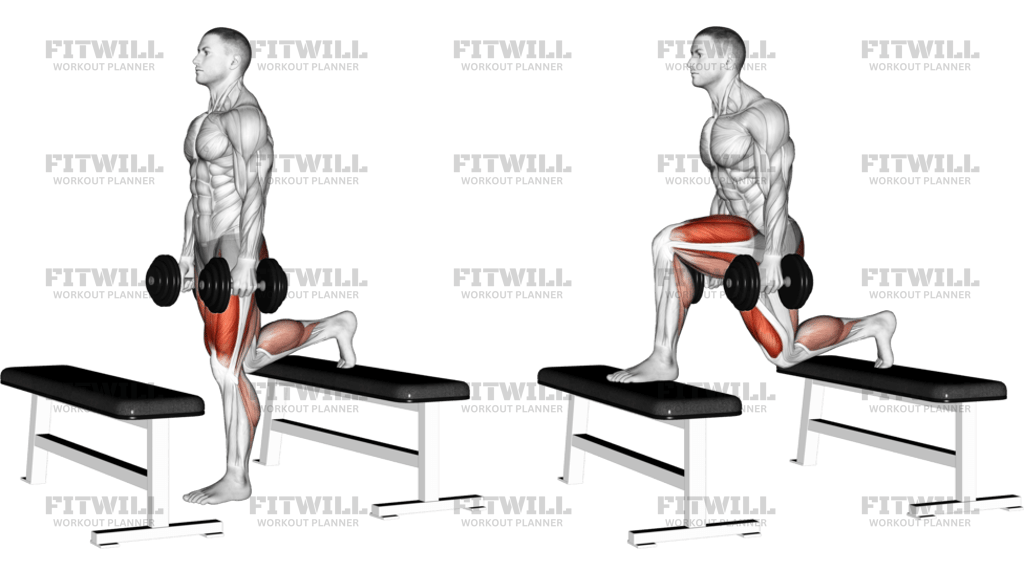
Dumbbell Single Leg Step-Up
Dumbbell Single Leg Step-Up is a unilateral lower-body strength exercise built around stepping one foot onto a box, bench, or platform while holding dumbbells at your sides. The working leg does most of the lifting as you stand tall on the step and then lower with control. It is a practical way to build leg strength, balance, and coordination without needing a barbell setup, and it is especially useful for exposing left-right differences in power or stability.
The setup matters because step height and foot placement change the entire feel of the movement. Choose a platform that lets the working thigh rise comfortably without forcing your pelvis to twist or your lower back to arch. Place the whole foot on the step, keep the dumbbells hanging straight beside your legs, and let the free leg stay light and relaxed until it is needed for balance. A clean setup keeps the exercise focused on the front leg instead of turning it into a hop.
Each repetition should feel like a controlled drive upward from the foot on the box. Lean slightly forward from the hips, brace through the trunk, and push through the heel and midfoot until the hip and knee extend together. At the top, stand fully on the platform without throwing your chest back or shrugging the dumbbells. Lower yourself slowly and under control, keeping the descent smooth so the working leg has to manage the full range instead of dropping off the step.
This exercise is commonly used for quad and glute development, unilateral strength, athletic carryover, and general lower-body conditioning. It also works well as an accessory lift when you want leg volume without loading the spine heavily. Beginners can learn it with bodyweight or light dumbbells, while stronger lifters can progress by slowing the lowering phase, adding a brief pause on the box, or using a slightly higher step only if the knee and hip stay aligned.
The key performance standard is clean, repeatable control. If the trailing leg is pushing hard, the knee caves inward, or the torso is swinging to get up, the load or box height is too aggressive. Good reps look and feel deliberate from the floor to the top of the step, with the dumbbells staying quiet and the working leg doing the real work. Done well, Dumbbell Single Leg Step-Up builds useful lower-body strength while teaching you to own each side independently.
[ Workout Log & Planner ]
Put your next workout in Fitwill
Keep your plan and training log ready when you are.


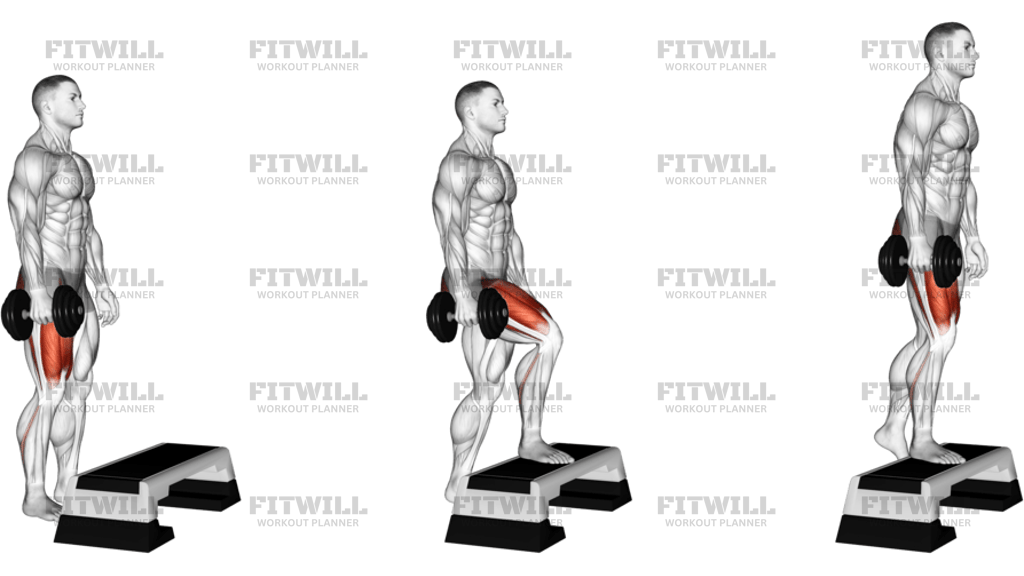
Instructions
- Place a box, bench, or step in front of you at a height you can control without twisting your hips.
- Stand tall with a dumbbell in each hand, arms straight, and your feet about hip-width apart.
- Plant the whole foot of the working leg on top of the step and keep the other foot light on the floor.
- Brace your trunk, keep your chest tall, and let your torso lean slightly forward from the hips.
- Drive through the heel and midfoot of the foot on the step to lift your body up.
- Bring your hip over the platform and finish standing tall on the box without pushing off hard from the trailing leg.
- Pause briefly at the top with the working leg fully extended and the dumbbells hanging still.
- Lower yourself back down in a controlled path, keeping the knee tracking over the toes and the descent smooth.
- Reset your stance and repeat all reps on one side before switching, unless your program calls for alternating sides.
Tips & Tricks
- Choose a step height that lets you keep control through the full range; a box that is too high usually turns the rep into a push and a hop.
- Keep the entire front foot on the platform so the heel can drive the ascent instead of balancing on the toes.
- A small forward torso lean is normal, but avoid collapsing at the waist or turning the rep into a rounded back hinge.
- Think about pressing the platform away with the working leg rather than swinging the body upward with momentum.
- Keep the dumbbells quiet at your sides; if they are swinging, the load is probably too heavy or the rep is too fast.
- Lower under control for at least two seconds so the working leg has to own the descent instead of dropping off the step.
- Let the trailing leg assist with balance only; if it is doing the push, the working side is not getting the full benefit.
- Track the knee in line with the second or third toe to reduce inward collapse and keep the step-up cleaner.
- Exhale as you drive up and inhale as you lower, especially if you are using a higher box or a heavier pair of dumbbells.
Frequently Asked Questions
What muscles do Dumbbell Single Leg Step-Ups work?
They mainly train the quadriceps and glutes of the working leg, with the hamstrings, calves, and core helping stabilize the movement.
Can beginners perform this exercise?
Yes. Start with bodyweight or very light dumbbells and use a lower step until you can stand up and lower down without wobbling.
How high should the box or bench be?
Use a height that keeps the working thigh around parallel or slightly below it while still letting you keep the pelvis level and the knee controlled.
Should my back leg push off the floor?
Only a little for balance. The working leg on the platform should do the bulk of the lifting.
Do I hold the dumbbells at my sides or at my shoulders?
Hold them at your sides with straight arms. That keeps the load centered and makes it easier to stay balanced.
What is the most common mistake with step-ups?
Using the trailing leg to jump up, which turns the exercise into a push-off instead of a single-leg step-up.
Is it normal to feel this in my core?
Yes. Your trunk has to stay braced and steady so the dumbbells and pelvis do not sway during the ascent and lowering phase.
Can I alternate legs every rep?
You can, but many lifters get better control by completing all reps on one side before switching to the other.