Prone Single-Arm Trap Raise
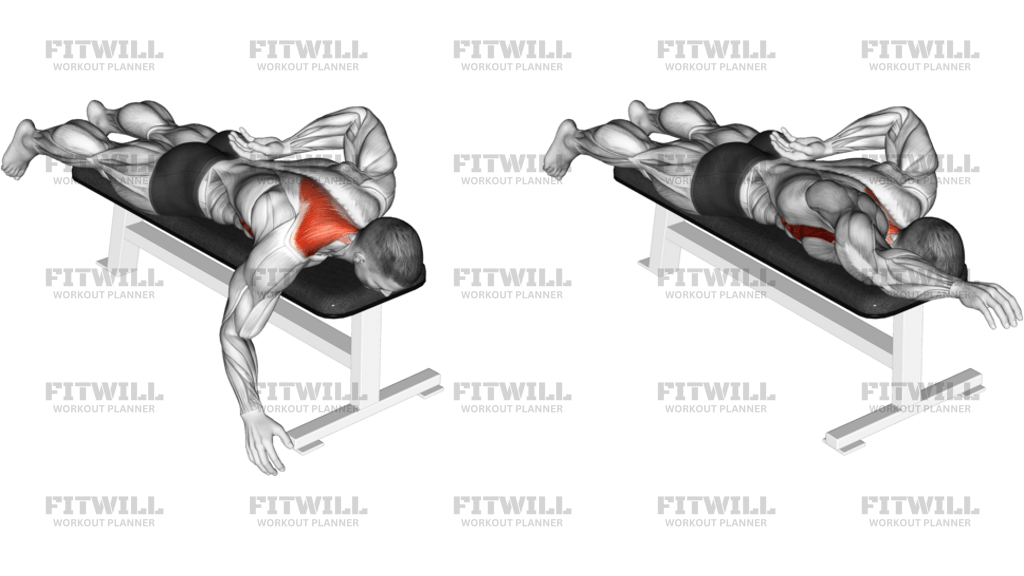
Prone Single-Arm Trap Raise is a chest-supported upper-back exercise performed lying face down on a bench with one arm hanging free. The movement is built around a small, controlled lift from the shoulder blade rather than a big swinging motion, so it is useful for training scapular control, postural strength, and cleaner shoulder mechanics.
This exercise places a lot of the work on the trapezius, especially the fibers that help the shoulder blade move and stabilize without the neck taking over. The rear shoulder and other upper-back stabilizers help guide the arm through the raise, but the goal is not to shrug hard or twist the torso. A good rep feels organized, smooth, and deliberate from the first inch of the lift to the last inch of the lower.
The bench setup matters. Lying prone with the chest supported removes most of the body swing that usually steals tension from small upper-back movements. One arm hangs toward the floor so the shoulder can start from a long, relaxed position, while the rest of the body stays still on the bench. That support makes the exercise especially useful when you want to train control, not load.
During the raise, the arm should travel in a controlled diagonal arc with the elbow mostly straight and the thumb or palm oriented to keep the shoulder open. Lift until the upper arm reaches a strong but pain-free end position, then pause briefly before lowering under control. If the neck tightens, the ribs flare, or the torso rolls, the set is too heavy or the range is too aggressive.
Prone Single-Arm Trap Raise fits well in accessory work, posture-focused training, shoulder prehab, or as a light activation drill before heavier pulling and pressing. It is also a good choice for beginners because the bodyweight setup is stable and the range can be kept small and precise. Use slow reps and clean positions so the upper traps and surrounding stabilizers do the work instead of momentum.
Fitwill
Log Workouts, Track Progress & Build Strength.
Achieve more with Fitwill: explore over 9600 exercises with images and videos, access built-in and custom workouts, perfect for both gym and home sessions, and see real results.
Start your journey. Download today!




Instructions
- Lie face down on a flat bench with your chest supported and your legs resting behind you.
- Let one arm hang straight down off the side of the bench so the shoulder starts in a relaxed, long position.
- Place your free hand, forearm, or bodyweight on the bench so your torso stays stable and square.
- Keep your neck neutral, ribs stacked, and core lightly braced before the first rep.
- Start the lift by setting the shoulder blade, then raise the working arm in a controlled diagonal arc.
- Keep the elbow mostly straight and the hand slightly turned so the shoulder stays open as you lift.
- Raise until the upper arm reaches a strong, pain-free end position without shrugging or twisting.
- Pause briefly at the top, then lower the arm slowly back to the hanging start position.
- Reset the shoulder, breathe evenly, and repeat for the planned number of reps before switching sides.
Tips & Tricks
- Keep the chest glued to the bench so the torso does not rotate when the arm leaves the floor.
- Think about the shoulder blade moving first; if the neck starts shrugging, the trap raise has become too heavy.
- Use a slow lower back to the dead-hang start so the bottom position keeps tension without bouncing.
- A slight thumb-up position usually keeps the shoulder calmer than turning the hand inward.
- Do not chase height by arching the low back or flaring the ribs off the bench.
- The movement should feel small and precise; if it turns into a rear-delt swing, shorten the range.
- Exhale as the arm lifts and keep the breath smooth enough that the ribs stay stacked.
- Stop the set when you can no longer keep the neck long and the torso square on the bench.
Frequently Asked Questions
What does Prone Single-Arm Trap Raise train most?
It primarily trains the trapezius and other upper-back stabilizers that control the shoulder blade during the raise.
Why is the chest supported on a bench?
The bench removes most of the body swing, which lets you focus on scapular control instead of using momentum.
Should the working arm stay straight or bent?
Keep the elbow mostly straight and use a smooth shoulder-driven arc, not a rowing motion.
Where should I feel the movement in the bench position?
You should feel the work high in the upper back and around the shoulder blade, not in the neck or low back.
Can beginners do this exercise?
Yes. The bodyweight setup is stable, and the small range makes it a good beginner-friendly control drill.
What is the biggest form mistake on the bench?
Shrugging the shoulder or twisting the torso to lift the arm higher is the most common error.
How hard should the top position be?
The top should feel strong but controlled, with a brief pause rather than a hard squeeze or forced hold.
How can I make the movement harder without losing form?
Slow the lowering phase, add a short pause at the top, or extend the time under tension before adding load.