Single-Arm Scapula Push-Up
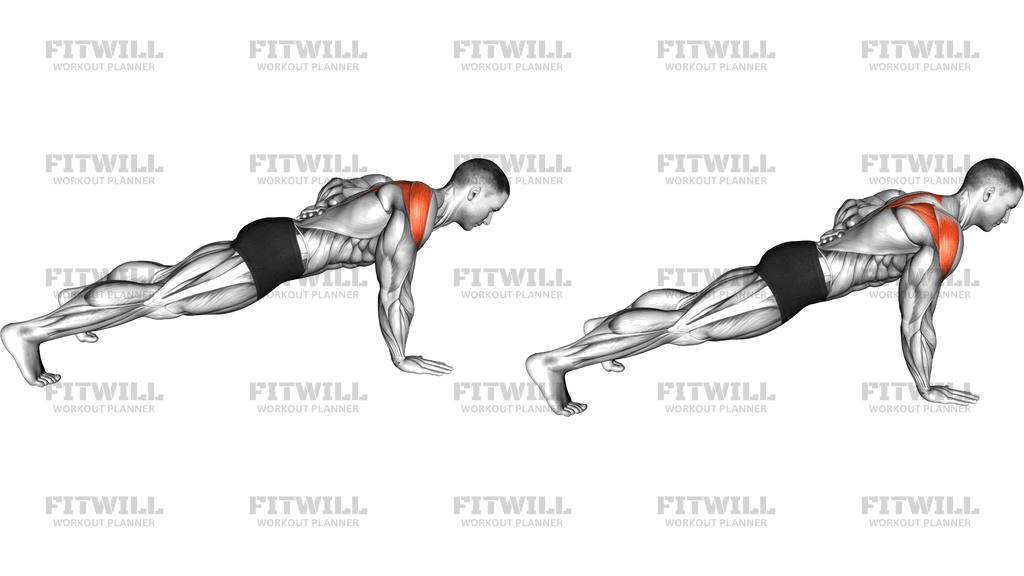
Single-Arm Scapula Push-Up is a bodyweight shoulder-girdle drill performed from a high plank with one hand on the floor and the other hand tucked behind the back. The visible setup matters because the exercise removes one point of support, forcing the working shoulder to control the scapula and keep the torso from twisting while the chest, triceps, serratus anterior, and core stay organized.
This variation is less about chasing depth and more about moving the shoulder blade cleanly through protraction and retraction while the arm stays straight. At the top, the working side should feel tall and stable; in the lowered phase, the chest drops a little toward the floor while the scapula glides and the ribcage does not collapse or rotate open.
It is a useful accessory for athletes and lifters who need unilateral shoulder stability, better serratus control, and cleaner plank mechanics. Because only one arm is supporting the body, the exercise exposes side-to-side differences quickly. That makes it valuable in warm-ups, shoulder prep, calisthenics work, and accessory blocks where precision matters more than load.
Set the hand directly under the shoulder, keep the feet slightly wider than a regular push-up for balance, and brace before each rep. Lower with control, then press the floor away and finish each repetition by actively spreading the shoulder blade rather than simply locking out the elbow. The free hand should stay out of the way behind the back, and the hips should stay square so the body does not spin toward the support side.
Use smooth reps, a short pause in the strongest top position if needed, and a range that you can own without shrugging, sagging, or arching. If the shoulder feels pinchy, reduce the range or switch to a two-hand scapular push-up until the control is there. For more challenge, slow the lowering phase, add a brief hold near the bottom, or narrow the foot stance while keeping the trunk from rotating. The best reps look almost quiet: no bouncing, no rib flare, no head craning forward, and no collapse into the planted shoulder.
[ Workout Log & Planner ]
Put your next workout in Fitwill
Keep your plan and training log ready when you are.


Instructions
- Start in a high plank with one hand under the shoulder, the other hand resting behind your lower back, and your feet set a little wider than a standard push-up for balance.
- Stack your head, ribs, and pelvis so your body forms a straight line from heels to crown before you begin.
- Press the floor away until the working shoulder blade protracts and the upper back feels broad.
- Keep the elbow straight and let the chest lower only slightly as the shoulder blade glides back under control.
- Hold the bottom briefly without letting the hips twist or the lower back sag.
- Drive through the planted palm and push yourself back to the top by spreading the shoulder blade forward again.
- Keep the free hand pinned behind the back so the trunk stays honest and the working side carries the load.
- Exhale as you press up, then reset your brace before the next repetition.
Tips & Tricks
- Keep the support hand directly under the shoulder so the elbow can stay stacked instead of drifting forward.
- A slightly wider foot stance makes it easier to keep the pelvis square when only one arm is on the floor.
- Think about moving the shoulder blade, not just bending the elbow; the arm should stay nearly straight through most of the rep.
- If your torso rotates toward the support arm, shorten the range and slow the lowering phase.
- Do not let the working shoulder shrug toward the ear at the top; press tall through the floor instead.
- The motion should be smooth and small enough that you can keep the ribcage from flaring open.
- Use a slower descent if the bottom position feels unstable or your chest drops abruptly.
- Stop the set once the hips start swaying or the shoulder blade no longer moves cleanly.
Frequently Asked Questions
What does the Single-Arm Scapula Push-Up train?
It trains scapular control, shoulder stability, serratus activation, and anti-rotation strength while the chest and triceps help support the press.
Should my arm bend a lot during this exercise?
No. Keep the elbow almost straight and let the shoulder blade do most of the movement so it stays a scapula-focused drill.
Why is one hand behind the back?
Tucking the free hand behind the back removes that support point and forces the working side to control the torso without help.
What is the biggest form mistake?
The most common mistake is twisting the torso or shrugging the shoulder instead of keeping the hips square and the shoulder blade controlled.
Can I do this if a standard push-up is still hard?
Only if you can hold a stable high plank and control the shoulder blade. Otherwise, start with a two-hand scapular push-up first.
What should I feel working most?
You should feel the serratus and the stabilizers around the shoulder blade working hard, with the chest and triceps assisting the press.
Where does this fit in a workout?
It works well in a warm-up, shoulder-prep block, calisthenics session, or accessory circuit before heavier pressing.
How can I make the exercise harder?
Use a slower lowering phase, brief pauses at the top, or bring the feet closer together while keeping the torso from rotating.