Roll Pec Foam Rolling
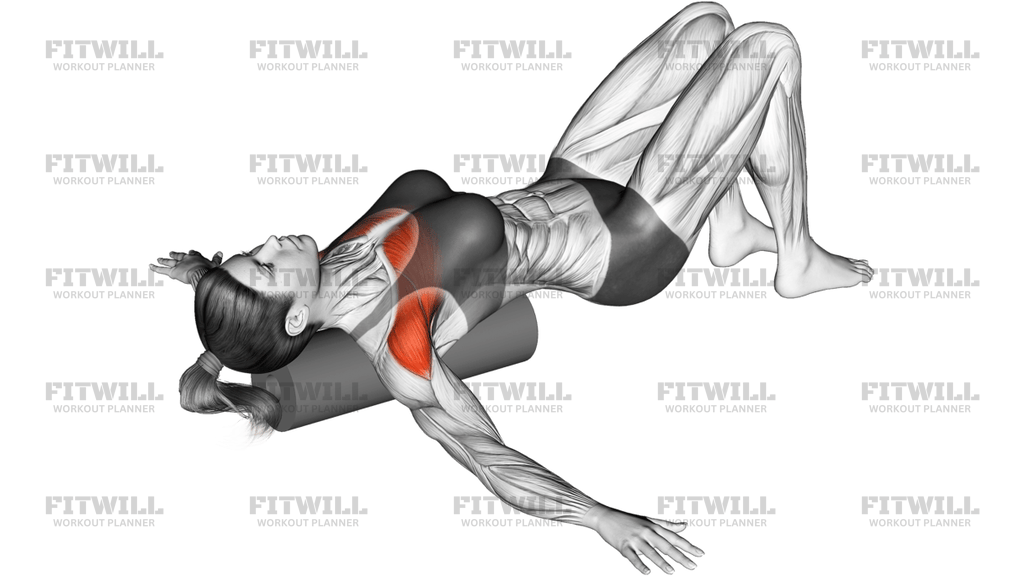
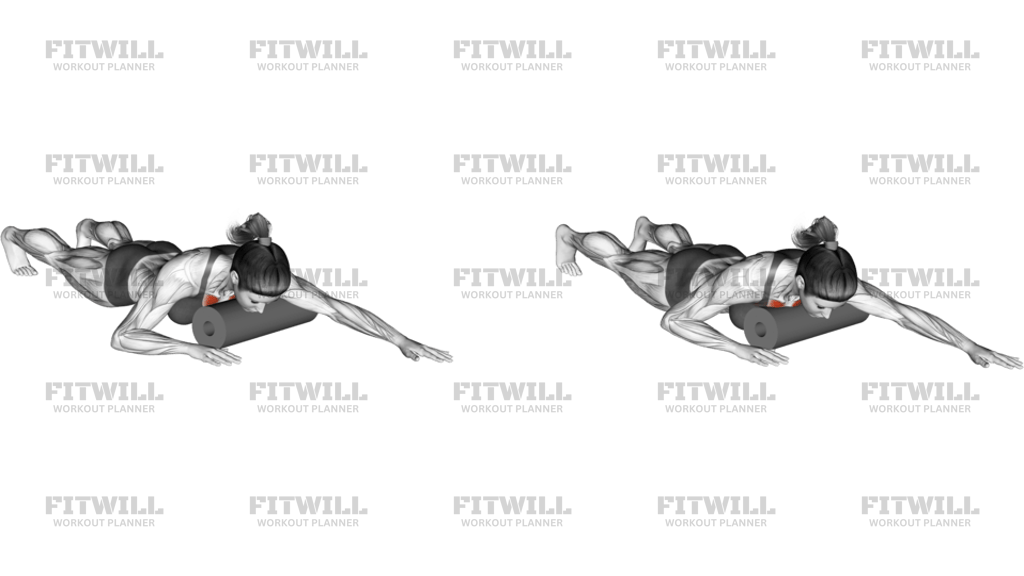
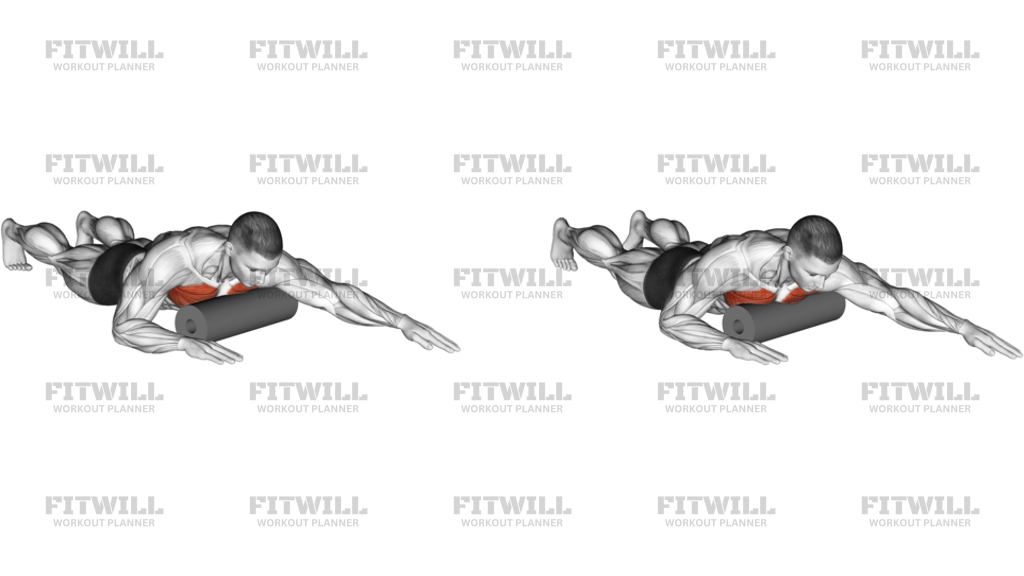
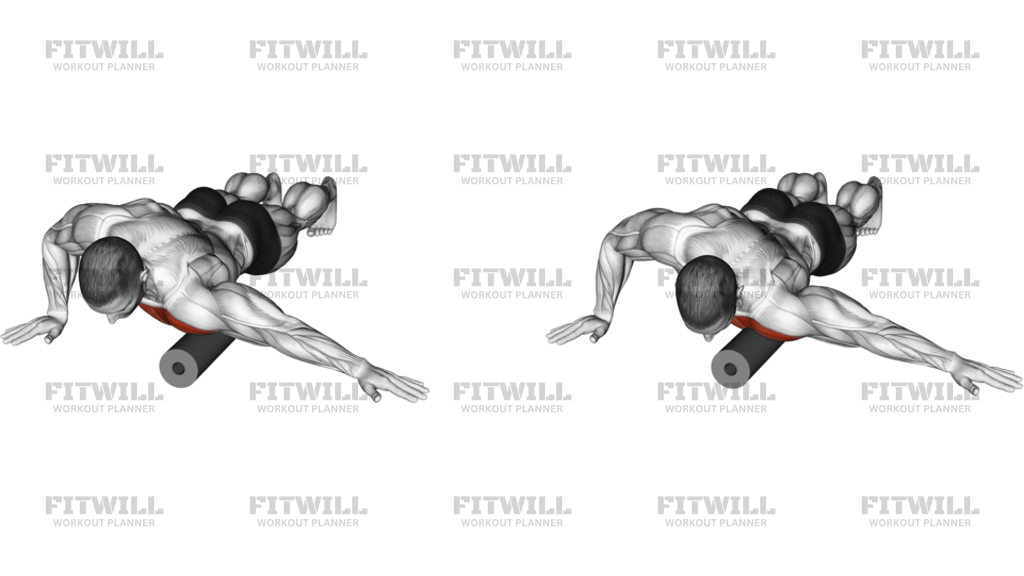
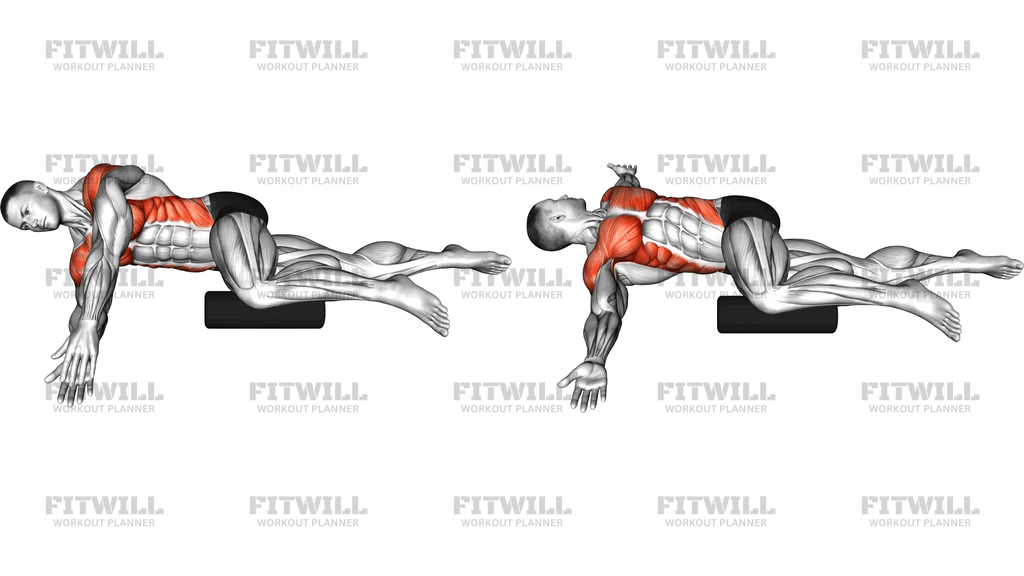
Roll Pec Foam Rolling is a chest mobility and tissue-release exercise that uses a foam roller to target the front of the shoulder and the thick belly of the pectoral muscles. The image shows a long, supported position with one arm reaching overhead, which is a useful setup for opening the pecs without forcing the shoulder into a painful range. This is not a strength lift; it is a controlled self-massage drill that should feel like steady pressure, slow breathing, and gradual release.
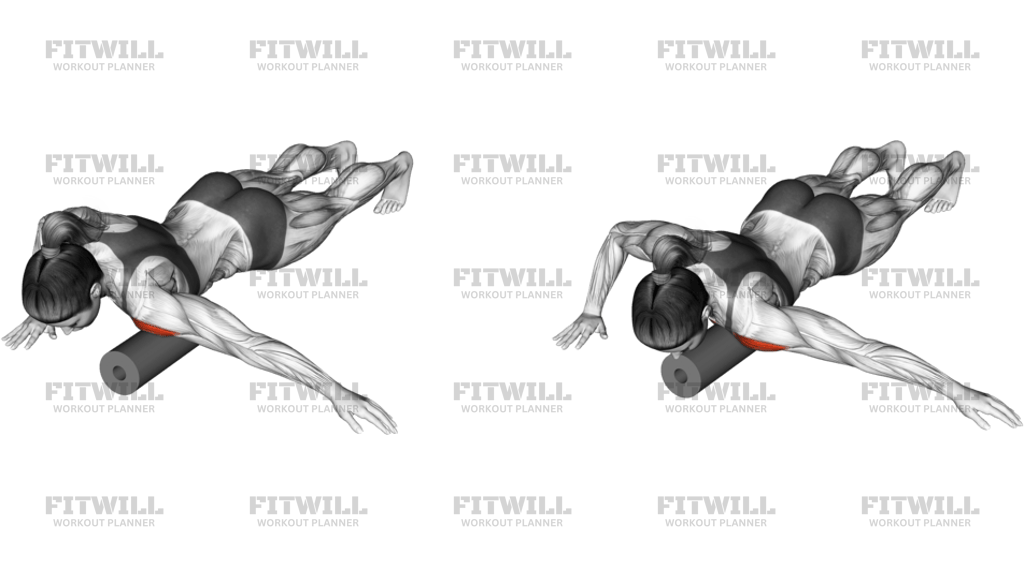
The main target is the pectoralis major, with the front deltoid, triceps, and the muscles around the shoulder girdle helping you hold position and guide the roll. The setup matters because the roller needs to contact the soft tissue of the chest, not the collarbone, neck, or front of the shoulder joint. If the body is too square to the floor, the pressure can disappear; if it is too rolled forward, the shoulder can pinch. A small angle shift is usually enough to find the working line shown in the image.
Treat each pass as a scan rather than a rep chase. Place the roller under the upper chest, lengthen the arm overhead, and use your breathing to let the pec relax around the roller. Short passes from the shoulder toward the inner chest work better than big sweeping rolls. When you find a tender spot, pause and breathe until the tissue softens, then continue with a slightly smaller range. The goal is to reduce guarding, not to grind through pain.
This exercise is most useful before pressing, overhead work, dips, or any session where tight pecs limit shoulder motion. It also fits well after upper-body training or on recovery days when the chest feels short and internally rotated. Keep the pressure tolerable, the neck relaxed, and the ribs from flaring. If you feel numbness, sharp pain, or a pinching sensation in the shoulder, reduce pressure or move the roller lower on the pec belly. Done well, this drill leaves the chest feeling more open and the shoulders easier to position for the next exercise.
Fitwill
Log Workouts, Track Progress & Build Strength.
Achieve more with Fitwill: explore over 9600 exercises with images and videos, access built-in and custom workouts, perfect for both gym and home sessions, and see real results.
Start your journey. Download today!




Instructions
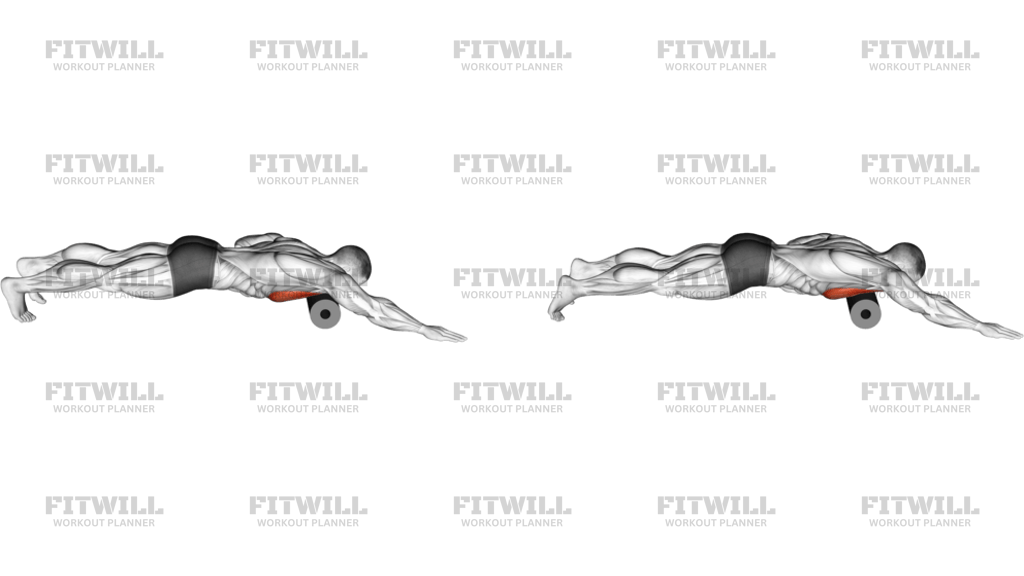
- Lie face down with the foam roller under the front of one shoulder and upper chest, and place the working-side arm long overhead with the thumb turned slightly up.
- Angle your torso just enough to let the roller sink into the pec, using the opposite forearm, hand, or foot for support so the pressure stays firm but tolerable.
- Set your ribs down and lengthen the neck before you start moving so the shoulder can open without shrugging.
- Take a slow breath in, then exhale and let the chest soften around the roller instead of pressing back into it.
- Make short, controlled passes from the front of the shoulder toward the inner chest, stopping before the roller reaches the collarbone or sternum.
- When you find a tight spot, pause there for a few breaths and keep the shoulder away from the ear.
- Keep the arm reaching overhead as you roll so the pec stays on stretch through the full pass.
- Continue for the planned time or number of passes, then switch sides and repeat with the same pressure and tempo.
Tips & Tricks
- Keep the pressure just below the point where you start bracing hard; if you cannot breathe smoothly, lighten the load on the roller.
- A thumb-up or palm-in position usually opens the pec better than turning the arm fully palm-down.
- Short rolls are more effective than long travel if you are trying to hit a stubborn knot in the front of the shoulder.
- If the roller is too close to the collarbone, slide it lower onto the meatier part of the pec to avoid a sharp pinch.
- Let the exhale be long and quiet; that is usually what allows the chest tissue to release around the roller.
- Keep the ribs heavy so you do not turn the drill into a low-back arching exercise.
- Do not chase range by collapsing the shoulder forward; the goal is soft tissue pressure, not a bigger stretch at any cost.
- If one side feels much tighter, spend a little longer there but keep the same slow pressure and avoid digging aggressively.
Frequently Asked Questions
What does Roll Pec Foam Rolling target most?
It mainly targets the pectoralis major and the front of the shoulder, with the pec minor area often feeling the strongest release.
Where should the foam roller sit for this drill?
Place it under the upper chest and front shoulder, not on the neck, collarbone, or directly on the shoulder joint.
Should I feel this more in the chest or in the shoulder?
You should feel the chest doing most of the releasing, with some front-shoulder involvement. Sharp shoulder joint pressure means the setup needs to change.
Is this exercise for stretching or strengthening?
It is a mobility and soft-tissue release drill, not a strength exercise.
How long should I stay on one side?
Most people do better with 30 to 90 seconds of slow passes and pauses per side, depending on how sensitive the tissue feels.
What if the front of my shoulder pinches?
Reduce the pressure, lower the roller slightly on the pec belly, and keep the arm angle a little less overhead.
Can I use this before pressing work?
Yes. It is commonly used in the warmup before bench pressing, push-ups, dips, or overhead pressing.
Do I need to roll fast to get results?
No. Slow passes, still holds, and calm breathing usually work better than fast rolling.