Roll Chest Opener Lying On Floor
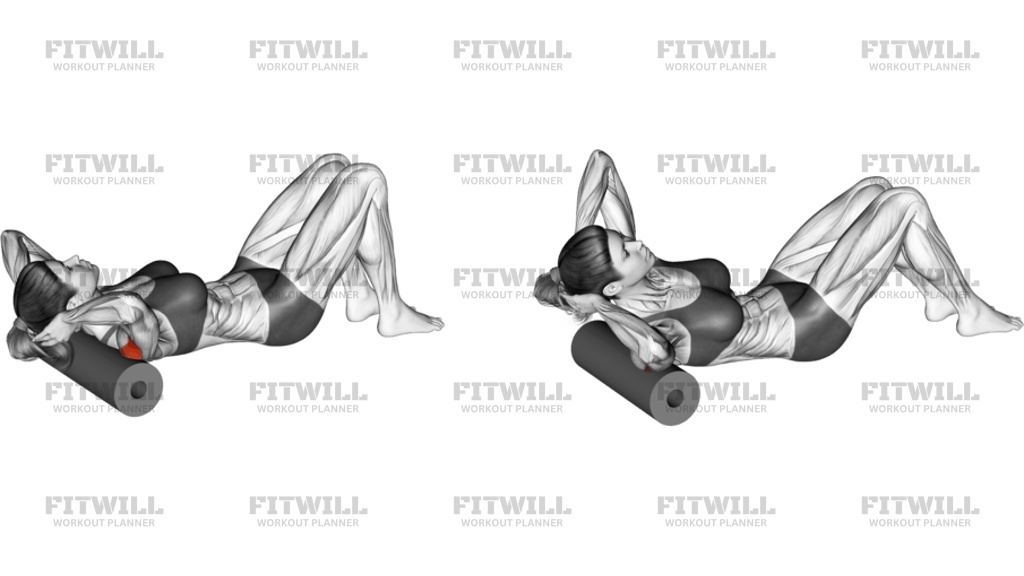
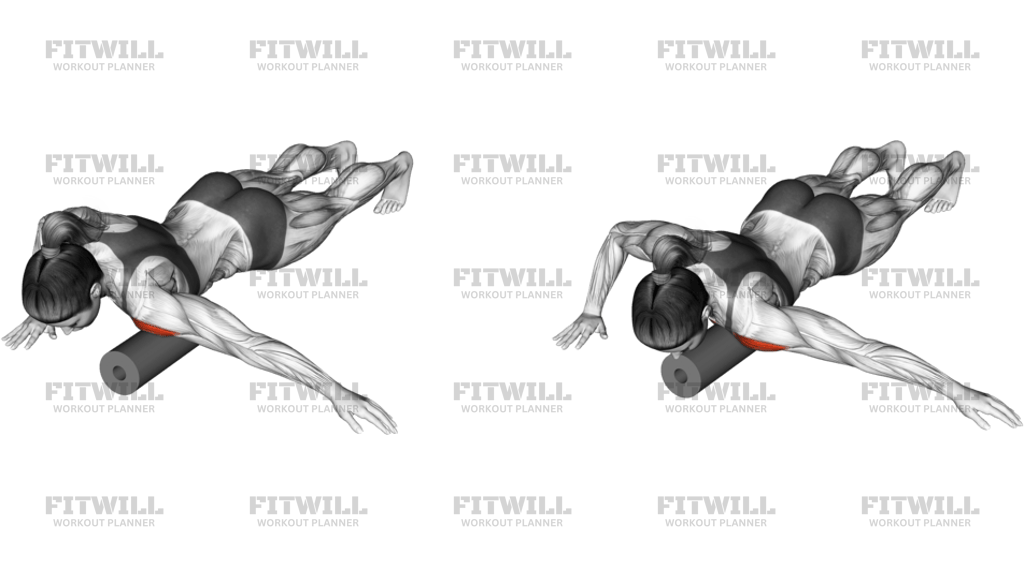
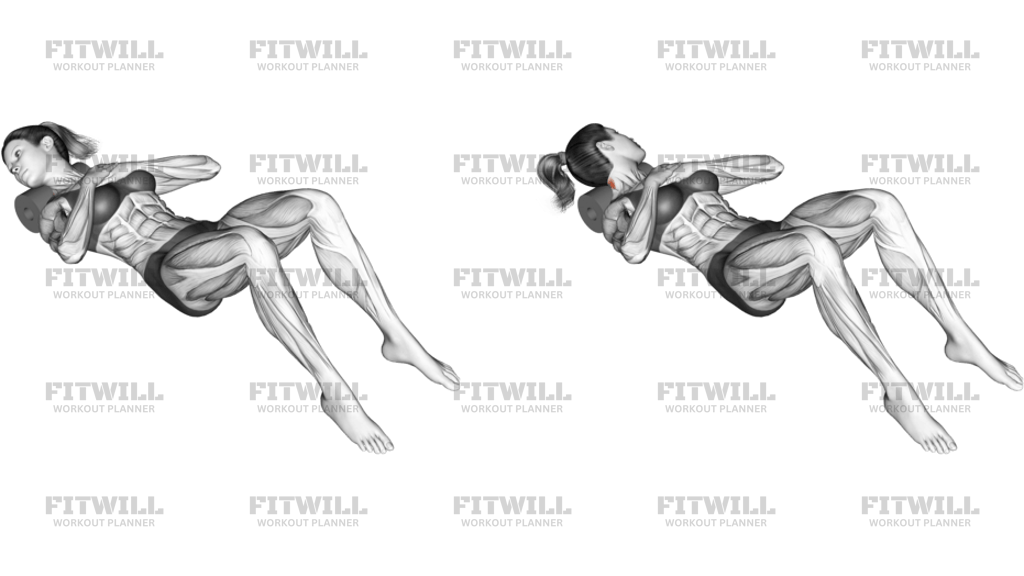
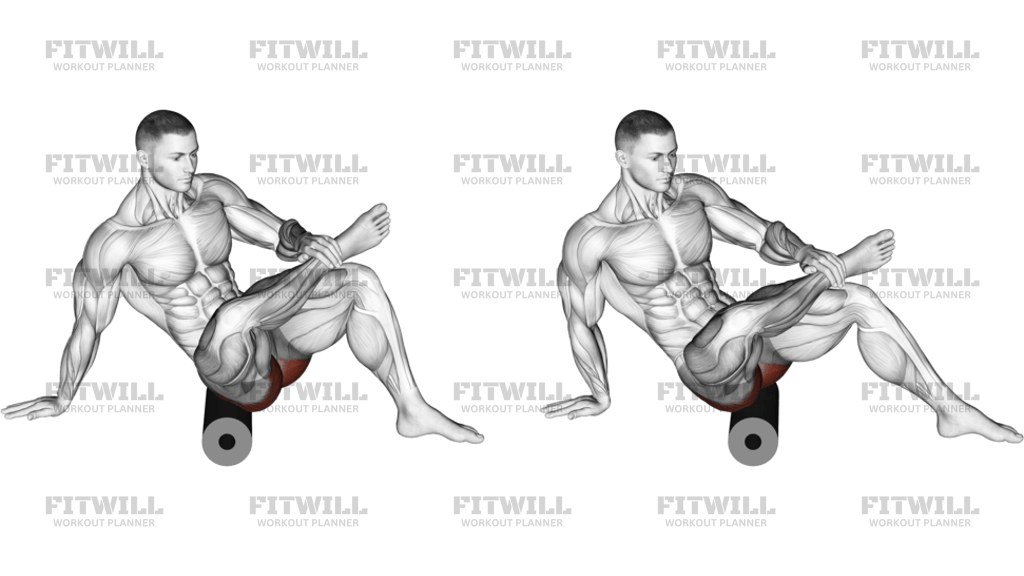
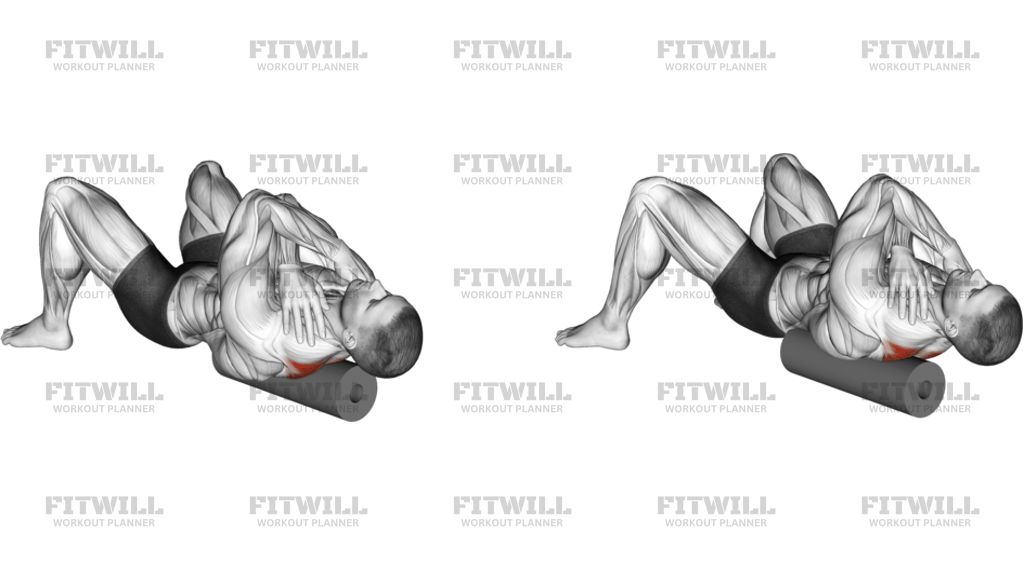
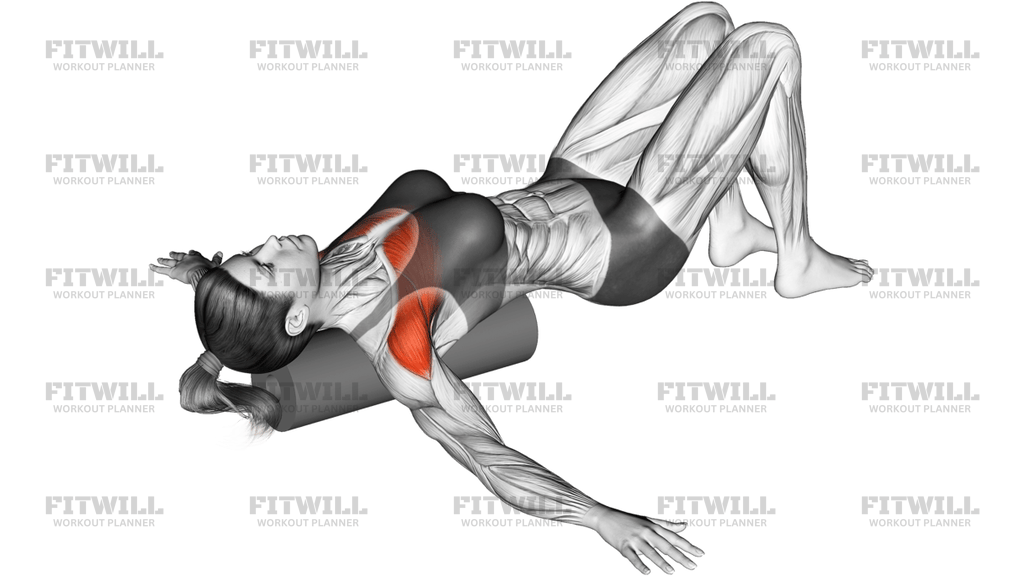
Roll Chest Opener Lying On Floor is a floor-based mobility drill that opens the front of the shoulders and chest while the upper back rests on a foam roller. The setup is simple, but the position matters: the roller should sit across the upper thoracic spine, the knees should stay bent with the feet flat, and the arms should open wide enough to create a stretch without forcing the shoulders forward.
This movement is mainly used to reduce stiffness in the pectorals, anterior delts, and upper ribcage area after pressing, desk work, or any training session that leaves the shoulders rounded. Because the chest opener is performed on the floor, the body can relax into the roller and let the sternum open gradually instead of trying to force range with an aggressive backbend. That makes it a useful reset before upper-body lifting, during warmups, or after long periods of sitting.
The key to getting value from the exercise is staying stacked and calm. Keep the lower back from arching hard, keep the chin softly tucked, and let the shoulders settle away from the ears. If the image and name feel a little different from the way your gym labels this drill, use the visible setup as the guide: a supine chest opener with the foam roller supporting the upper back, not a heavy rolling massage through the lower spine.
On each rep or hold, breathe slowly into the chest and side ribs while keeping the ribs from flaring. The goal is a broad stretch across the front of the torso, not pain in the shoulder joint. A gentle reach of the arms, a short pause, and a controlled return are usually enough. If the front of the shoulder pinches, reduce the arm angle or move the roller slightly higher until the stretch shifts back into the pecs.
Used consistently, Roll Chest Opener Lying On Floor can make pressing positions feel less restricted and improve the way the shoulders sit over the ribcage. It works best as a low-intensity accessory: enough tension to open the chest, not so much that the neck tightens or the lower back takes over.
[ Workout Log & Planner ]
Put your next workout in Fitwill
Keep your plan and training log ready when you are.


Instructions
- Place the foam roller across your upper back, just below the shoulder blades, and lie back with your knees bent and feet flat on the floor.
- Let your head rest on the floor and keep your chin slightly tucked so the neck stays long instead of cranked back.
- Open your arms out to the sides in a wide T or relaxed cactus shape, with your palms facing up and your elbows soft.
- Set your ribs down gently and keep your lower back from arching as you settle onto the roller.
- Take a slow inhale and let the chest lift open around the roller without shrugging the shoulders.
- On the exhale, soften your sternum, ribcage, and front shoulders toward the floor while keeping the arms open.
- If you are moving dynamically, glide only a few inches at a time over the roller and stop before the neck or lower back starts to take over.
- Hold the open position for the planned time or reps, then bring the arms back in and roll off the foam roller carefully.
Tips & Tricks
- Keep the roller across the upper thoracic spine, not down on the lumbar area, or the stretch turns into a low-back arch.
- A small bend in the elbows usually feels better than locking the arms straight, especially if the shoulders are tight.
- Let the ribs widen on the inhale and settle on the exhale; forced breathing tends to make the chest brace instead of open.
- If the front of the shoulder pinches, bring the hands a little closer to your body and reduce the angle of abduction.
- Use the floor to support your head so you are not holding tension in the neck while the chest opens.
- Keep the feet planted and the knees bent so the pelvis stays quiet and the lower back does not steal the movement.
- A gentle stretch in the pecs and front shoulders is the target; sharp pain or numbness means the setup is too aggressive.
- For a warmer-up version, stay in the hold for shorter periods and repeat a few times instead of forcing a long end-range stay.
Frequently Asked Questions
What does Roll Chest Opener Lying On Floor stretch most?
It mainly opens the pectorals and front shoulders while also easing stiffness through the upper back and ribcage.
Where should the foam roller sit for this exercise?
Place it across the upper back, usually just below the shoulder blades, so it supports the chest opener without pressing into the low back.
Do I need to keep rolling during the set?
Not necessarily. Many people use it as a held opener with slow breathing, while others make very small rolls through the upper thoracic spine.
Why are the knees bent and feet flat on the floor?
That position helps keep the pelvis stable so you can open the chest without turning the movement into a big low-back arch.
Should I feel this in my shoulders?
You should feel a broad stretch in the front of the shoulders and chest, not a sharp pinch inside the shoulder joint.
Can beginners do this stretch?
Yes. Beginners usually do best with a shorter hold, a softer arm angle, and a smaller range of motion.
When is this exercise most useful?
It works well before pressing workouts, after long desk sessions, or anytime the chest and shoulders feel rounded and stiff.
What should I do if my neck feels strained?
Support the head better, tuck the chin slightly, and reduce how far the arms open so the neck can relax.