Roll Chest Lying On Floor
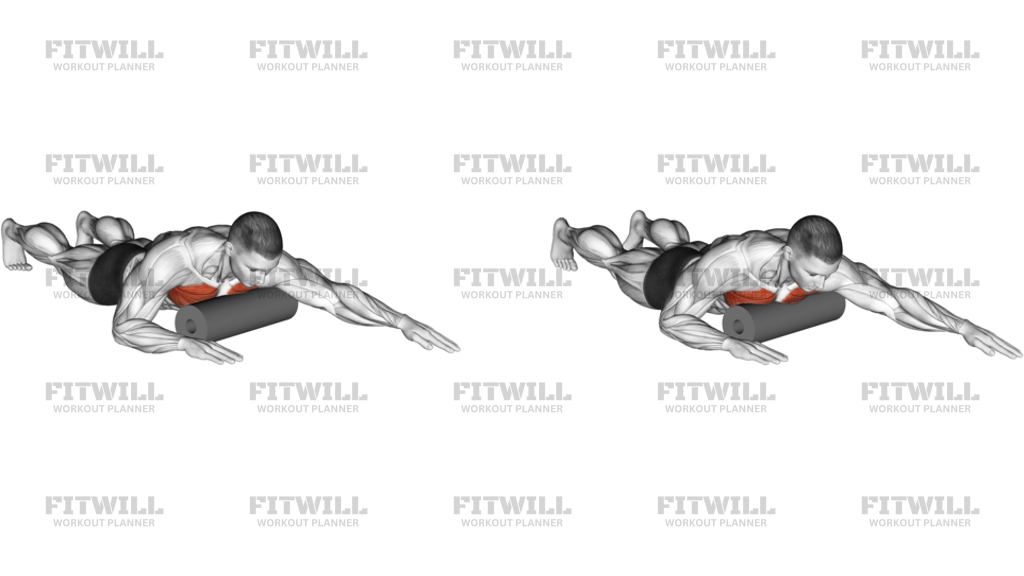
Roll Chest Lying On Floor is a floor-based chest and front-shoulder mobility drill done with a foam roller under the upper chest. It is designed to help the pectorals relax, reduce stiffness through the front of the shoulder, and let the upper back and rib cage move more freely. The goal is not to force a big range or chase load; it is to find a position where you can breathe, soften tension, and let the tissues around the chest open gradually.
The setup matters because small changes in roller placement and arm position change where the pressure lands. In the image, the body is face down with the roller under the chest and one arm reaching long, which shifts the stretch toward the pecs and the front of the shoulder on that side. Keep the pressure on the soft tissue of the chest rather than directly on the shoulder joint or collarbone, and use the floor to stay stable while you settle into the drill.
The best execution uses short, controlled shifts instead of big sweeps. Roll a few inches forward and back, or pause on a tender point for a couple of slow breaths, then move on. Keep the neck long, the ribs from flaring hard, and the shoulder from shrugging up toward the ear. The movement should feel like a focused release with active control, not like you are collapsing into the roller.
This drill is useful before pressing, push-ups, dips, or overhead work when the front of the shoulder feels short and the chest feels locked up. It can also work after upper-body sessions when you want to downshift tension and restore a smoother reach overhead. Because the exercise is low-load and position-dependent, beginners can use it safely as long as the pressure stays moderate and the breathing remains calm.
Stop or modify the position if you feel sharp pinching in the shoulder, numbness in the arm, or pressure directly on bone. Moving the roller slightly lower, widening the reach, or softening the pressure usually makes the drill more comfortable. The right repetition is the one where the chest opens without forcing the shoulder into an irritated position.
[ Workout Log & Planner ]
Put your next workout in Fitwill
Keep your plan and training log ready when you are.


Instructions
- Place a foam roller lengthwise on the floor and lie face down with the roller under the upper chest.
- Reach one arm long along the floor, with the palm turned down or slightly inward, and keep the other arm relaxed for balance.
- Set your ribs gently down and keep your neck long before you start moving.
- Let your weight settle onto the roller without shrugging the working shoulder toward your ear.
- Shift your body a few inches forward and back so the roller works across the pec and front-shoulder line.
- Pause on any tight spot for one or two slow breaths instead of forcing a larger range.
- Keep the movement smooth and small, then switch the reaching arm if you want to work the other side.
- Roll off the pressure slowly and stand up or reset before repeating.
Tips & Tricks
- Keep the roller on the soft chest tissue, not directly on the shoulder joint or the front of the collarbone.
- A small shift often works better than a big roll because the pec and front deltoid respond well to slow pressure changes.
- If the shoulder feels pinched, lower the arm angle a little instead of forcing the reach overhead.
- Exhale slowly as you sink into a tight spot so the ribs and pecs can relax instead of bracing harder.
- Keep the neck long and the chin slightly tucked so you do not jam the cervical spine while looking at the floor.
- Do not let the low back arch hard; a light rib cage set keeps the pressure where you want it.
- Use moderate pressure that feels like a strong stretch or tissue release, not sharp pain or numbness.
- This works well before bench press, push-ups, dips, or overhead pressing when the chest feels shortened.
Frequently Asked Questions
What does Roll Chest Lying On Floor work?
It mainly targets the pecs and front of the shoulder while also helping the upper rib cage and thoracic area move more freely.
Is this a strength exercise or a mobility drill?
It is a mobility and soft-tissue drill, not a strength movement. The goal is to reduce stiffness and improve comfortable reach.
Where should the roller sit on my chest?
Place it under the upper chest and pec line, not directly on the shoulder joint or collarbone. Small adjustments change the pressure a lot.
Why is one arm reaching long in the image?
The long reach opens the front of the chest on that side and lets the roller work more directly into the pec and anterior shoulder.
How long should I stay on one tight spot?
Usually one to three slow breaths is enough before you shift a little and find the next spot.
Can I use this before bench press or push-ups?
Yes. It is a good pre-lifting drill when the chest feels short or the shoulders do not want to open comfortably.
What should I do if the front of my shoulder pinches?
Reduce the pressure, move the roller slightly lower, or bring the reaching arm a little closer to your side.
Can I swap this for another chest release?
A doorway pec stretch, wall pec stretch, or ball release against the wall are the closest substitutes.