Roll Neck Rotation Lying On Floor
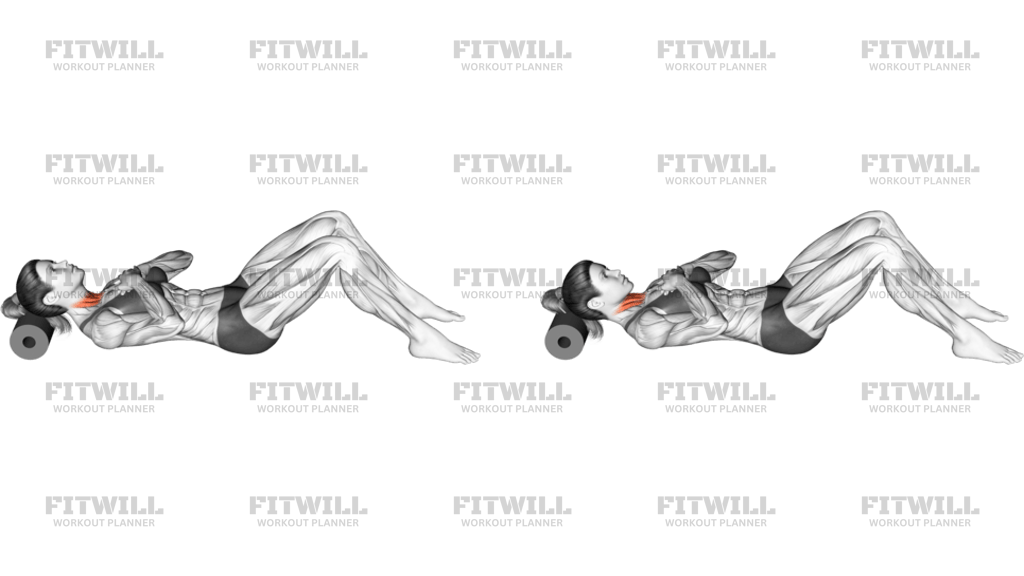
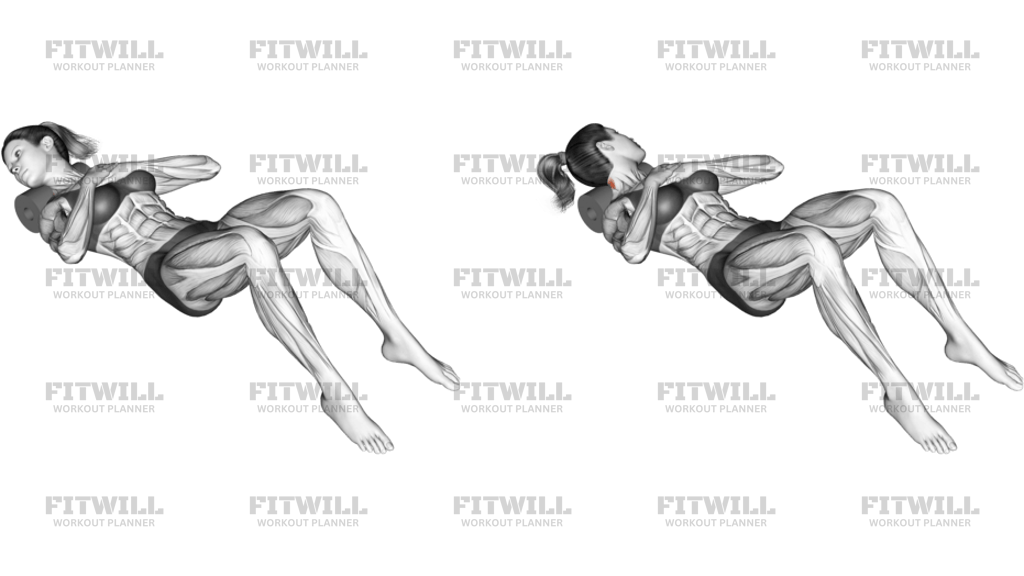
Roll Neck Rotation Lying On Floor is a low-load neck mobility drill performed while lying on your back with a foam roll supporting the upper back and the head free to turn side to side. The goal is not to chase a big range or a hard stretch. It is to create smooth cervical rotation while the shoulders, rib cage, and pelvis stay quiet.
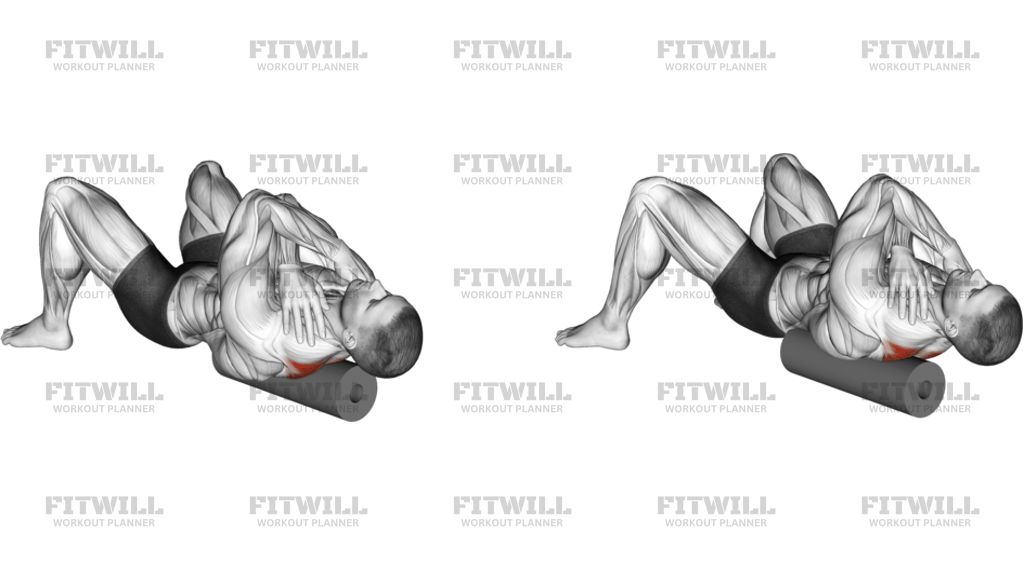
The setup matters because the foam roll changes how much of the movement comes from the neck instead of the upper back. With the knees bent and feet planted, the body has a stable base. Arms crossed over the chest help keep the shoulders from drifting and make it easier to feel the rotation happening through the neck.
This exercise is most useful when the neck feels stiff from desk work, long driving, overhead training, or general upper-body tension. It can be used in a warm-up, recovery session, or mobility circuit. It is also helpful before pressing, pulling, or sports work that depends on comfortable head turns and a calm upper body.
Each repetition should look and feel smooth. Turn the head slowly to one side until you reach a gentle end range, then return to center and rotate to the other side. Keep the chin relaxed, breathe evenly, and avoid forcing the neck deeper into the floor or into the foam roll. If the motion feels pinchy or creates symptoms down the arm, reduce the range or stop the set.
This is a control-and-position drill, so the best result comes from repeatable reps rather than intensity. A thinner roll, towel, or softer support usually makes the movement easier and less aggressive. When done well, the neck feels looser, the head turns more freely, and the upper body stays organized instead of bracing hard through every rep.
[ Workout Log & Planner ]
Put your next workout in Fitwill
Keep your plan and training log ready when you are.


Instructions
- Lie on your back on the floor with a foam roll placed under your upper back so your head can turn freely.
- Bend your knees and place your feet flat on the floor to keep your body anchored.
- Cross your arms over your chest or let them rest quietly by your sides so the shoulders stay relaxed.
- Set your head in a neutral position before starting, with the chin relaxed and the neck long.
- Slowly rotate your head to one side until you feel a gentle stretch or end range in the neck.
- Pause for a moment without shrugging, twisting your torso, or pressing harder into the support.
- Bring your head back through center with control, then rotate to the other side using the same smooth tempo.
- Keep breathing evenly through each rep and stop if the motion becomes sharp, dizzy, or uncomfortable.
Tips & Tricks
- Let the head turn first; do not roll the rib cage or shoulders with it.
- Use the smallest range that feels smooth if your neck is irritated or stiff.
- Keep the chin relaxed instead of jamming it toward the chest or lifting it up.
- A longer exhale often helps the neck soften into the rotation without forcing it.
- If the foam roll feels too aggressive, switch to a towel roll or thinner support.
- Avoid pressing the back of the head hard into the floor while you rotate.
- Move slowly enough that you could stop the rep anywhere without losing control.
- Stop before pain, tingling, or a pinching sensation starts to increase.
Frequently Asked Questions
What does Roll Neck Rotation Lying On Floor train?
It mainly trains neck mobility and control through cervical rotation while the torso stays stable.
Where should the foam roll sit during this exercise?
Place it under the upper back or upper shoulder area as shown so the neck can rotate freely without the torso taking over.
Should I feel a stretch in my neck?
Yes, a gentle stretch is normal at the end of the turn, but it should stay smooth and never feel sharp or forced.
Why are my knees bent and feet flat on the floor?
That position gives you a stable base so the neck can move without your lower body or pelvis compensating.
Can beginners do this movement?
Yes. Beginners should keep the range small, move slowly, and use a softer support if the foam roll feels too intense.
What is the most common mistake?
Most people either twist the torso with the head or force the neck into a range that feels pinchy instead of smooth.
When is this exercise useful?
It fits well before upper-body training, after long periods of sitting, or in a mobility session when your neck feels tight.
How many reps should I do?
Use a small, controlled set of rotations, usually enough to loosen the neck without creating fatigue.