Cable Standing Reverse-Grip Curl Straight Bar
Cable Standing Reverse-Grip Curl Straight Bar is a standing cable arm exercise that keeps constant tension on the elbow flexors while you hold a pronated, shoulder-width grip on a straight bar. The cable path makes the exercise feel different from a dumbbell reverse curl because the resistance stays active through the whole repetition instead of dropping off at the top or bottom.
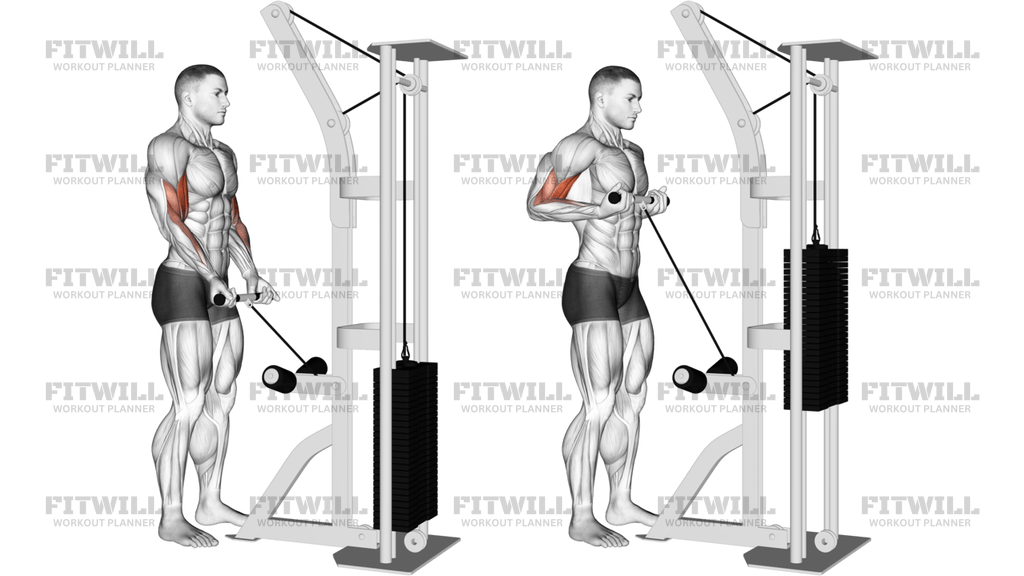
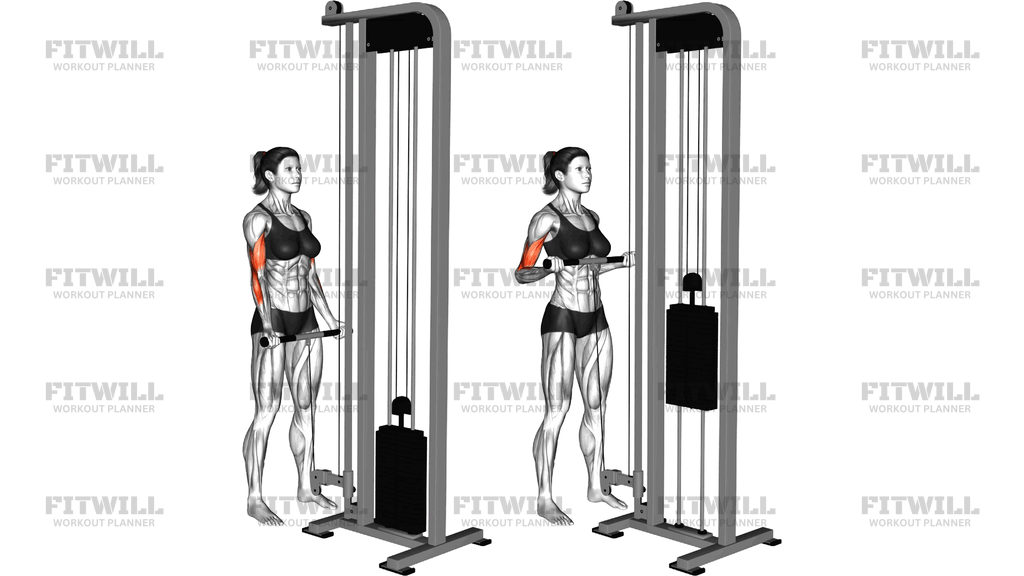
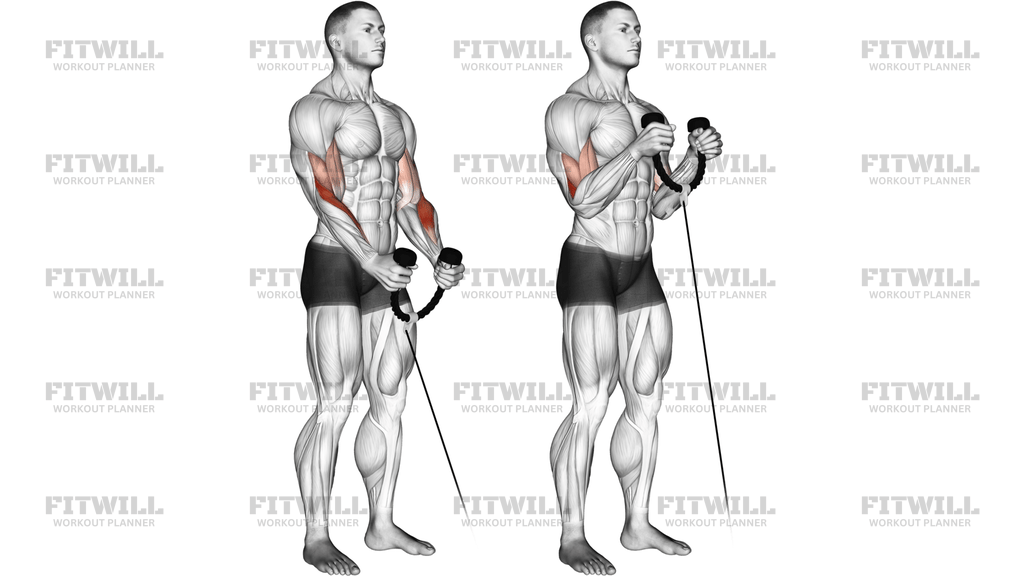
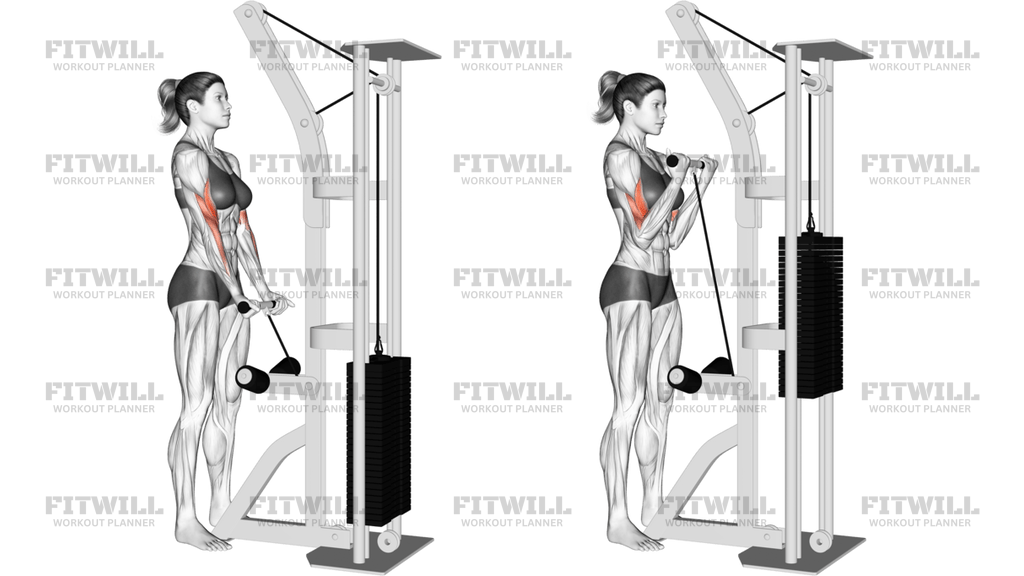
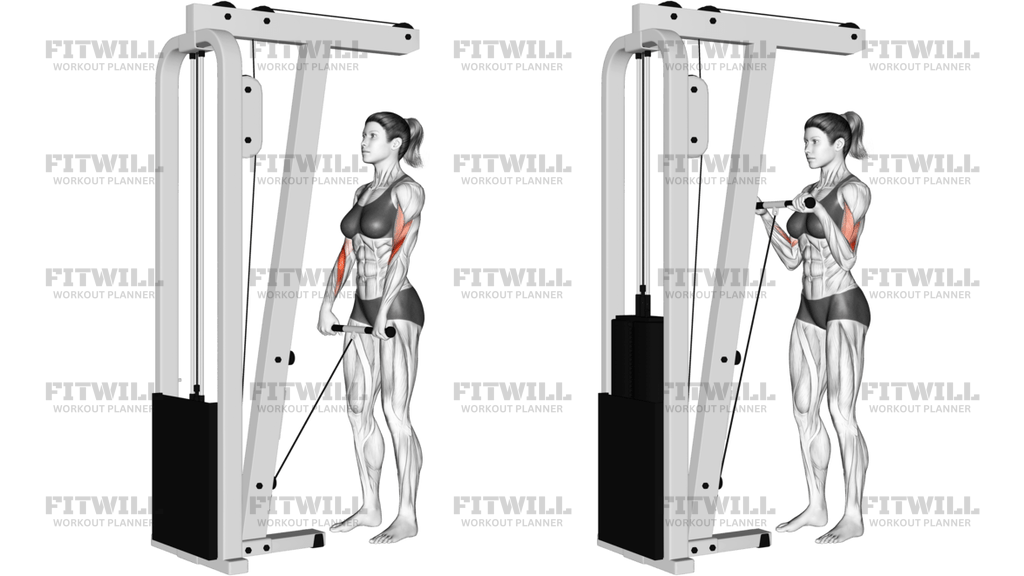
The movement is especially useful when you want to train the brachioradialis, brachialis, and forearms while still getting meaningful biceps involvement. In practical terms, that makes it a strong choice for arm-focused sessions, pull-day accessories, or any program that needs more forearm strength without adding a lot of body sway or shoulder involvement. The image shows the bar starting in front of the thighs and traveling upward in a short, controlled arc.
Setup matters here because a reverse-grip curl gets sloppy fast if you stand too far from the stack or let the elbows wander. Position the cable at the lowest pulley, take a balanced stance, soften the knees, and grip the straight bar overhand at about shoulder width. Keep the wrists stacked and neutral, the chest tall, and the upper arms quiet so the curl starts from the elbows rather than from a shrug or a swing.
On each rep, curl the bar toward the lower chest or upper stomach, then lower it slowly until the arms are almost straight again. The bar should move smoothly, the elbows should stay close to the sides, and the torso should stay tall enough that the cable is doing the work instead of your lower back. If you have to lean back, yank the bar, or flare the elbows to finish the set, the load is too heavy or the stance is too loose.
Cable Standing Reverse-Grip Curl Straight Bar is best used as a controlled accessory rather than a momentum lift. It pairs well after heavier pulling work, but it also works as a focused arm finisher when you want the forearms and elbow flexors to stay under tension for a longer set. Beginners can use it safely with light resistance, but the grip and wrist position need to stay strict so the exercise stays on the arms and does not turn into a shoulder or full-body cheat curl.
[ Workout Log & Planner ]
Put your next workout in Fitwill
Keep your plan and training log ready when you are.


Instructions
- Set the cable to the lowest pulley and clip on the straight bar.
- Stand facing the machine with your feet about hip-width apart and a slight bend in your knees.
- Take an overhand grip on the bar about shoulder-width apart and let it hang in front of your thighs.
- Stack your wrists, lift your chest, and keep your elbows tucked close to your ribs.
- Brace your midsection and curl the bar upward by bending only at the elbows.
- Drive the bar toward your lower chest or upper stomach without letting your shoulders roll forward.
- Pause briefly at the top, then lower the bar under control until your arms are almost straight.
- Keep the cable under tension, reset your posture, and repeat for the planned reps.
Tips & Tricks
- Stand close enough to the stack that the cable stays loaded at the bottom of the rep.
- Keep the grip shoulder-width; a wider grip usually makes the wrists work harder than the forearms.
- If your elbows drift forward, drop the weight and pin the upper arms to your sides.
- Let the wrists stay straight instead of bending them back to help the curl.
- Lower the bar slowly for two to three seconds so the forearms stay under tension.
- Stop the set when you have to lean back or shrug to get the bar moving.
- Keep the range a little shorter if the straight bar irritates your wrists or elbows.
- Use moderate reps and a controlled pace; this movement responds better to clean tension than to heavy cheating.
Frequently Asked Questions
What muscles does Cable Standing Reverse-Grip Curl Straight Bar work?
It hits the brachioradialis and brachialis hard while also training the biceps and forearm flexors.
Why use a reverse grip on Cable Standing Reverse-Grip Curl Straight Bar?
The pronated grip shifts more of the work toward the forearms and brachialis, so the curl feels less like a classic biceps curl.
How far should I bring the bar on Cable Standing Reverse-Grip Curl Straight Bar?
Bring it up toward the lower chest or upper stomach, then lower it until your arms are almost straight without losing cable tension.
Should my elbows move during Cable Standing Reverse-Grip Curl Straight Bar?
They should stay close to your sides. A little natural motion is fine, but big elbow travel turns the exercise into a cheat curl.
Is Cable Standing Reverse-Grip Curl Straight Bar beginner-friendly?
Yes, as long as the load is light enough to keep the wrists straight and the torso still.
What if the straight bar bothers my wrists?
Reduce the load first and shorten the range if needed. If the irritation stays, a different handle or grip angle may be a better choice.
How is Cable Standing Reverse-Grip Curl Straight Bar different from a dumbbell reverse curl?
The cable keeps tension on the arms through the whole rep, while dumbbells get easier at certain points in the range.
Where should I feel Cable Standing Reverse-Grip Curl Straight Bar most?
You should feel it mostly in the forearms and the front of the upper arm, not in the shoulders or lower back.