Cable Standing Reverse-Grip Curl Straight Bar
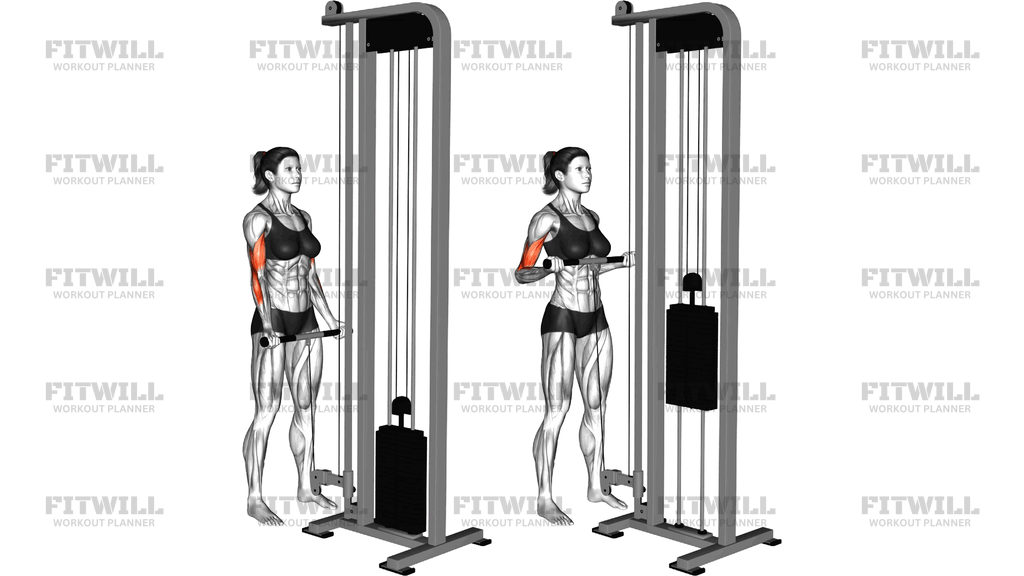
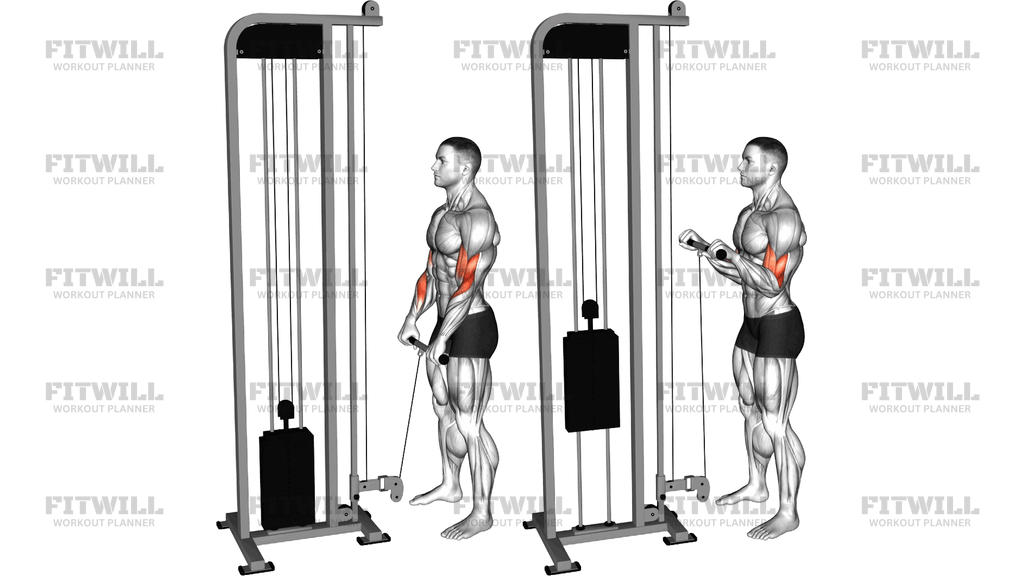
Cable Standing Reverse-Grip Curl Straight Bar is a strict standing biceps curl performed on a low cable with an underhand grip on a straight bar. The cable keeps tension on the arms through the whole rep, which makes it useful when you want steady resistance instead of the brief unloading that happens with dumbbells near the top of a curl. It is a practical choice for arm-focused sessions, accessory work, and finishers where clean position matters more than momentum.
The reverse-grip setup shifts some of the work toward the brachialis and forearms while the biceps still do most of the elbow flexion. Holding the bar palms up also asks the wrists and forearms to stay organized, so the movement feels more demanding than a standard curl. If the bar swings, the elbows drift forward, or the torso leans back, the set quickly turns into a shoulder and lower-back exercise instead of a direct arm movement.
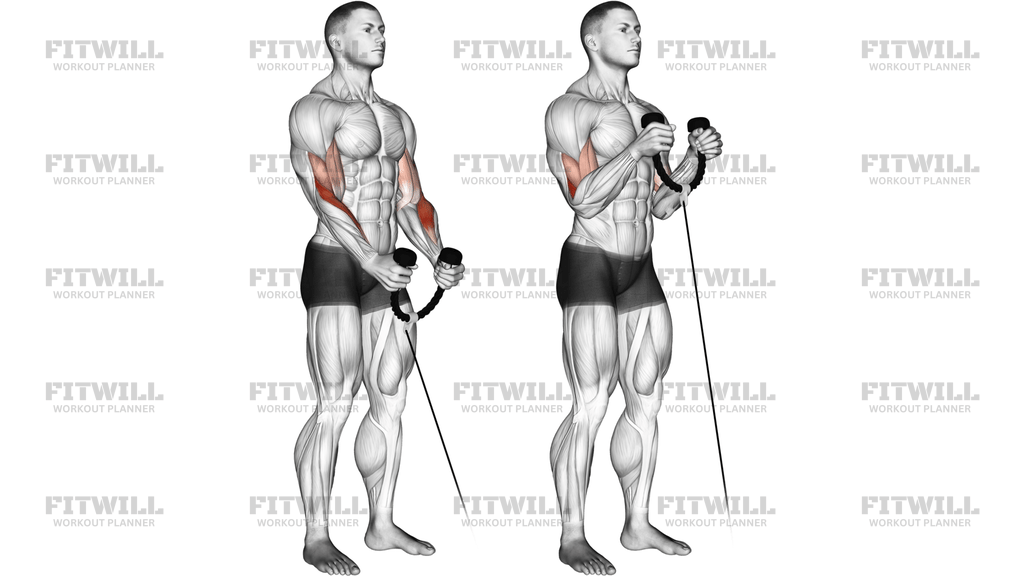
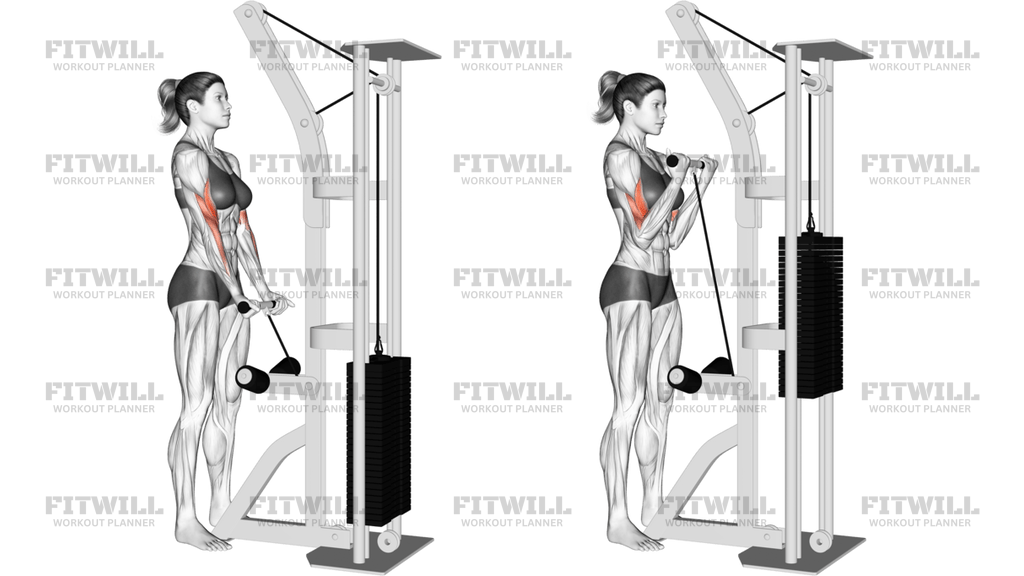
A good rep starts with the pulley low, the bar already under tension, and the hands set about shoulder-width apart. Stand tall with your feet about hip-width apart, soften the knees, and keep the chest stacked over the pelvis before you curl. Pull the bar toward the front of your shoulders by bending only the elbows, then squeeze briefly at the top before lowering under control until the arms are almost straight and the cable is still pulling on the bar.
Cable Standing Reverse-Grip Curl Straight Bar works well when you want repeatable tension and a clear arm pump without needing much body movement. It is especially useful for people who want to build biceps strength while also challenging the forearms and grip. Keep the load moderate enough that each repetition looks the same, breathe out on the curl and in on the lowering phase, and stop the set when the wrists start to bend back, the elbows move, or the torso begins to sway.
[ Workout Log & Planner ]
Put your next workout in Fitwill
Keep your plan and training log ready when you are.


Instructions
- Set the cable pulley to the lowest position and attach a straight bar.
- Stand facing the stack and take an underhand grip on the bar, about shoulder-width apart.
- Step back until the cable is taut with your arms nearly straight and the weight stack is settled.
- Plant your feet about hip-width apart and keep a soft bend in the knees.
- Stack your ribs over your pelvis, lift your chest, and keep your torso upright without leaning back.
- Pin your elbows close to your sides and keep your wrists straight before you start the first rep.
- Curl the bar up by bending the elbows only, bringing it toward the front of your shoulders.
- Squeeze the arms briefly at the top, then lower the bar slowly until the elbows are almost straight and tension stays on the cable.
- Exhale as you curl and inhale as you lower, then set the bar down under control when the set is finished.
Tips & Tricks
- Keep the grip about shoulder-width; a very narrow reverse grip can irritate the wrists.
- Do not let the elbows drift forward to chase a higher curl; keep the upper arms quiet.
- If the stack lifts off too sharply at the bottom, step a little farther back so the cable starts with tension.
- Use a lighter load if your wrists extend backward or the bar rolls into your fingers.
- Lower the bar more slowly than you lift it so the cable does not yank your shoulders forward.
- Stop the rep when the forearms hit the lower position and the cable is still under control; do not lock out hard.
- Keep your shoulders down and away from your ears so the biceps stay in charge of the movement.
- If your torso starts rocking, the weight is too heavy for a strict reverse-grip curl.
- A short pause at the top helps prevent momentum from taking over the next rep.
Frequently Asked Questions
What muscles does Cable Standing Reverse-Grip Curl Straight Bar work?
The biceps are still the main mover, but the reverse grip also puts noticeable work on the brachialis, brachioradialis, and forearm flexors.
How is Cable Standing Reverse-Grip Curl Straight Bar different from a regular cable curl?
The underhand grip makes the forearms work harder and usually reduces how much weight you can use, while the cable keeps tension more consistent through the whole curl.
Should my elbows stay tucked during Cable Standing Reverse-Grip Curl Straight Bar?
Yes. Keep the elbows close to your sides so the movement comes from elbow flexion, not from swinging the upper arms forward.
How wide should my grip be on the straight bar?
About shoulder-width is the safest starting point. If the wrists feel cranky, adjust slightly wider rather than forcing a narrow reverse grip.
Can beginners do Cable Standing Reverse-Grip Curl Straight Bar?
Yes. Start light and focus on keeping the torso still, the wrists straight, and the lowering phase controlled.
How low should I lower the bar?
Lower until the elbows are almost straight and the cable still has tension. If you have to reach, lean back, or lose wrist position, the range is too aggressive.
Why do I feel Cable Standing Reverse-Grip Curl Straight Bar in my forearms so much?
That is normal because the reverse grip puts the brachioradialis and forearm flexors under more demand than a standard palm-up curl.
What is the most common mistake with this exercise?
The biggest mistake is turning it into a body-swing curl by leaning back and letting the elbows travel forward.
Where should I stand relative to the cable stack?
Stand just far enough back that the bar starts under tension without pulling you forward; if the cable goes slack at the bottom, step back a little more.