Lever One-Arm Chest Press Plate Loaded
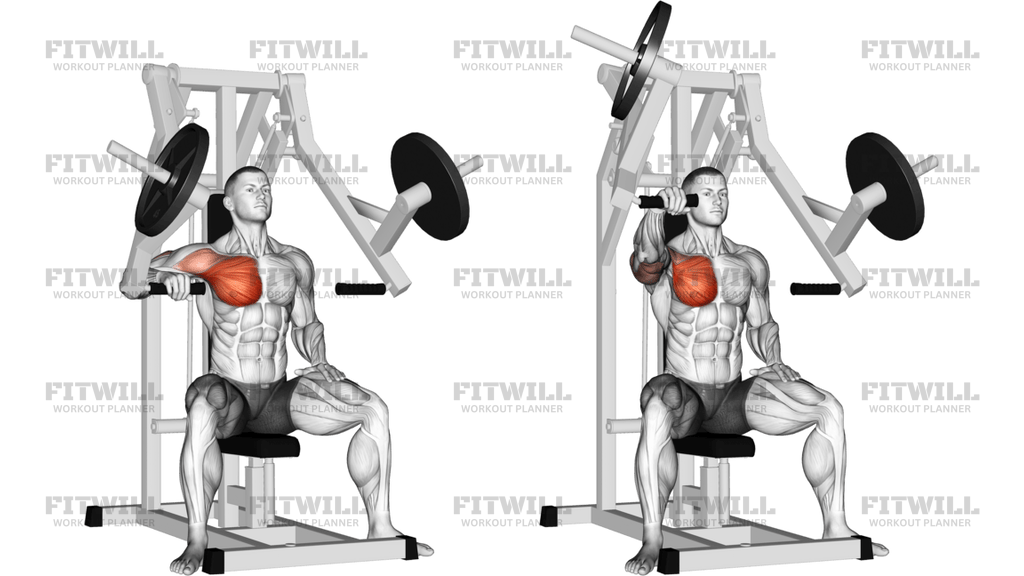
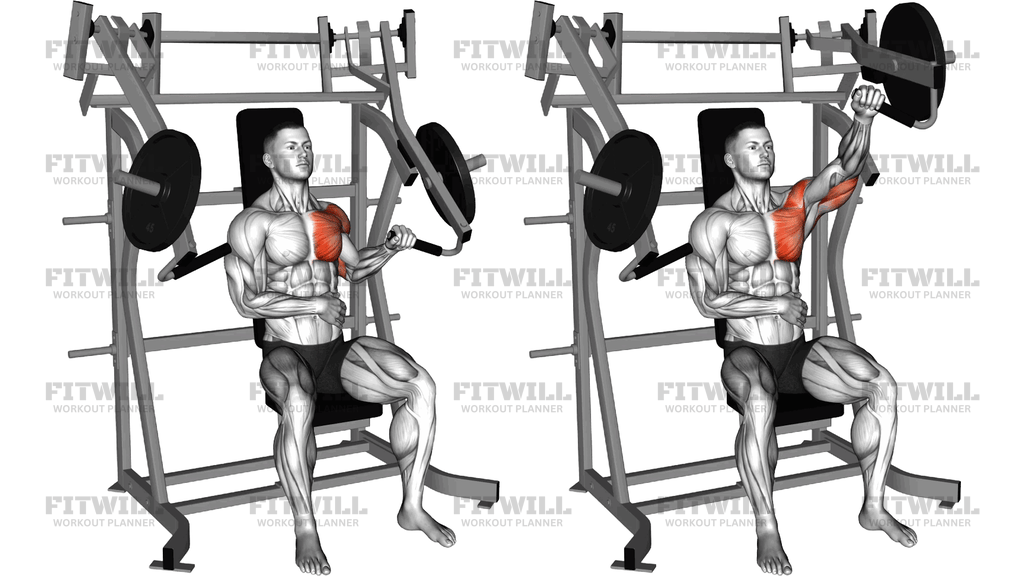
Lever One-Arm Chest Press Plate Loaded is a unilateral machine pressing exercise that trains the chest with help from the front deltoid and triceps while the torso resists twisting. Because the arm moves on a fixed lever, the machine gives you a stable press path without removing the need to set the shoulder, brace the ribcage, and keep the trunk square to the pad and seat.
The one-arm format makes the exercise more than just a chest builder. It also exposes side-to-side differences in pressing strength and control, and it demands cleaner anti-rotation from the core than a two-arm machine press. That makes it useful for lifters who want chest volume, focused unilateral work, or a way to keep one side from dominating the other.
The setup matters. Seat height should place the handle roughly in line with mid-chest so the working elbow can start slightly behind the torso without the shoulder climbing up toward the ear. The feet should stay planted, the non-working hand can rest on the thigh or seat for balance, and the chest should stay tall without over-arching the lower back. From there, press the handle forward in a smooth arc until the arm is almost straight, then return under control until the chest is loaded again.
Good reps feel like the shoulder stays packed down while the upper arm drives the machine rather than the hand punching at random. If the load is too heavy, the torso will rotate, the wrist will bend back, or the shoulder will roll forward at the bottom. Use a weight that lets you keep the path clean, the pause at the end controlled, and the lowering phase deliberate.
This is a strong accessory movement for chest-focused sessions, unilateral upper-body work, or as a machine-based press when you want stability and consistent tension. It can be beginner-friendly when the seat is adjusted correctly and the range of motion stays pain-free, but the exercise still rewards patient setup and precise control more than maximal load.
[ Workout Log & Planner ]
Put your next workout in Fitwill
Keep your plan and training log ready when you are.


Instructions
- Adjust the seat so the handle lines up with your mid-chest and sit tall with your back against the pad.
- Plant both feet flat, and let the non-working hand rest on your thigh or the seat for balance.
- Set the working shoulder down and back, with the elbow slightly behind the torso at the start.
- Grip the handle firmly with a neutral wrist and keep the forearm stacked under the handle.
- Brace your torso so your ribcage stays quiet and your body does not rotate toward the pressing side.
- Press the handle forward and slightly inward in the machine's natural arc until the arm is almost straight.
- Squeeze the chest briefly at the finish without slamming into lockout or shrugging the shoulder.
- Lower the handle slowly until the elbow returns to the loaded start position and the chest stays in control.
- Breathe out on the press, inhale on the return, and finish the set by returning the handle with control.
Tips & Tricks
- If the seat is too low, the press turns into an awkward shoulder press; raise it until the handle starts near mid-chest.
- Keep the working shoulder from creeping toward your ear at the bottom of the rep.
- Do not let the torso twist toward the pressing side just to finish the rep.
- A neutral wrist helps keep the handle stacked over the forearm and reduces strain in the hand and elbow.
- The non-working hand should help you stay square, not pull you off the pad.
- Stop the descent when the chest still feels loaded; do not sink so deep that the shoulder rolls forward.
- Use a load that lets you pause briefly at the finish instead of bouncing the lever back.
- Keep the lowering phase slower than the press if you want more chest tension and less machine momentum.
- If the triceps take over too early, bring the handle path a touch lower and focus on squeezing the chest first.
Frequently Asked Questions
What muscles does the lever one-arm chest press train?
It primarily trains the chest, with the front shoulders and triceps helping through the press.
Why use the one-arm version instead of a two-arm machine press?
The one-arm version makes it easier to spot side-to-side differences and forces your core to resist rotation.
Where should the handle start before I press?
Set the seat so the handle starts around mid-chest, with the elbow slightly behind the torso and the shoulder not shrugged.
Should my torso stay perfectly still during the rep?
It should stay as square as possible. A small amount of natural tension is fine, but twisting to move the weight usually means the load is too heavy.
How far should I press the handle?
Press until the arm is almost straight and the chest stays engaged, but do not force a hard lockout if it pulls the shoulder forward.
Is this safe for beginners?
Yes, if the seat is adjusted correctly and the load is light enough to keep the shoulder and torso controlled.
What is a common form mistake on this machine?
Shrugging the shoulder, flaring the elbow too high, or bouncing out of the bottom are the most common issues.
Can I use this as a chest accessory after barbell pressing?
Yes. It works well after heavier pressing because the machine keeps tension steady without needing a lot of stabilization.