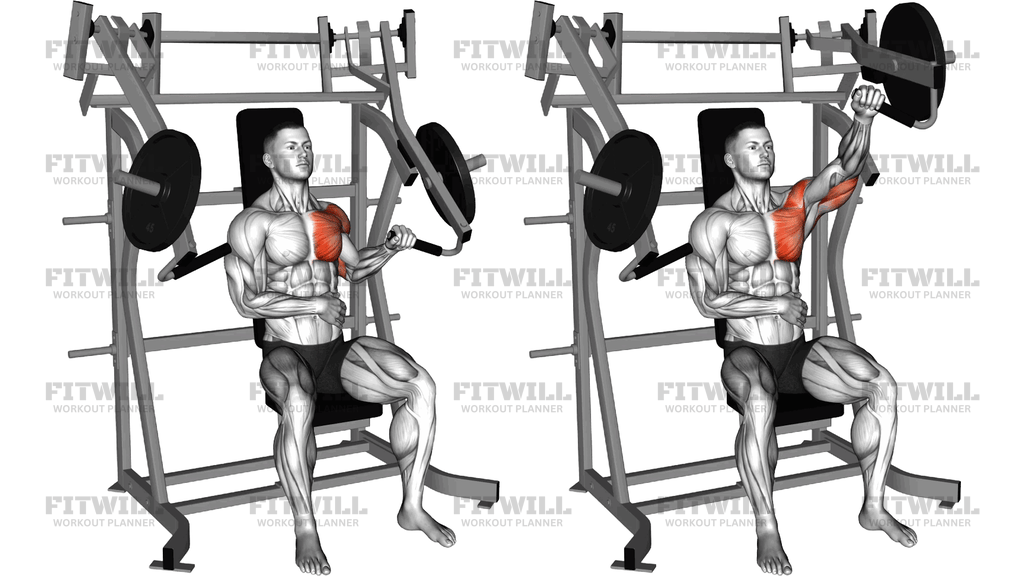
Lever One-Arm Chest Press Plate Loaded
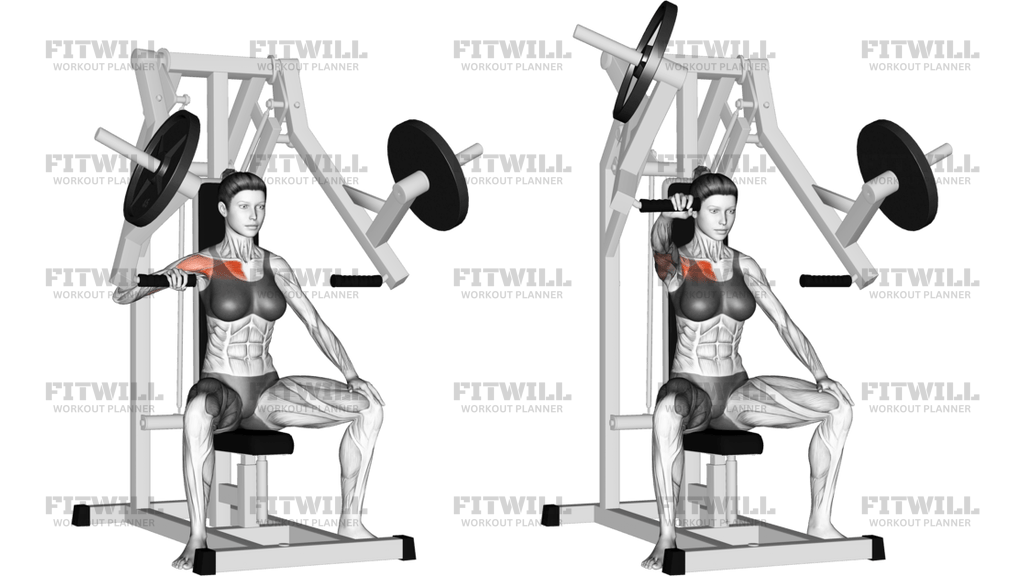
Lever One-Arm Chest Press Plate Loaded is a unilateral machine pressing exercise that builds the chest, front shoulder, and triceps while forcing the torso to resist twisting. The plate-loaded lever gives you a fixed path, but the single-arm setup adds a stabilizing demand that makes clean positioning more important than brute force. It is especially useful when you want strong pressing work without the balance demands of a free-weight press.
The working side starts with the elbow bent and the handle near shoulder height. From there, the press moves forward along the machine's arc until the arm is almost straight in front of the body. Because only one arm is doing the work, the rib cage, pelvis, and shoulder line have to stay organized so the rep stays on the chest instead of turning into a shrug, a twist, or a short push from the shoulder.
Set the seat so the handle lines up with the middle of the chest and the grip does not force the shoulder too high or too low. Keep the back and glute contact steady on the pad, plant both feet, and use the free hand on the thigh, seat, or machine frame to help prevent rotation. That setup lets you create force through the pressing side while keeping the torso square and the shoulder blade controlled.
The best repetitions are smooth, deliberate, and repeatable. Press until the chest is fully engaged and the arm is nearly extended without locking hard through the elbow, then return the handle with control until you feel a manageable stretch across the chest and front shoulder. If the machine feels cramped or the path pulls the shoulder forward, lower the load and adjust the seat before continuing.
This movement fits well in chest-focused training, upper-body strength blocks, or unilateral accessory work when you want to compare sides and clean up asymmetries. It can be a practical choice for lifters who need guided pressing mechanics, but the setup must stay tight enough that the torso does not lean, rotate, or bounce against the pad. When done well, it trains pressing strength, shoulder stability, and side-to-side control in the same rep.
Fitwill
Log Workouts, Track Progress & Build Strength.
Achieve more with Fitwill: explore over 9600 exercises with images and videos, access built-in and custom workouts, perfect for both gym and home sessions, and see real results.
Start your journey. Download today!




Instructions
- Adjust the seat so the pressing handle lines up with mid-chest and the starting grip sits near shoulder height.
- Sit tall with your back against the pad, both feet planted, and the working elbow bent out to the side.
- Place the free hand on your thigh, seat, or machine frame to help keep your torso from rotating.
- Set your shoulder down and back lightly, then brace before you move the handle.
- Press the handle forward and slightly inward along the machine's arc until the arm is almost straight.
- Keep the chest lifted and the rib cage quiet so the press does not turn into a torso twist.
- Pause briefly at the front without locking hard through the elbow or shrugging the shoulder.
- Return the handle slowly until the elbow is back beside the torso and the chest has a controlled stretch.
- Reset your breath and repeat for the planned number of reps, then switch sides if needed.
Tips & Tricks
- If the handle starts too high, your front shoulder will take over; lower the seat until the press lines up with the middle of the chest.
- Keep both sitting bones heavy on the pad so the free side cannot help by turning the torso.
- A slight inward path is fine, but do not let the elbow flare so far back that the shoulder feels pinched at the bottom.
- Use the free hand as a brace, not as a pull; it should steady you without yanking the body sideways.
- Stop the press just short of a hard elbow lockout so the chest keeps tension instead of dumping load into the joint.
- Lower the lever under control, especially on the way back, because the stretched position is where sloppy reps show up first.
- Breathe out as you drive the handle forward and inhale as it comes back to keep the torso from bracing too rigidly.
- Choose a load you can control for every rep on the weaker side; unilateral machines expose side-to-side strength differences quickly.
Frequently Asked Questions
What muscles does the lever one-arm chest press hit most?
It primarily trains the chest, with the front deltoid and triceps helping to finish the press.
Why use the one-arm version instead of a two-arm machine press?
The single-arm setup helps you train one side at a time and makes it easier to spot rotation, strength differences, and control issues.
Where should the handle start on this machine?
The handle should start near shoulder height with the elbow bent and the forearm lined up so the press begins from the middle of the chest.
Should my torso rotate during the press?
No. A small amount of natural bracing is normal, but the chest and hips should stay square against the pad.
Do I need to lock out the elbow at the top?
No. Finish the rep with strong chest tension and a nearly straight arm, but avoid slamming into a hard lockout.
Is this exercise shoulder-friendly for everyone?
It is usually easier to control than free-weight pressing, but the bottom position should still feel smooth and pain-free.
What is the most common setup mistake?
The most common mistake is sitting too high or too low, which changes the press path and shifts work away from the chest.
Can beginners use this machine?
Yes. It is a good beginner pressing option if the seat is adjusted correctly and the weight stays light enough to control.