Elbow Up And Down Dynamic Plank
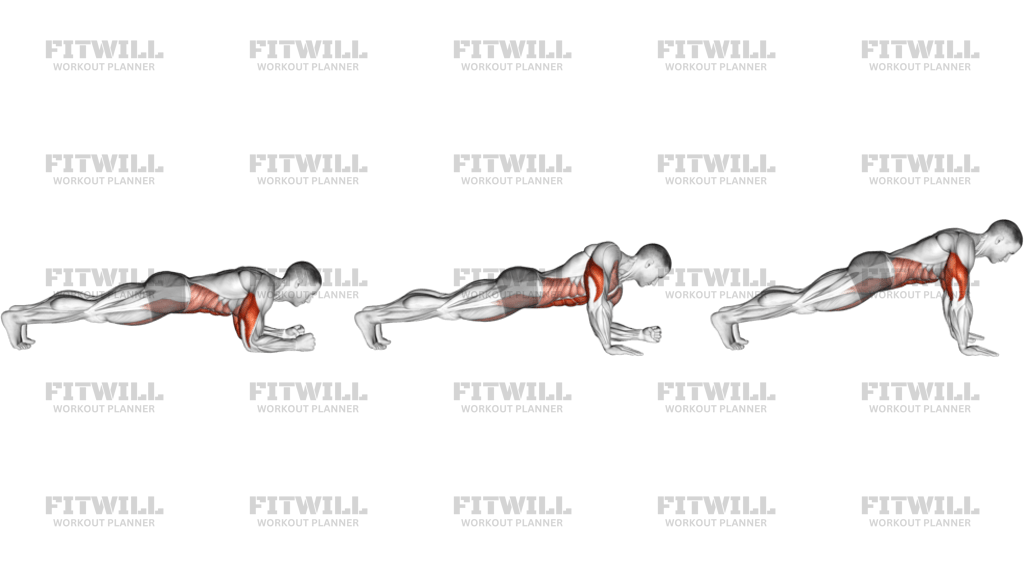
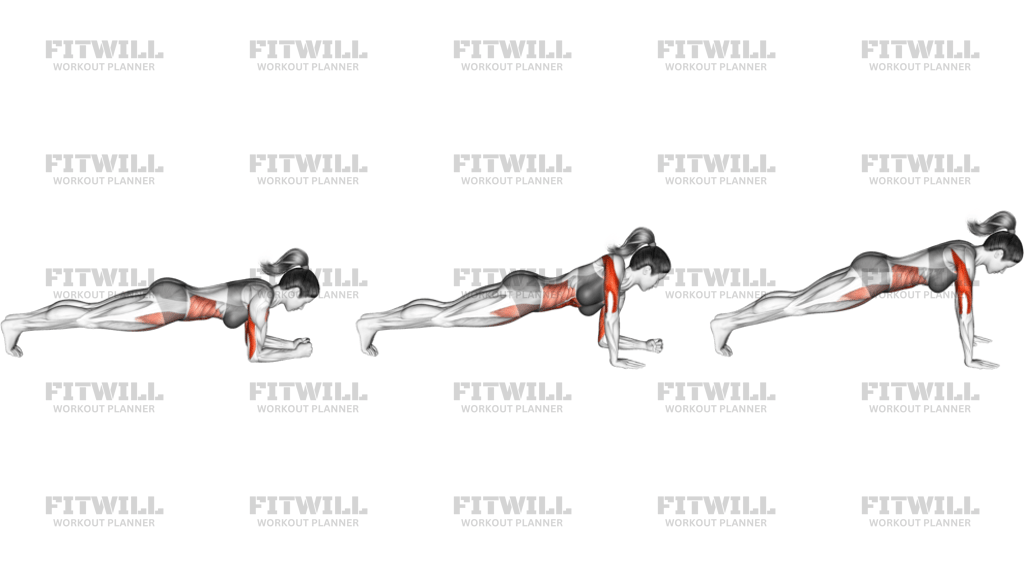
Elbow Up and Down Dynamic Plank is a bodyweight core drill that moves between a forearm plank and a straight-arm plank while the trunk stays braced and the hips stay level. It is a small, controlled version of a classic plank-up-down pattern, so the goal is not speed. The goal is to keep the rib cage, pelvis, and shoulders organized while the arms do the work of changing positions.
The exercise is centered on the abs, with the obliques and deep core muscles helping resist rotation and unwanted side-to-side sway. The shoulders, triceps, and chest also have to support bodyweight each time you press up or lower back down. Because the movement changes the base of support, it is useful for teaching full-body tension, shoulder stability, and clean plank mechanics at the same time.
The setup matters. Start on a mat in a forearm plank with elbows under the shoulders, forearms parallel or slightly angled inward, legs straight, and feet set about hip-width apart for balance. Keep the glutes lightly engaged, squeeze the thighs, and make one long line from head to heels before the first rep. If the lower back arches or the hips twist before you even start, the rep will turn into a shoulder exercise instead of a core exercise.
Each repetition should be deliberate. Press one hand into the floor, then the other, until you arrive in a stable high plank with both hands stacked under the shoulders. From there, lower back to the forearms one arm at a time, returning to the same forearm-plank position without rocking the torso. Exhale as you press or lower, inhale as you stabilize, and keep the neck long so the head does not lead the movement.
This is a good accessory exercise for warmups, core blocks, or conditioning circuits when you want core endurance with a shoulder-stability challenge. It fits best when the rest of the workout can tolerate a moderate amount of fatigue in the trunk and triceps. Use a slower tempo or fewer reps if your hips start to bounce, your shoulders collapse, or you lose the ability to hold the plank line.
Beginners can use this movement with shorter sets, wider foot placement, or a pause in the high plank before lowering again. More advanced lifters can make it harder by slowing each transition, reducing the foot stance, or extending the set while keeping every rep crisp. The right version is the one that lets you keep the torso quiet from start to finish.
[ Workout Log & Planner ]
Put your next workout in Fitwill
Keep your plan and training log ready when you are.


Instructions
- Start in a forearm plank on a mat with your elbows under your shoulders, forearms parallel, legs straight, and feet about hip-width apart.
- Set your body in one long line from head to heels, then lightly squeeze your glutes and thighs so your lower back does not sag.
- Brace your abs before you move and keep your rib cage pulled down instead of flaring forward.
- Press one hand into the floor and lift that side of the body into a high plank, then press the other hand down to finish with both arms straight.
- Keep your shoulders stacked over your wrists in the high plank and resist letting your hips twist or bounce.
- Lower one forearm back to the mat under control, then lower the other forearm to return to the starting plank.
- Use a steady exhale as you press up or lower down, and inhale as you stabilize between transitions.
- Repeat the same alternating side pattern for the planned reps, then finish by returning both forearms to the floor with control.
Tips & Tricks
- Set your feet a little wider if your hips want to rock side to side during the transition.
- Think about pushing the floor away instead of simply lifting your torso; that keeps the shoulders active.
- Keep your elbows close to the line of your ribs when lowering so the rep stays tight and controlled.
- If your lower back starts to arch, shorten the set rather than forcing more reps.
- A slow lower back to the forearms is usually harder and cleaner than dropping quickly.
- Squeeze your glutes before every rep to help keep the pelvis from tilting forward.
- Do not let your head reach ahead of your shoulders; keep your neck long and neutral.
- Use a mat or soft surface so repeated forearm contact does not become distracting.
- Choose a rep count you can finish without losing the straight line from shoulders to heels.
Frequently Asked Questions
What muscles work most in Elbow Up and Down Dynamic Plank?
The abs do most of the stabilizing, while the obliques, deep core, shoulders, triceps, and chest help support each transition.
Is this the same as a plank up-down?
Yes. It is the forearm-to-hand plank transition where you alternate arms to move from low plank to high plank and back again.
Should my feet stay together or apart?
Hip-width feet are usually easiest for keeping the torso steady. A slightly wider stance can help if you are fighting a lot of hip sway.
What should I do if my hips twist during the rep?
Widen your stance, slow the transitions, and reduce the reps. The torso should stay quiet while the arms change levels.
Do I need to touch the floor every time I lower?
Yes, each lowering phase should return you to a clear forearm plank so the rep has a real start and finish.
Can beginners use this plank variation?
Yes, but shorter sets and a wider foot position help. If the body line collapses, a standard forearm plank is a better starting point.
Where should I feel the exercise most?
You should feel the abs and obliques working hard to stop rotation, with the shoulders and triceps supporting the press to high plank.
What is the most common mistake with the hand placement?
Putting the hands too far in front of the shoulders makes the press unstable. Stack the wrists under the shoulders in the high plank.
How can I make this movement harder without adding weight?
Slow each up-down transition, narrow the feet slightly, or extend the set while keeping the hips and rib cage locked in place.