Bench Pull-Ups
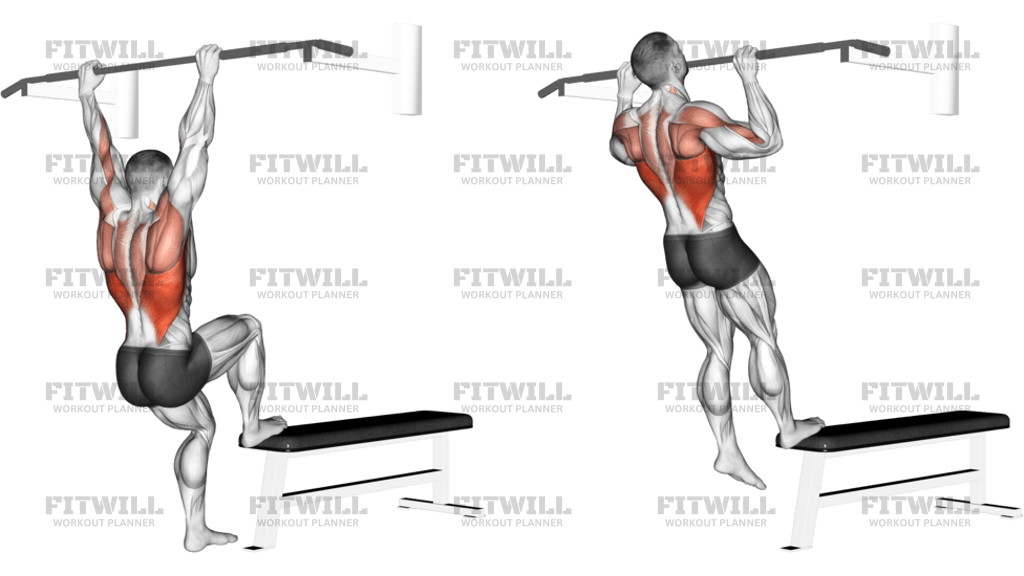
Bench Pull-Ups are a bench-assisted vertical pull used to build the pulling strength and coordination needed for a cleaner pull-up pattern. One foot stays on the bench to reduce how much body weight you have to lift, which makes the movement useful when strict pull-ups are still too demanding or when you want to accumulate more high-quality reps without losing position. The exercise still asks the same muscles to work hard, but the bench gives you enough assistance to practice a smooth pull from a dead hang into a strong top position.
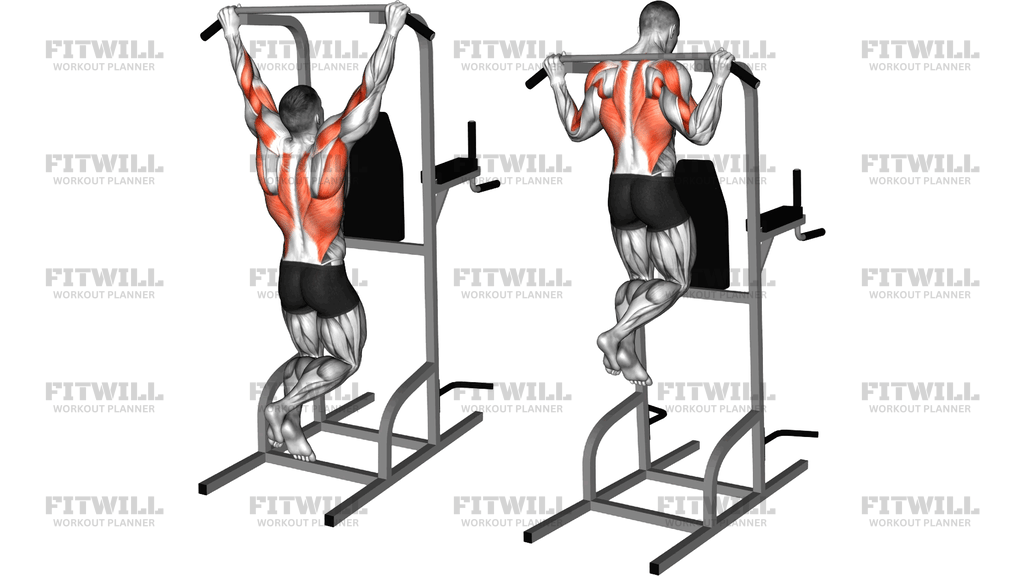
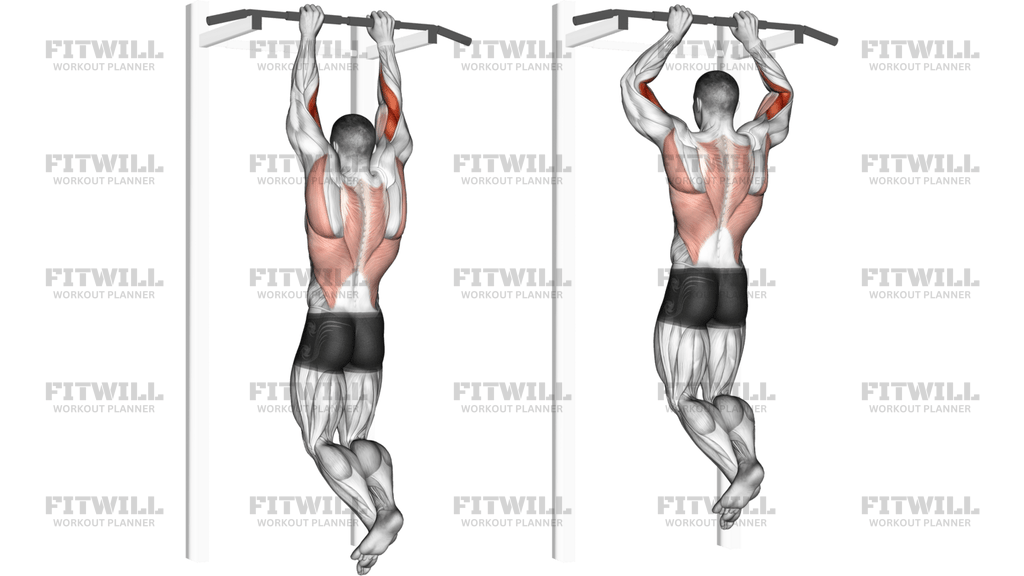
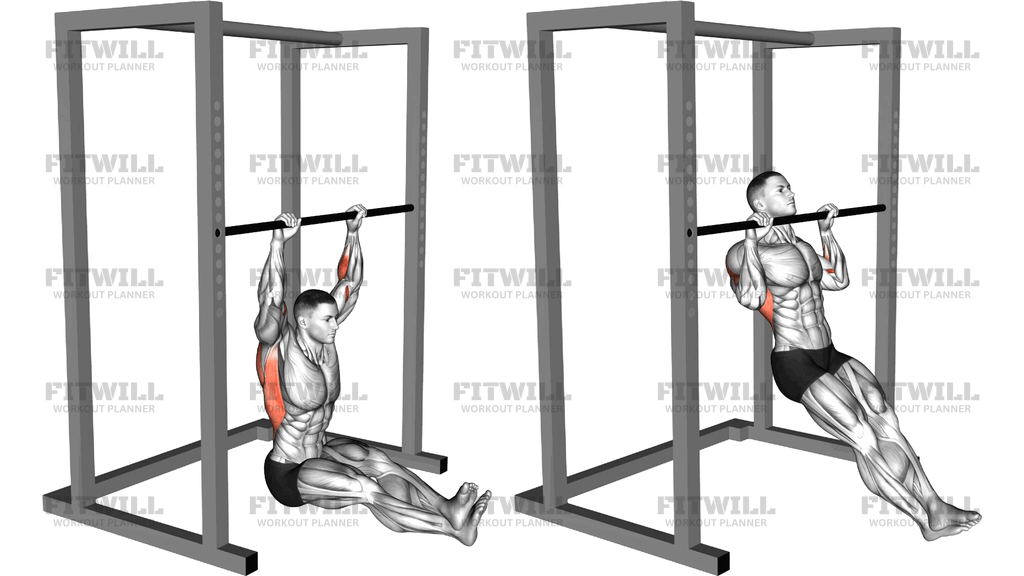
The main emphasis is on the lats, with the upper back, biceps, forearms, and rear shoulder muscles helping control the shoulder blades and elbow bend. In anatomy terms, the primary mover is the latissimus dorsi, with rhomboids, biceps brachii, and forearm flexors contributing to stability and pulling force. Because one foot is assisting from the bench, the exercise rewards clean line of pull and shoulder control more than raw momentum.
Setup matters a lot here. Place a stable bench under the bar so the assisting foot can stay planted without wobbling or chasing the movement. Use an overhand grip slightly wider than shoulder width unless your shoulder shape or bar style makes a slightly different width feel better. Start with one foot on the bench and the other leg hanging free or lightly bent, then set the ribs down, brace the trunk, and let the shoulders hang before the first pull.
Each repetition should feel like a controlled pull, not a jump. Drive the elbows down and back as the chest rises toward the bar, then keep the neck long rather than reaching the chin forward to cheat the top position. At the bottom, return to a full stretch under control so the lats and upper back stay active instead of collapsing into the joints. Breathing should stay steady: inhale on the way down, then exhale as you pull.
Bench Pull-Ups are a practical bridge between assisted pulling and full pull-up work. They fit well in strength sessions, back-focused accessories, or beginner programs where the goal is to build enough scapular control and pulling capacity to own a full rep later. The exercise is also useful for lifters who want more vertical pulling volume without having to turn every set into a max-effort grind. If the bench setup forces you to twist, swing, or push hard through the assisting foot, the load is too awkward for the rep to stay clean.
The best version of Bench Pull-Ups looks smooth from start to finish: steady hang, controlled pull, brief top position, and a deliberate return. When the bench height, grip width, and foot placement are right, the movement gives you strong lat tension with enough help to stay strict. When those details are off, the exercise turns into a half-jump and a half-pull, which defeats the purpose. Treat it as a skill-building pull-up variation, not just a way to make the rep easier.
Fitwill
Log Workouts, Track Progress & Build Strength.
Achieve more with Fitwill: explore over 9600 exercises with images and videos, access built-in and custom workouts, perfect for both gym and home sessions, and see real results.
Start your journey. Download today!




Instructions
- Set a stable bench under the pull-up bar and grip the bar overhead with hands slightly wider than shoulder width.
- Place one foot on the bench, let the other leg hang freely, and keep the bench foot close enough to help without forcing your hips to twist.
- Hang with straight arms, long neck, and shoulders set down away from your ears before you start the first rep.
- Brace your midsection so your ribs stay down and your torso does not swing when you pull.
- Pull your chest up toward the bar by driving your elbows down and back while the assisting foot stays light on the bench.
- Keep the chin neutral and avoid craning your head forward to reach the top position.
- Pause briefly near the top, then lower yourself under control until your arms are straight again.
- Reset the shoulders at the bottom and repeat for the planned number of reps without bouncing off the bench.
Tips & Tricks
- Use a bench height that lets the assisting foot help without pushing you into a jump at the start of each rep.
- A slightly wider-than-shoulder-width grip usually gives enough clearance to pull the chest up without flaring the elbows too hard.
- Keep the assisting foot light; if you are pressing hard through the bench, the set has become too easy to teach a real pull-up pattern.
- Think about pulling the bar to the upper chest, not just getting the chin over the bar.
- Do not let the shoulders shrug at the bottom; keep them active so the lats stay loaded through the stretch.
- If your torso twists, narrow your stance on the bench and square both hips before each rep.
- Lower slowly enough that you can feel the lats lengthen, but do not dead-drop into the bottom position.
- Stop the set when you start kicking from the free leg or using momentum to get over the bar.
Frequently Asked Questions
What muscles do Bench Pull-Ups work most?
They mainly train the lats, with help from the upper back, biceps, forearms, and rear shoulders as you pull and control the descent.
Why is there a bench under one foot in Bench Pull-Ups?
The bench reduces how much body weight you have to lift, which makes the pull-up pattern easier to practice while keeping the movement vertical and strict.
Are Bench Pull-Ups good for beginners?
Yes, if a strict pull-up is not yet available. The bench lets beginners practice hanging, pulling, and lowering with less total load.
How should my feet be set up on Bench Pull-Ups?
One foot stays on the bench and the other leg hangs freely or stays lightly bent. The bench foot should assist just enough to keep the rep smooth without turning it into a hop.
How wide should I grip the bar?
A grip slightly wider than shoulder width is a good default. If your shoulders feel pinched, bring the hands in a little and keep the elbows tracking down instead of flaring hard.
What is the most common mistake in Bench Pull-Ups?
The usual mistake is using the bench foot too aggressively, which turns the rep into a jump. Keep the leg assistance light so the back still does the real work.
Can Bench Pull-Ups replace regular pull-ups?
They can be a useful progression, but they do not fully replace strict pull-ups. Use them to build pulling volume and control while you work toward less assistance.
What should I feel at the top of Bench Pull-Ups?
You should feel the lats and upper back squeezing to bring the chest upward, not the neck jutting forward or the shoulders rolling up toward the ears.