Cable High Pulley Overhead Tricep Extension
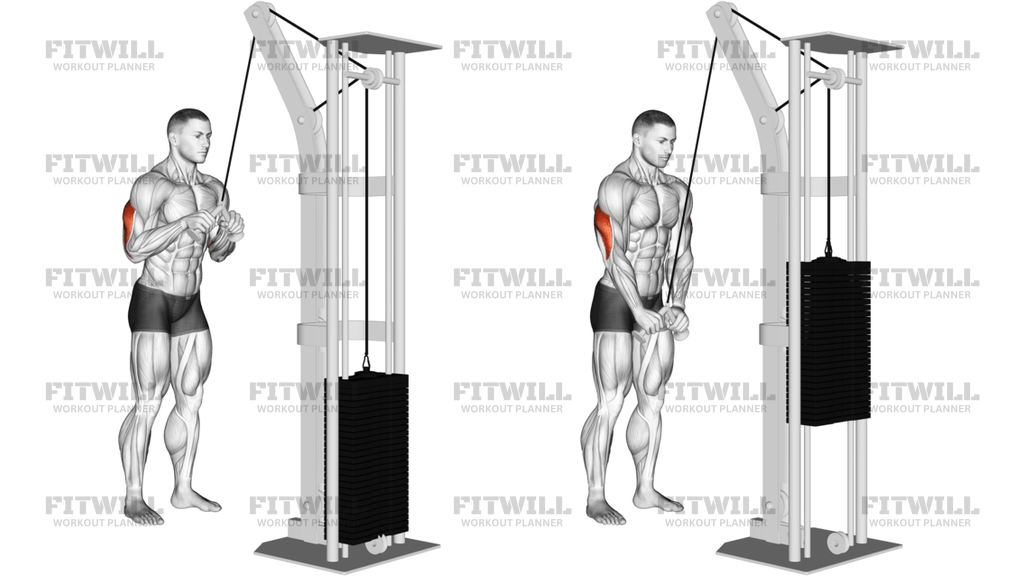
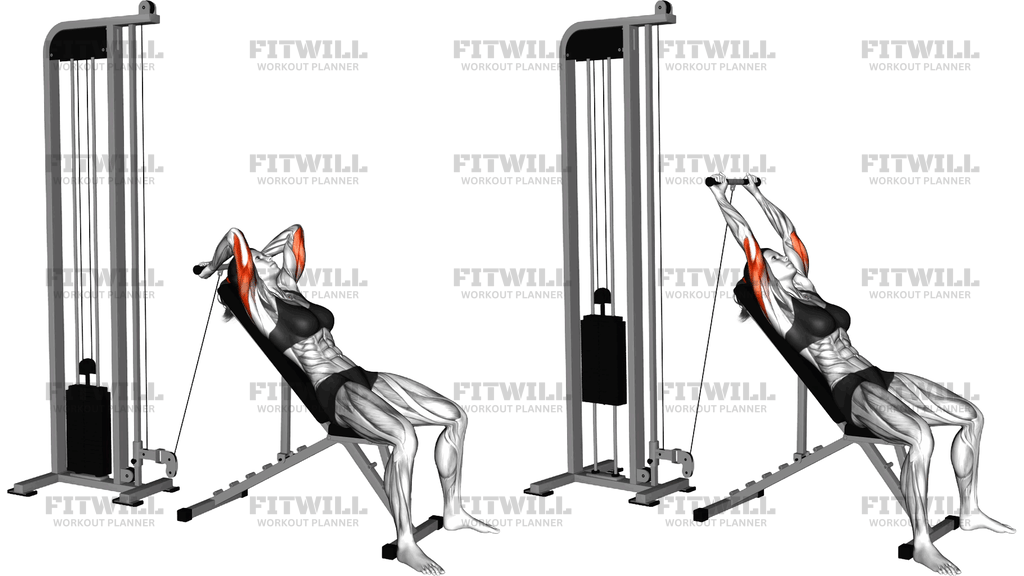
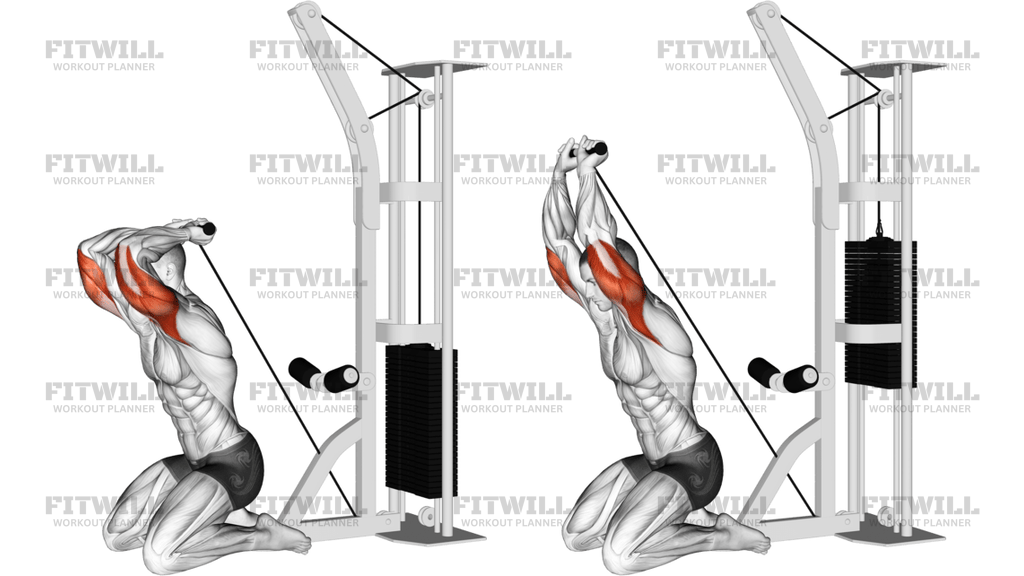
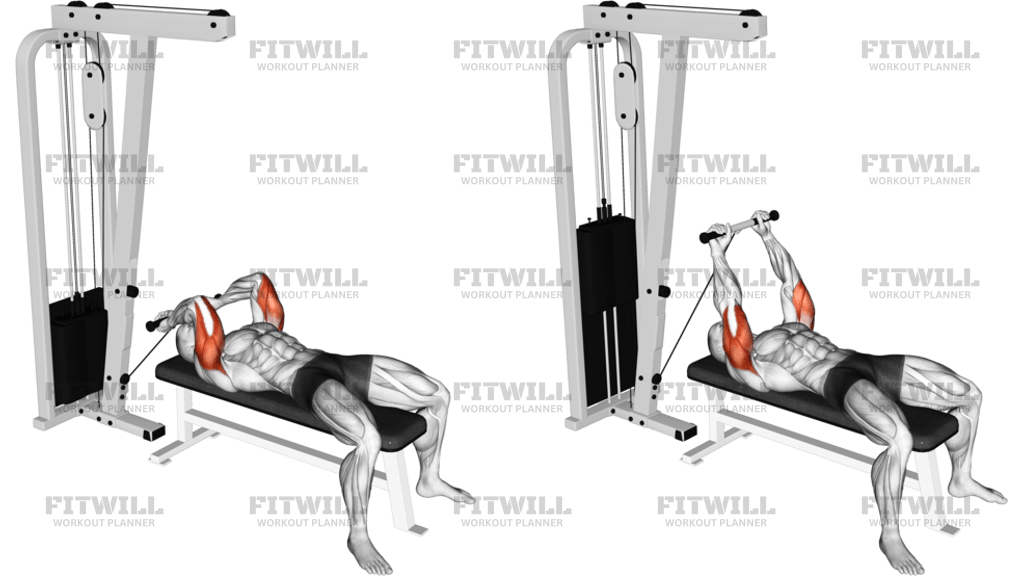
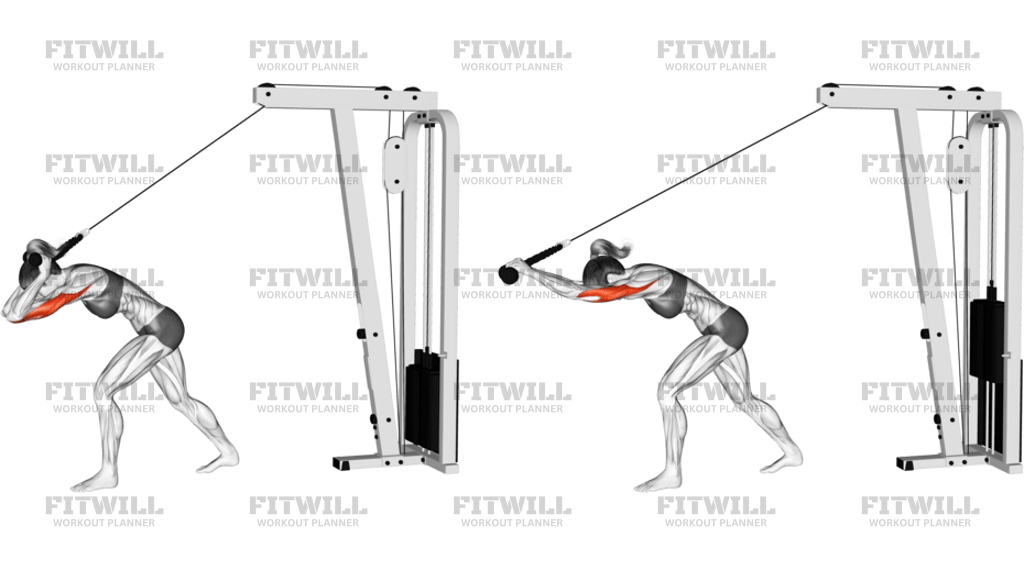
Cable High Pulley Overhead Tricep Extension is a cable-based triceps isolation exercise performed from a high pulley with a handle attachment. The image shows a forward-leaning stance with the body angled away from the stack so the cable can stay taut while the elbows stay fixed and the forearms move through the arc. That setup matters because the overhead angle keeps steady tension on the triceps instead of letting the weight stack rest between reps.
The main training effect is elbow extension strength and size in the triceps brachii, with the forearms, shoulders, and trunk working to keep the line of pull clean. In anatomy terms, the triceps brachii does the prime work while the forearm flexors, anterior deltoid, and rectus abdominis help stabilize the handle and trunk. This is a useful accessory movement when you want direct triceps work without the shoulder and chest involvement you get from pressing variations.
The best execution starts before the first rep. Step far enough from the machine that the cable is already under tension, hinge forward from the hips, and set a staggered stance so you can resist the pull of the stack. From there, keep the upper arms in place, let the elbows open and close like hinges, and press the handle forward and slightly down until the arms are straight without forcefully locking out.
The return phase should be just as controlled as the press. Let the elbows bend slowly until the forearms come back beside the head and the triceps stay loaded through the full range. Breathing should stay calm and consistent so the torso does not flare, twist, or rise into the cable. If the shoulder starts to take over, shorten the range slightly and re-establish the lean and elbow position.
Use this exercise in a triceps-focused accessory block, after compound pressing, or as a lighter finishing movement when you want local fatigue without a lot of systemic load. It is especially useful when you want a cable pattern that keeps constant tension through the top and bottom of the rep. Keep the load honest, keep the line of pull smooth, and stop the set when the elbows drift or the torso starts to swing.
Fitwill
Log Workouts, Track Progress & Build Strength.
Achieve more with Fitwill: explore over 9600 exercises with images and videos, access built-in and custom workouts, perfect for both gym and home sessions, and see real results.
Start your journey. Download today!




Instructions
- Clip a single handle to the high pulley, then step away until the cable is taut before you begin.
- Face slightly away from the stack and hinge forward from the hips so your torso is angled down, not rounded.
- Set one foot forward and the other back to create a split stance that lets you resist the cable pull.
- Bring the handle overhead and position your elbows so they point forward and stay close to the line of your ears.
- Brace your midsection and keep your ribs from flaring as you start each rep.
- Press the handle forward and slightly down by straightening only the elbows.
- Pause briefly with the arms extended, but do not jam the elbows into a hard lockout.
- Lower the handle back with control until the forearms fold beside the head and the triceps stay under tension.
- Keep the cable moving smoothly for the full set, then step back to let the stack settle before you reset.
Tips & Tricks
- Set your feet far enough from the stack that the first inch of motion is already loaded; slack makes the rep sloppy.
- Keep the upper arms nearly still so the elbows act like hinges instead of letting the shoulders turn it into a press.
- A slight forward lean usually feels better than standing upright because it matches the cable line and reduces rib flare.
- If the handle drifts behind your head, you are probably too close to the machine or letting your shoulders travel forward.
- Use a grip that keeps the wrists straight; bent wrists usually show up before the triceps actually fail.
- Lower the handle slowly enough that you can feel the long head of the triceps stay loaded in the stretched position.
- Do not chase a bigger range by collapsing the torso forward; keep the hip hinge fixed and let only the elbows move.
- Choose a load that lets you finish the set without jerking the stack or shrugging the shoulders toward your ears.
Frequently Asked Questions
What muscles does Cable High Pulley Overhead Tricep Extension train most?
The triceps are the main target, with the forearms, shoulders, and core helping stabilize the cable and torso.
Why do I need to lean forward and step away from the stack?
The forward hinge and staggered stance keep the cable under tension and give you room to extend the elbows without the weight stack slacking off.
Should my elbows move during the rep?
They should stay mostly in place while the forearms open and close around them. If the elbows drift a lot, the shoulders and torso are taking over.
Where should I feel the stretch in the bottom position?
You should feel the triceps lengthen, especially around the back of the upper arm, without a pinching sensation in the shoulder.
Can I do this with one arm at a time?
Yes, if the handle and cable setup allow it. A single-arm version makes it easier to keep the elbow path honest and the torso steady.
What is the most common mistake with the handle?
People often let the wrists bend back or let the handle travel so far that the shoulders start pressing instead of the triceps extending.
Is this exercise beginner friendly?
Yes, as long as the load is light and you can keep the cable path smooth without swinging your body.
What should I do if the cable pulls me out of position?
Step a little farther from the stack, widen or stagger your stance more, and reduce the load until you can hold the lean without twisting.