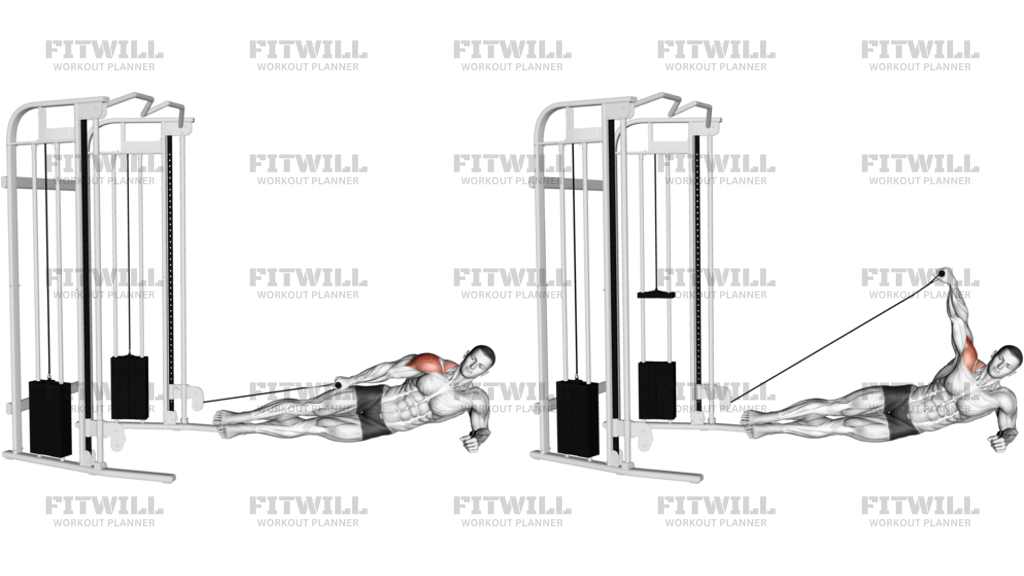
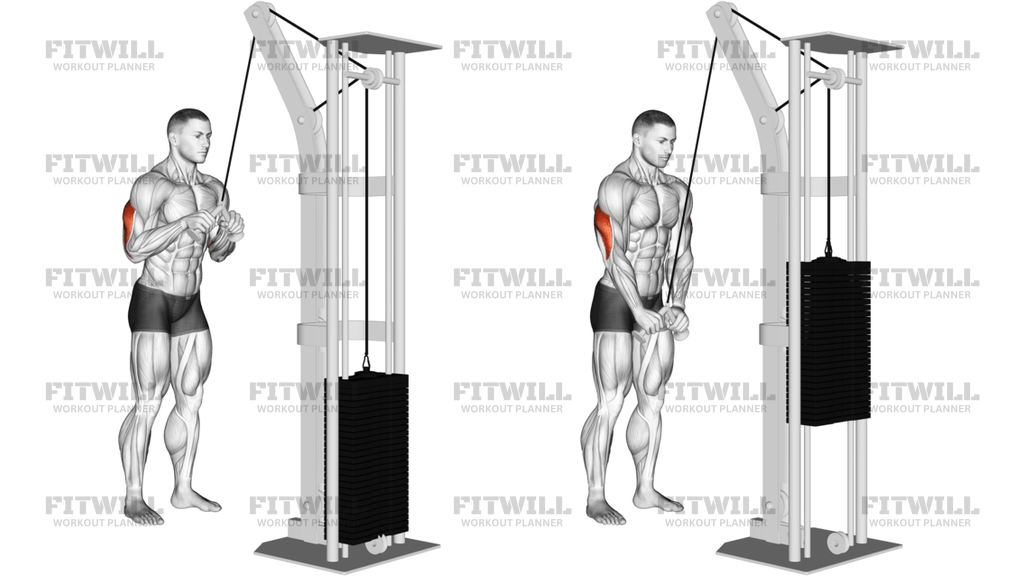
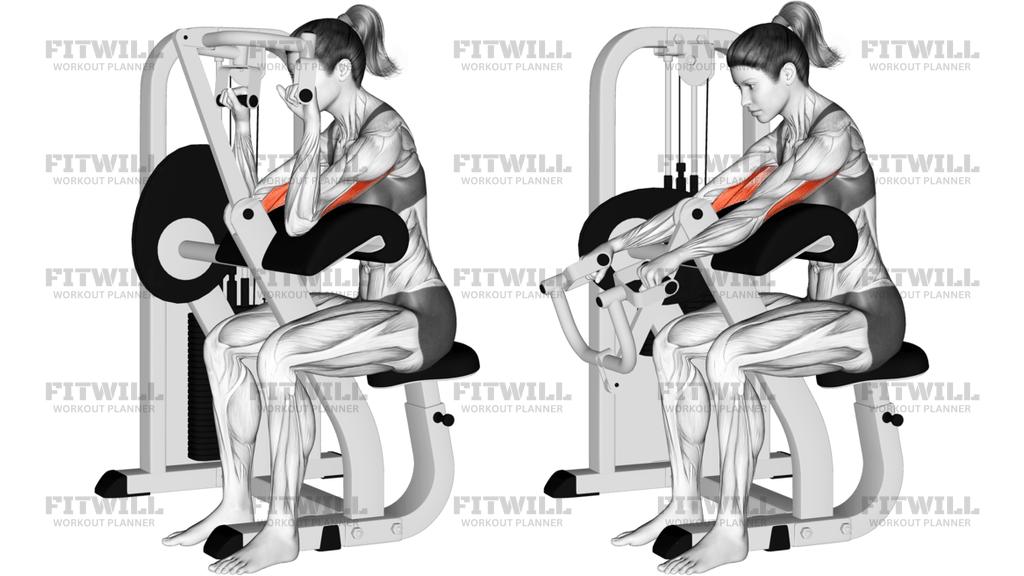
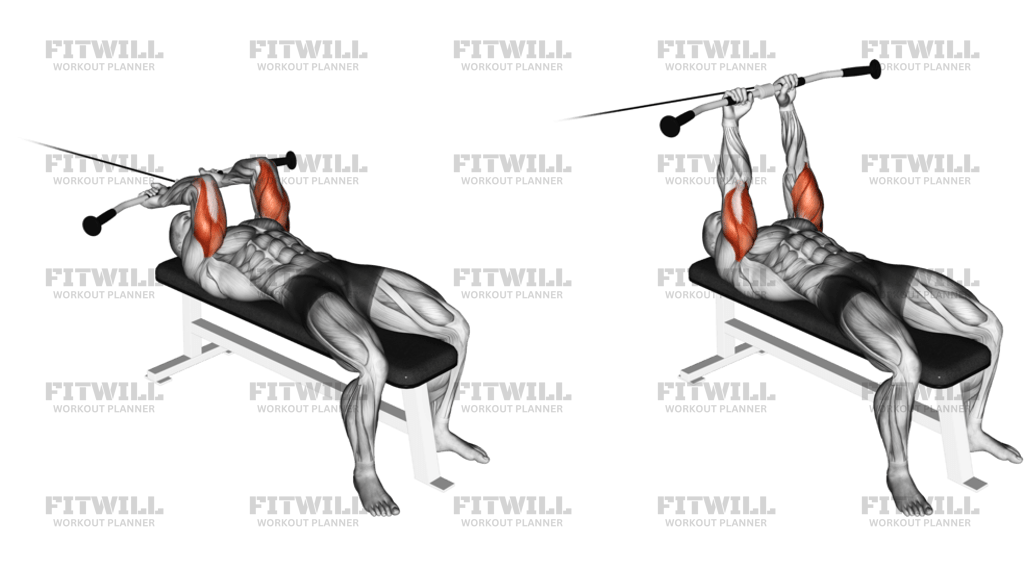
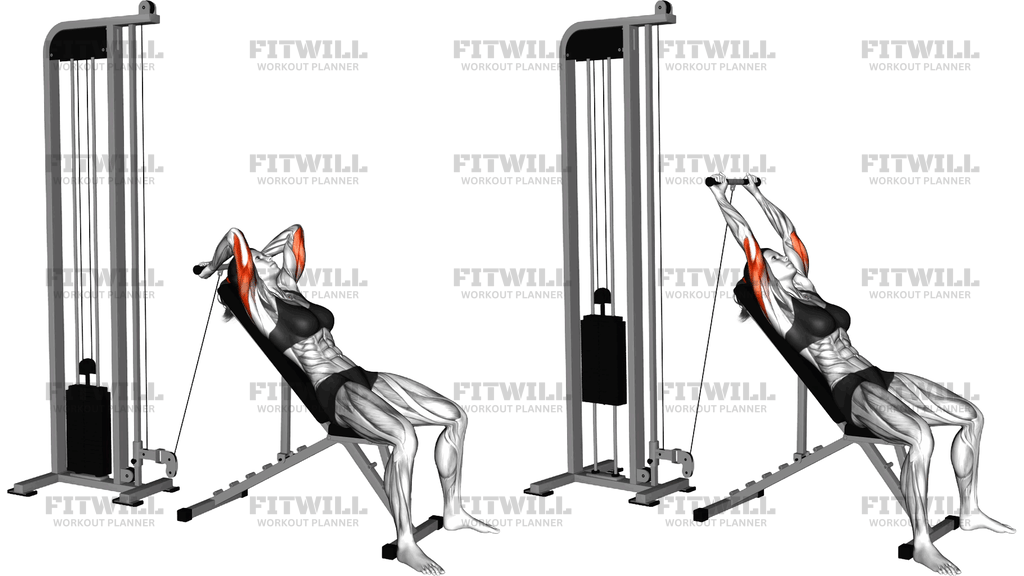
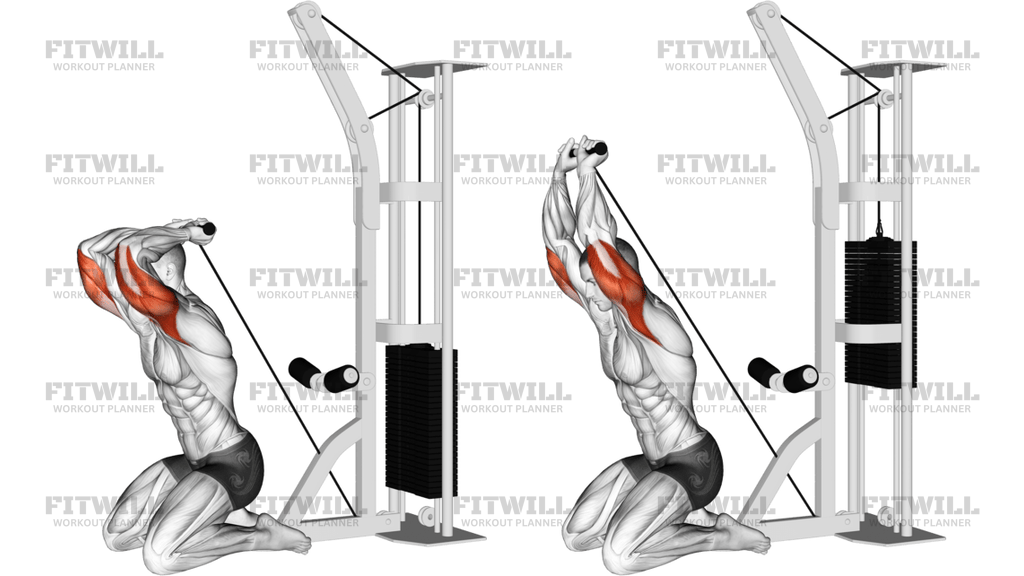
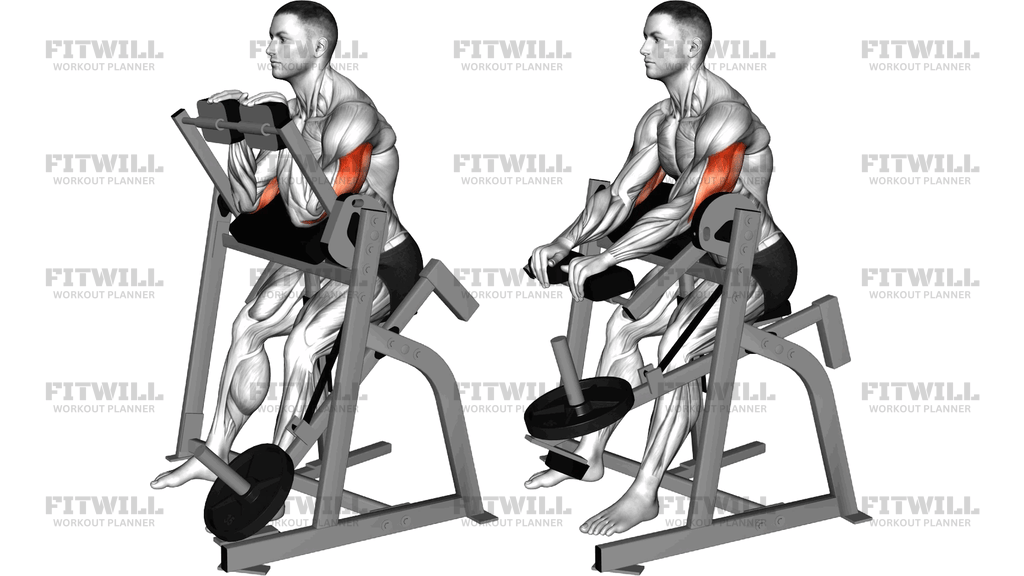
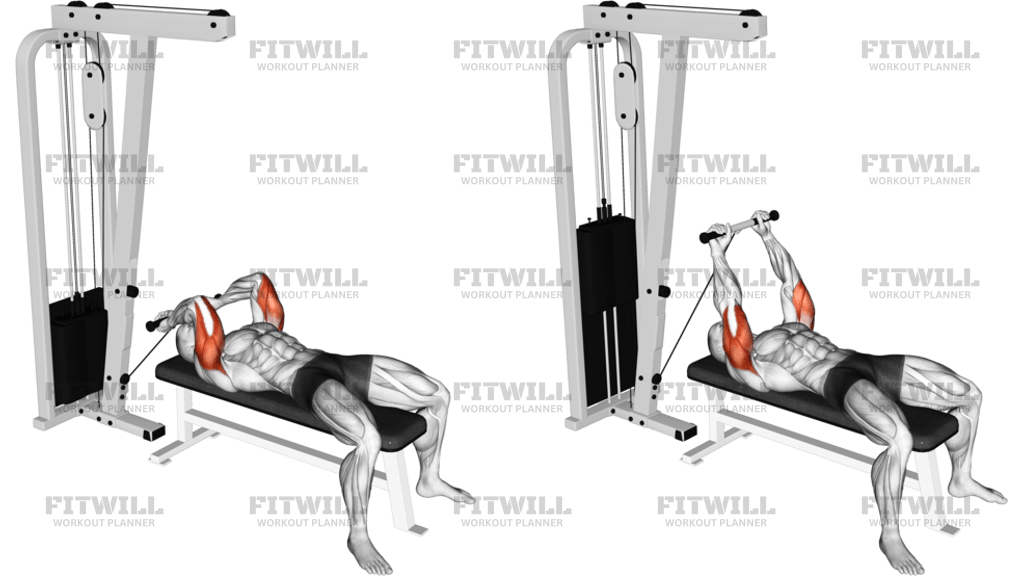
Cable Incline Triceps Extension
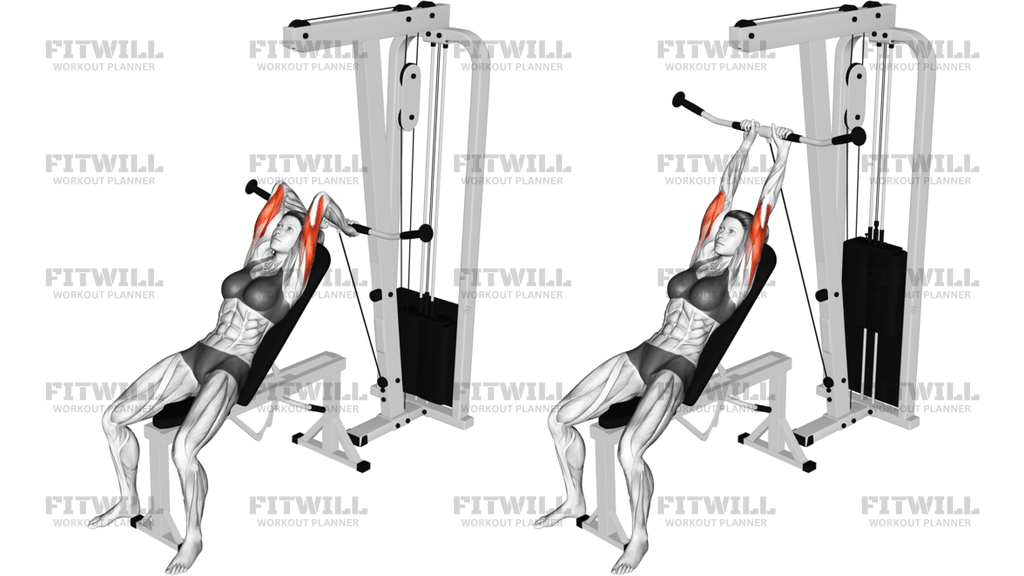
Cable Incline Triceps Extension is a supported overhead triceps exercise done on an incline bench with a cable handle attached low on the machine. The reclined bench position keeps your torso fixed while the arms move through a long overhead arc, which makes it a useful choice for training the triceps with steady cable tension instead of free-swinging momentum.
The exercise mainly targets the triceps brachii, especially when you keep the elbows pointed up and resist the urge to let them flare or drift forward. The forearms help hold the handle, the front shoulders help stabilize the upper arm position, and the core keeps the ribcage from opening up as the load gets heavier. That support work matters here because the bench removes most of the standing balance demands, so any instability usually comes from sloppy elbow position or an overextended lower back rather than from your feet.
The setup is the part that determines whether this feels like a clean triceps extension or a shoulder-dominant press. Sit back on the incline bench, keep your head supported, and line the handle up so the cable tracks behind or just above your head in the stretched position. Your upper arms should stay mostly fixed while the elbows bend and straighten through the rep. When that line of pull is right, you should feel a strong triceps stretch at the bottom and a hard lockout without shrugging at the top.
This movement is especially useful for accessory triceps work, arm-focused sessions, or as a cable-based option when you want continuous tension through both the shortened and lengthened parts of the rep. It is also easier to self-limit than many free-weight extensions because the bench and cable path make cheating more obvious. Use a weight that lets you keep the wrists stacked, the elbows stable, and the shoulders quiet for every rep.
Treat the motion as an elbow-extension drill rather than a full-body lift. The best repetitions are smooth, symmetrical, and controlled from the stretched overhead start to the finish with straight arms. If the bench position, cable height, or handle path feels off, adjust them before adding load. Clean setup and a strict range matter more here than chasing a big number on the stack.
Fitwill
Log Workouts, Track Progress & Build Strength.
Achieve more with Fitwill: explore over 9600 exercises with images and videos, access built-in and custom workouts, perfect for both gym and home sessions, and see real results.
Start your journey. Download today!




Instructions
- Set an incline bench in front of a low cable pulley and attach a single handle.
- Sit back on the bench with your head and upper back supported, and grasp the handle with both hands behind your head.
- Plant your feet, tuck your ribs down, and keep your elbows pointed mostly upward instead of flaring wide.
- Start with the handle just behind or slightly above the crown of your head so the triceps are loaded in a long stretch.
- Extend your elbows to bring the handle up and forward along the cable path until your arms are nearly straight.
- Keep your upper arms still as the forearms rotate through the rep; only the elbows should do most of the moving.
- Squeeze the triceps at the top without leaning back or shrugging the shoulders.
- Lower the handle slowly back behind your head until you feel the stretch return, keeping tension on the cable.
- Exhale as you extend and inhale as you lower, then repeat for the planned reps.
- Re-rack the handle and sit up carefully after the final rep.
Tips & Tricks
- Keep your elbows in the same lane for the whole set; if they drift forward, the front delts start stealing the rep.
- A lower pulley and a longer bench setup usually give a cleaner overhead line than trying to force the handle from too high.
- Do not let your lower back arch off the bench to finish the lockout; keep the ribcage stacked over the pelvis.
- Use a neutral or semi-neutral grip if the wrists feel cranky, especially at the stretched bottom position.
- Pause briefly in the overhead stretch only if you can keep the shoulders from rolling forward.
- The lowering phase should feel longer than the lifting phase; a slow return keeps tension on the triceps.
- Choose a load that lets you keep both hands balanced on the handle without twisting at the top.
- If your elbows ache, shorten the range slightly and stop just before the deepest stretch.
- Do not turn this into a pullover or chest press; the motion should stay at the elbow joint.
- When fatigue sets in, finish the set before the handle path starts wandering behind your head.
Frequently Asked Questions
What does Cable Incline Triceps Extension train most?
It primarily trains the triceps, with the long head doing a lot of the work because your arms start overhead.
Why use an incline bench instead of standing?
The incline bench fixes your torso and makes it easier to keep the elbows in position while the cable loads the triceps through a longer overhead stretch.
Where should the cable and handle be at the start?
The pulley should be low, with the handle tracking behind or just above your head so the triceps are loaded before you begin extending.
What is the most common mistake on this movement?
Letting the elbows drift forward or flare out, which turns the extension into a less stable shoulder-dominant movement.
Should I keep my upper arms moving?
No. Your upper arms should stay mostly fixed while the elbows flex and extend through the rep.
Can I use a rope or a bar instead of a single handle?
Yes, if the attachment lets you keep a comfortable wrist position and still follow the same overhead elbow-extension path.
Is this exercise beginner friendly?
Yes, as long as the load is light enough to keep the bench position, elbow path, and breathing controlled.
How deep should the lowering phase go?
Lower only until you feel a strong triceps stretch and can still keep the shoulders quiet and the wrists stacked.