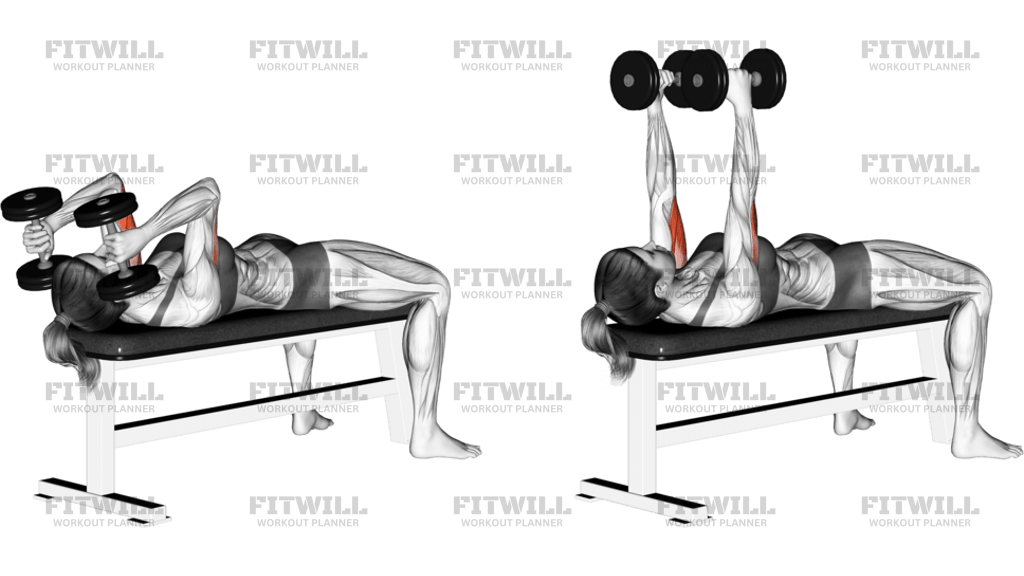
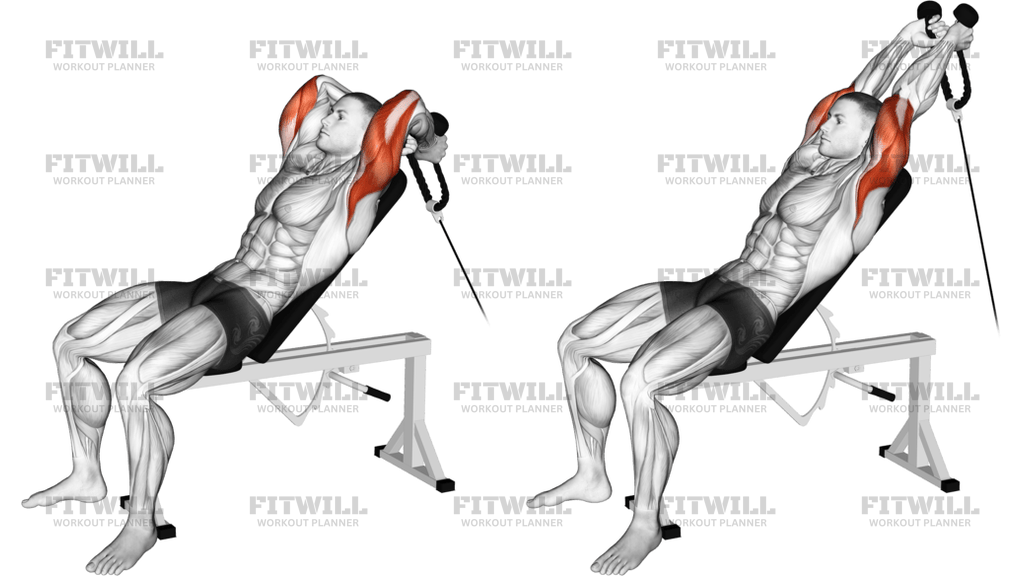
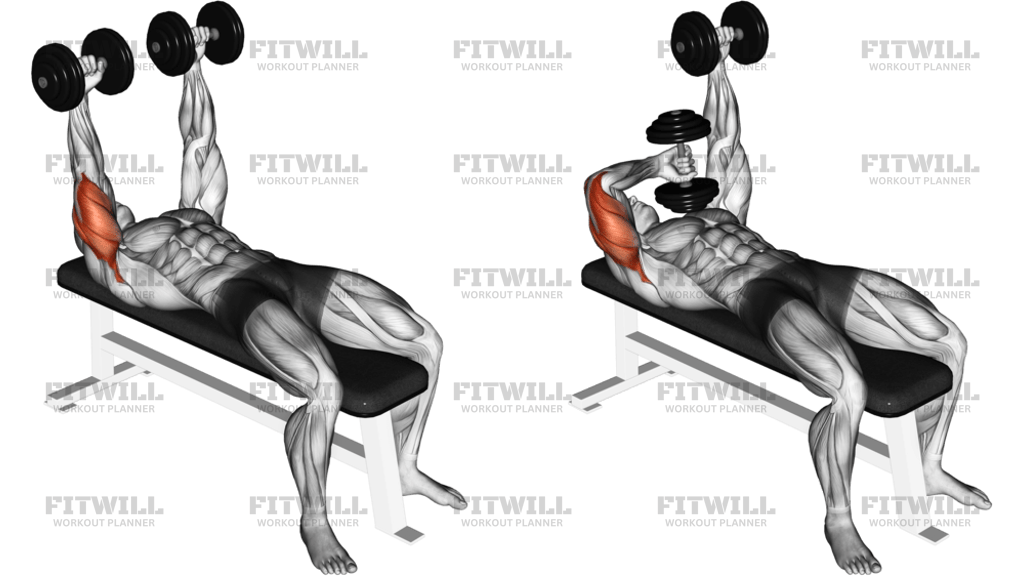
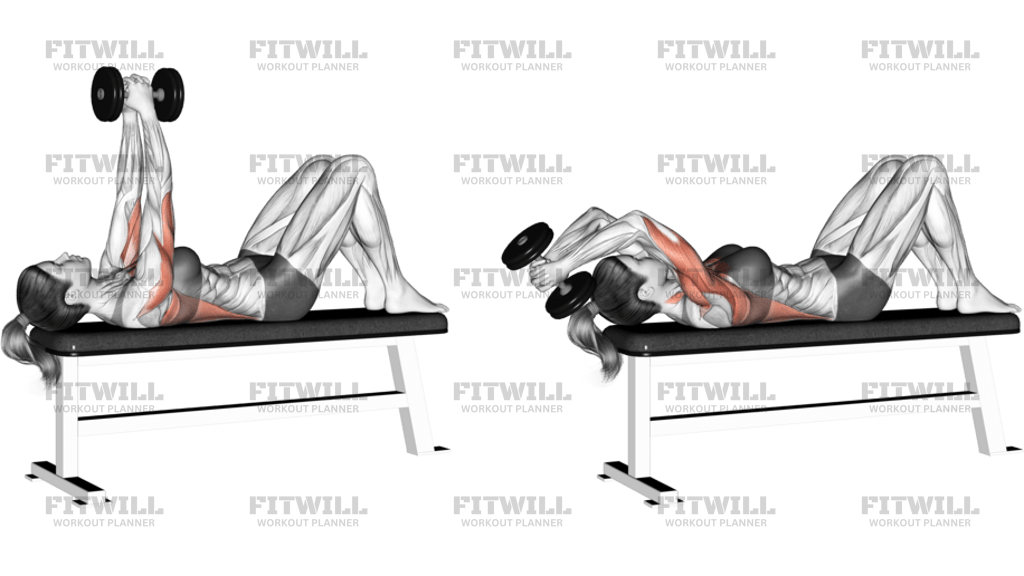
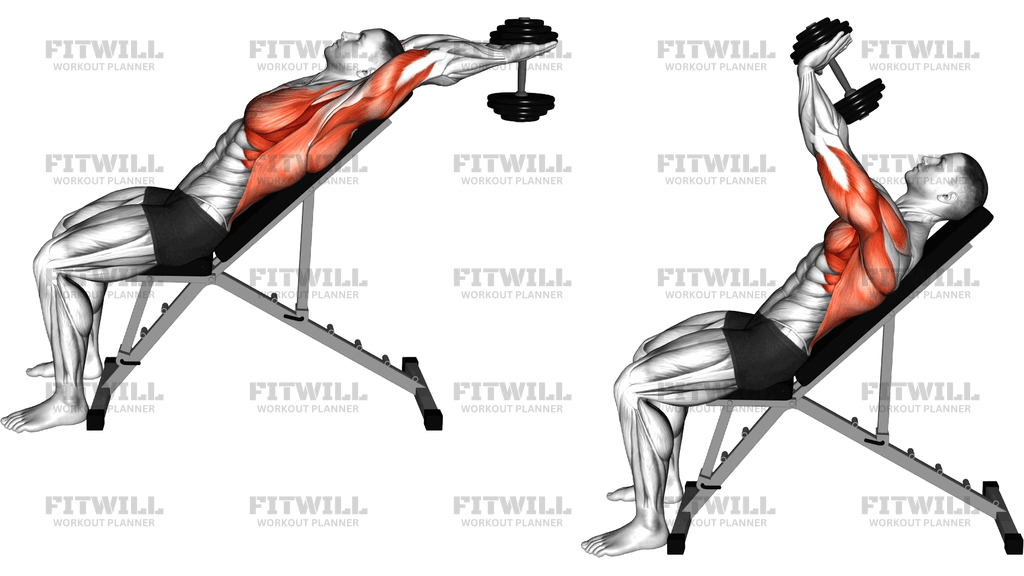
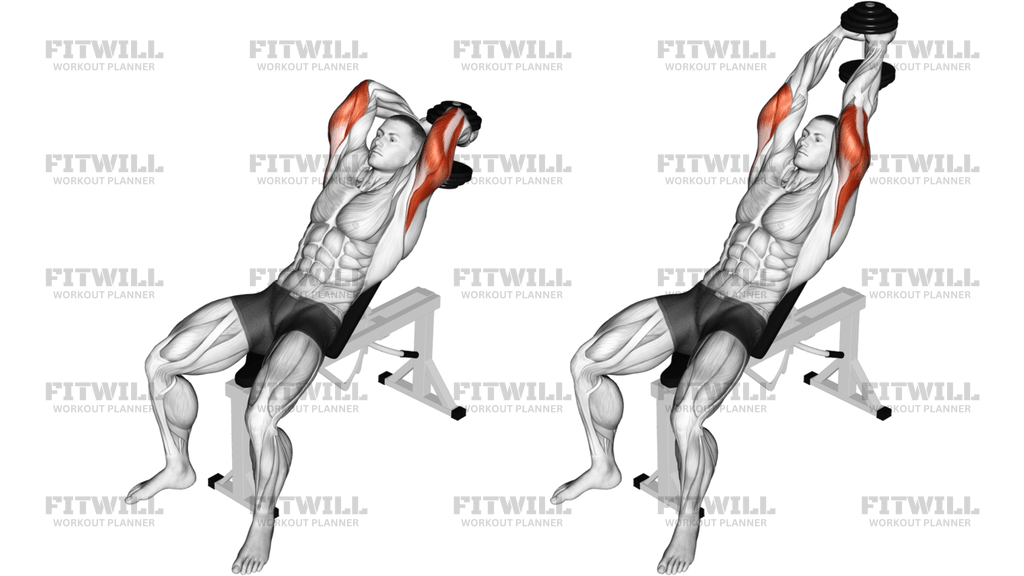
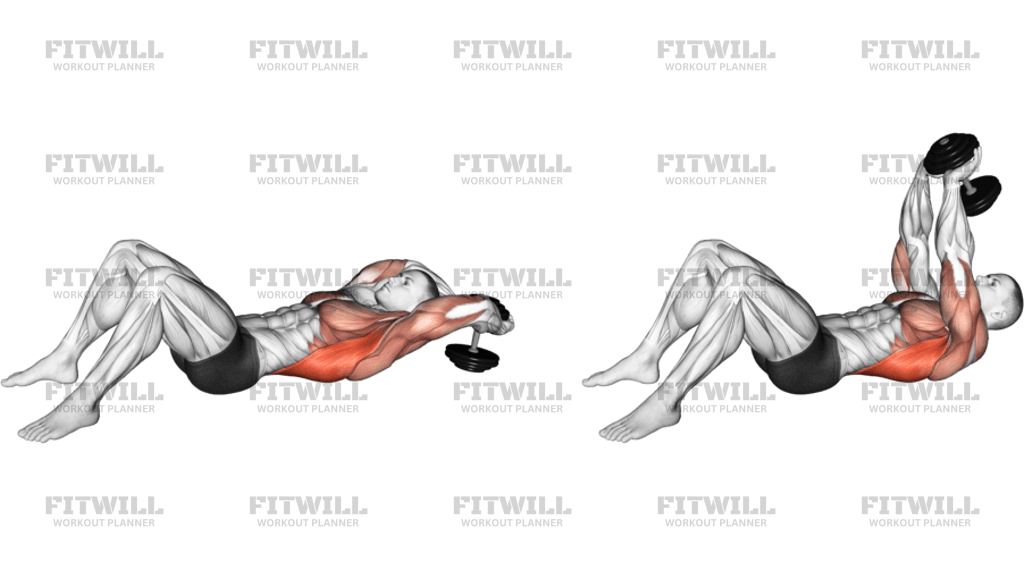
Dumbbell Incline Two Arm Extension
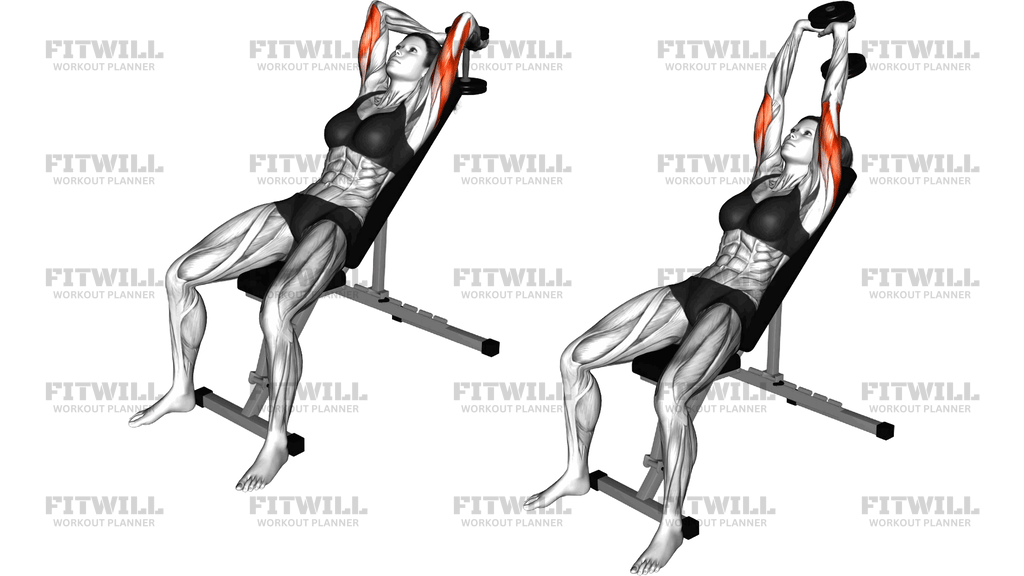
Dumbbell Incline Two Arm Extension is a supported triceps isolation exercise performed on an incline bench with a dumbbell in each hand. It combines the stability of a bench with a long elbow-bending range, which makes it a useful option when you want direct arm work without standing balance demands or heavy pressing fatigue.
The movement places most of the load on the triceps, especially the long head, because the upper arms stay angled back while the elbows open and close. The forearms, front shoulders, and trunk still help keep the dumbbells and torso organized, but they should not take over the set. That balance is what makes the exercise feel controlled instead of like a loose overhead press.
Setup matters a lot. A moderate incline lets the upper back stay supported while still keeping the arms in a strong overhead line. Sit back on the bench, plant the feet, keep the ribs from flaring, and bring the dumbbells to a finish position above the face with the wrists stacked over the elbows. From there, the upper arms should stay mostly still while the elbows bend to lower the weights behind the head.
Each rep should follow the same arc. Lower the dumbbells until the triceps are stretched but the shoulders stay quiet, then extend the elbows to bring the weights back overhead without snapping the lockout or letting the elbows drift wide. The best reps feel smooth from start to finish, with the torso held firm and the head resting against the bench instead of chasing the weights.
This exercise fits well in hypertrophy work, accessory triceps volume, or any session where you want a precise arm movement after bigger compound lifts. It can be appropriate for beginners if the load stays light and the range stays honest, but it rewards patience more than load. If the dumbbells start to wobble, the lower back arches hard, or the shoulders keep moving forward, the set is usually too heavy or the bench angle is too steep.
Fitwill
Log Workouts, Track Progress & Build Strength.
Achieve more with Fitwill: explore over 9600 exercises with images and videos, access built-in and custom workouts, perfect for both gym and home sessions, and see real results.
Start your journey. Download today!




Instructions
- Set a moderate incline bench and sit back so your upper back and head are supported.
- Hold a dumbbell in each hand and press them overhead with your palms facing in and your wrists stacked over your elbows.
- Plant both feet, keep your ribs down, and brace your abs so your lower back stays quiet on the pad.
- Let your elbows bend and travel slightly behind your head while keeping your upper arms mostly fixed beside your ears.
- Lower the dumbbells in a controlled arc until you feel a strong triceps stretch without letting your shoulders roll forward.
- Exhale and extend both elbows to drive the dumbbells back to the overhead position.
- Finish each rep with the dumbbells close together above your face and avoid snapping into a hard lockout.
- Lower the weights under control for the next rep, then stop the set and place the dumbbells down safely if your elbows or shoulders start to drift.
Tips & Tricks
- A moderate incline usually keeps the triceps working better than a very steep bench angle.
- Keep your upper arms angled back by your head; if they drift forward, the shoulders start stealing the rep.
- Think about opening and closing the elbows instead of moving the whole shoulder joint.
- Use a neutral grip and keep the dumbbells aligned so your wrists do not bend backward.
- Lower until you feel the triceps lengthen, but do not chase extra range if the weights wobble behind your head.
- Take 2 to 3 seconds on the lowering phase to keep tension on the arms.
- Keep your ribs from popping up as the dumbbells rise; that arch usually means the load is too heavy.
- If your elbows flare wide, reduce the load and bring them back in line with your ears.
- Stop the set when the dumbbells stop tracking evenly or one arm starts finishing the rep early.
Frequently Asked Questions
What does Dumbbell Incline Two Arm Extension work most?
It targets the triceps most, with the long head usually getting the strongest stretch because the arms are overhead on an incline bench.
Why use an incline bench for Dumbbell Incline Two Arm Extension?
The bench supports the upper back and keeps the torso steadier, which lets the elbows move through a long extension without turning the lift into a standing press.
How far should I lower the dumbbells?
Lower them until the triceps are well stretched and the elbows stay under control, usually just behind the head. If the shoulders roll forward or the lower back arches, cut the range a little.
Should my elbows stay tucked in during Dumbbell Incline Two Arm Extension?
They should stay fairly close to the head and pointed up, not flare out wide. A small amount of movement is normal, but the upper arms should stay mostly fixed.
Is Dumbbell Incline Two Arm Extension good for beginners?
Yes, as long as the dumbbells are light enough to keep the path smooth and the bench angle is moderate. Beginners usually do best with slow reps and a shorter range at first.
What is a common mistake with Dumbbell Incline Two Arm Extension?
The biggest mistake is letting the chest and lower back take over by flaring the ribs and driving the dumbbells with momentum instead of the elbows.
What rep range works well for Dumbbell Incline Two Arm Extension?
Moderate to higher reps usually work best, especially when the goal is triceps volume and clean control rather than maximum loading.
Can I do this exercise if my elbows get irritated easily?
You can often make it friendlier by using lighter dumbbells, slowing the lowering phase, and shortening the bottom range slightly. If the pain persists, switch to a more elbow-friendly triceps variation.