Janda Sit-Up
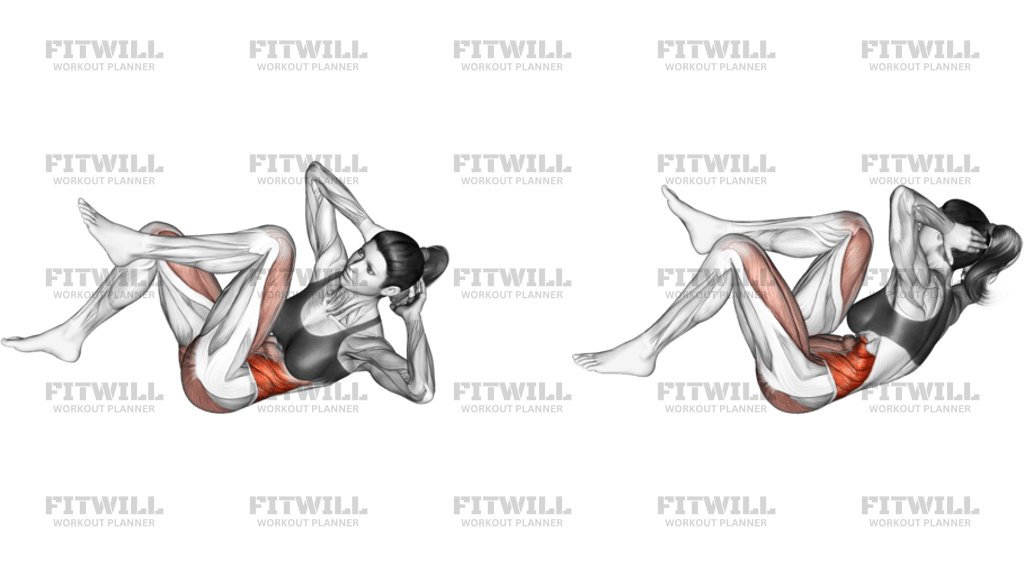
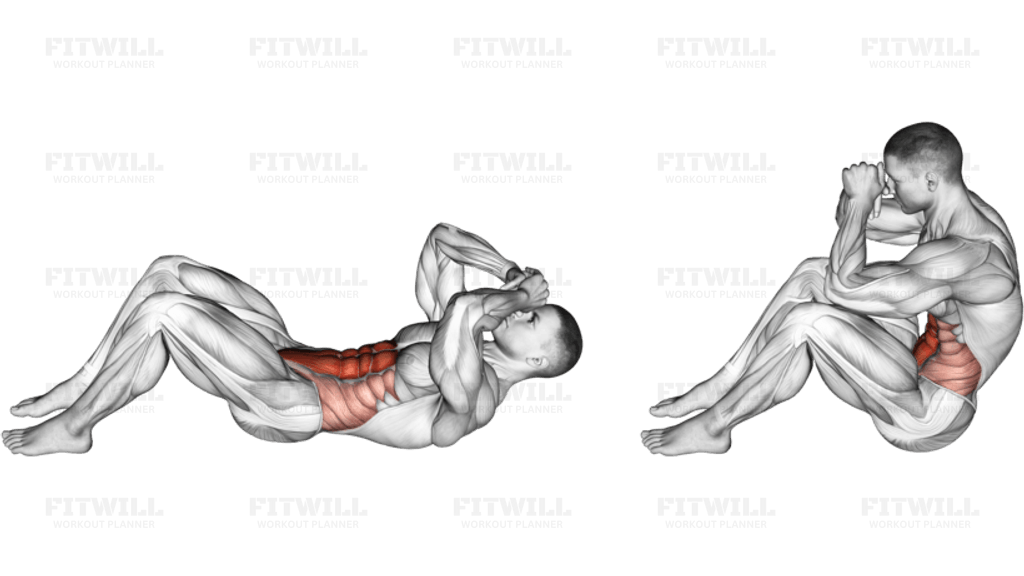
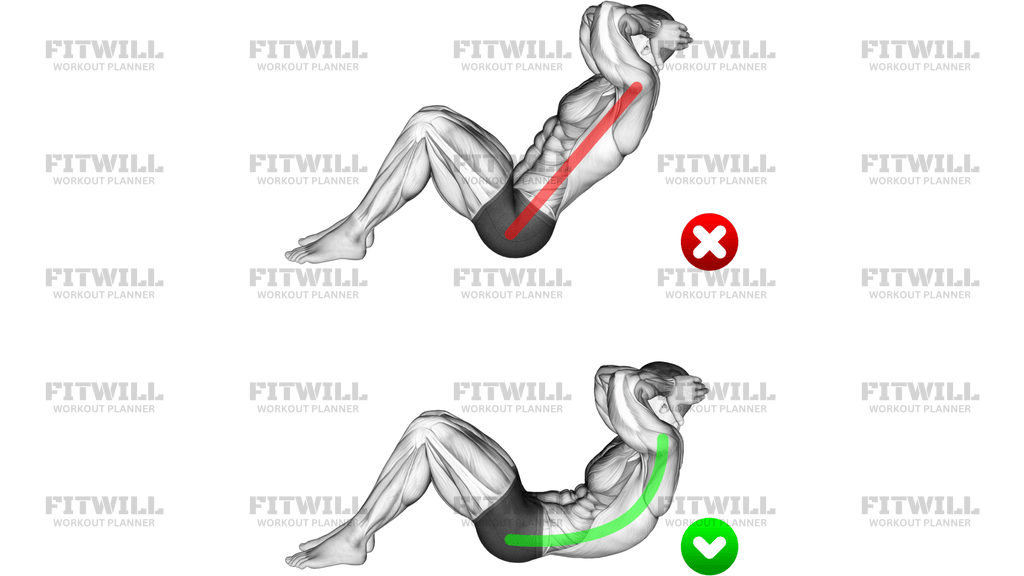
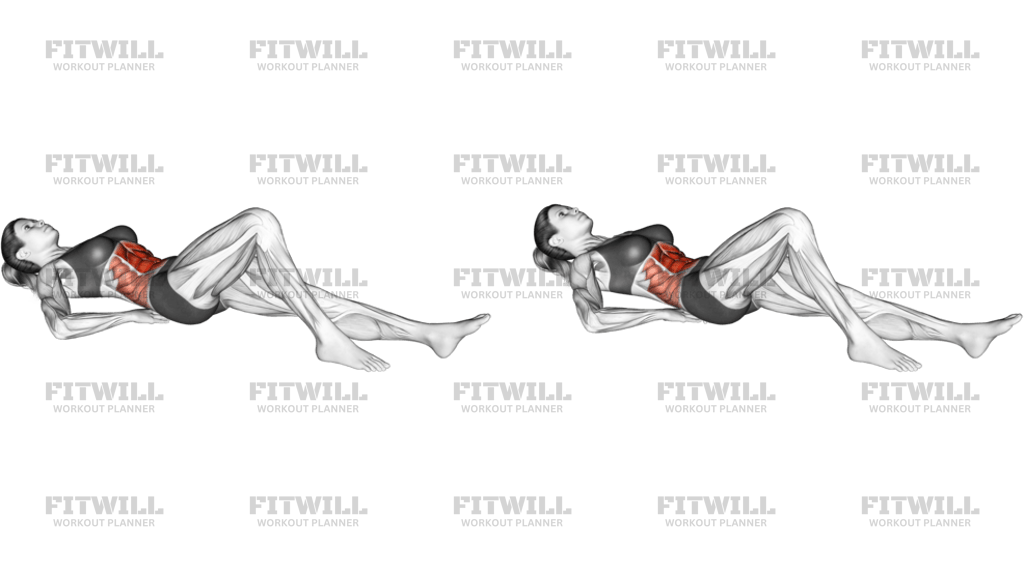
Janda Sit-Up is a bodyweight core exercise built around a controlled floor curl with an active heel drive. In the image, you start lying on your back with your knees bent, feet planted, and your trunk curling off the floor. The Janda cue matters because it asks you to pull the heels into the ground instead of letting the hip flexors do all the work, which usually makes the abdominal contraction feel cleaner and more honest.
This movement is mainly about the rectus abdominis, with the obliques and deep core helping keep the rib cage and pelvis organized while the hamstrings contribute through the heel-dig setup. When the setup is right, the lower body stays quiet and the torso moves as a single controlled unit. If the feet slide, the knees flare hard, or the low back arches, the rep usually shifts away from the abs and toward momentum or hip flexion.
A good Janda sit-up starts before the first rep. Plant the feet, lightly brace the trunk, and create tension by trying to drag the heels backward without actually moving them. From there, curl the head and shoulders off the floor, keep the chin gently tucked, and keep the elbows or hands from pulling the neck forward. The top position should feel like a strong abdominal curl, not a thrown sit-up. Lower slowly until the shoulders and upper back return to the mat, then reset the brace before the next rep.
Use this exercise when you want a strict, floor-based ab drill that teaches control, posterior-chain tension, and cleaner trunk flexion mechanics. It fits well in core blocks, accessory work, warmups, or as a regression from more aggressive sit-up variations. Because the movement is simple, quality matters more than range or speed, and the rep should stop the moment the heels lose pressure or the neck starts to take over.
If you want the exercise to stay useful, keep the rep path small enough to control and consistent enough to repeat. The best sets feel deliberate, with steady breathing, a quiet pelvis, and no jerking off the floor. Beginners can use it as long as they can keep the feet rooted and the curl smooth, while more advanced lifters can slow the lowering phase or hold the top position longer without turning it into a hip-flexor dominant sit-up.
Fitwill
Log Workouts, Track Progress & Build Strength.
Achieve more with Fitwill: explore over 9600 exercises with images and videos, access built-in and custom workouts, perfect for both gym and home sessions, and see real results.
Start your journey. Download today!




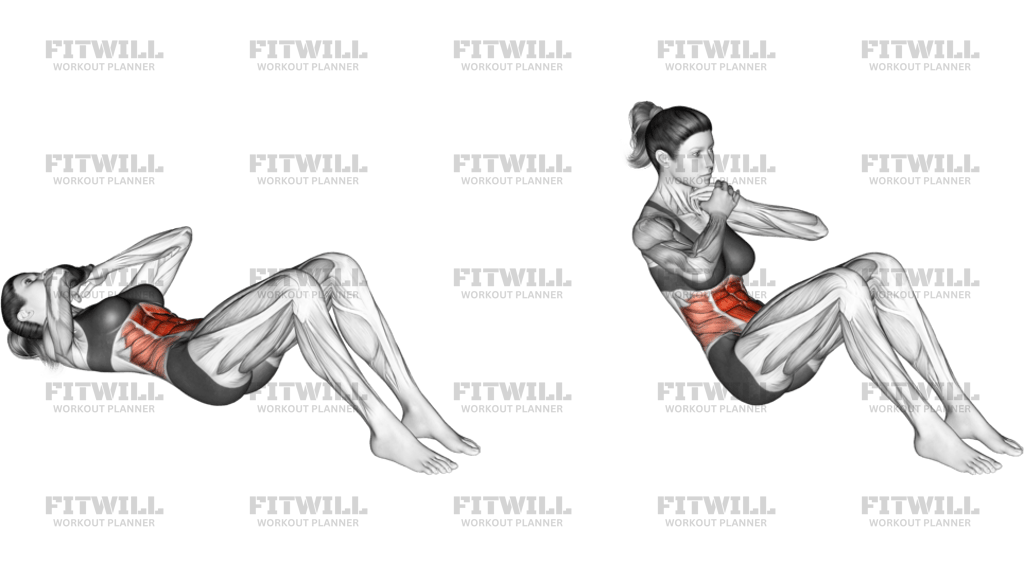
Instructions
- Lie on your back on a mat with your knees bent and your feet flat, about hip-width apart.
- Cross your arms over your chest or keep your fingertips lightly at your temples without pulling on your neck.
- Plant your heels and try to drag them backward as if you were pulling the floor toward you, but do not let them actually move.
- Brace your abs and exhale as you peel your head and shoulders off the floor.
- Curl your ribs toward your pelvis until your upper back leaves the mat, keeping the neck relaxed and the hips quiet.
- Pause briefly at the top with tension in your abs and pressure still in your heels.
- Lower slowly until your shoulders touch the floor again, keeping the heels rooted and the movement controlled.
- Reset your brace and repeat for the planned number of reps.
Tips & Tricks
- Think about pulling your heels backward instead of just crunching up; that heel drive is what gives the Janda sit-up its feel.
- If your feet start sliding, reduce the range of motion before you try to add more reps.
- Keep the chin softly tucked so the curl comes from the ribs and abs, not from yanking the head forward.
- Stop the rep before your low back arches hard off the floor; this should stay like a controlled curl, not a full throw-up sit-up.
- A slower lowering phase usually makes the abs work harder than rushing back to the mat.
- Keep the elbows wide or the hands light so the neck does not become the limiter.
- If your hip flexors cramp, bring your feet a little closer and shorten the curl.
- Use a steady exhale on the way up to help the ribs close and keep the trunk braced.
Frequently Asked Questions
What muscles does the Janda sit-up work most?
It mainly trains the rectus abdominis, with help from the obliques, deep core, and hamstrings during the heel-dig setup.
How is a Janda sit-up different from a regular sit-up?
The heel drive is the key difference. Instead of anchoring the feet and letting the hip flexors dominate, you actively pull the heels into the floor to bias the abs more directly.
Should my feet stay flat during the rep?
Yes. Keep the heels planted and resist the urge to let the feet slide or lift, because that usually breaks the Janda setup.
Where should I feel this exercise?
You should feel it mainly in the front of the abs, with some tension through the hamstrings from the heel-dig cue. If the neck or hip flexors dominate, the setup needs to be adjusted.
Can I keep my hands behind my head?
You can, but only if the hands stay light. Many people do better with arms crossed over the chest so they do not pull on the neck.
Why do my hip flexors take over?
Usually the feet are too far away, the curl is too big, or the heel pressure is too weak. Shorten the range and re-create the backward heel pull.
Is the Janda sit-up good for beginners?
Yes, as long as they can keep the feet rooted and the curl small and controlled. Beginners should treat it like a strict core drill, not a speed exercise.
How can I make the Janda sit-up harder?
Slow the lowering phase, pause longer at the top, or increase reps while keeping the heel drive and spinal control intact.