Resistance Band Bent-Over Neutral Grip Row
Resistance Band Bent-Over Neutral Grip Row is a bent-hip pulling exercise that uses a band stepped on by both feet and two neutral grips to train the back without needing a machine or bench. The movement starts from a hinged torso position and asks you to row the handles toward your lower ribs while keeping the spine long, the knees soft, and the shoulders from drifting into a shrug. That setup matters because the band angle, foot placement, and hinge depth decide whether the row loads the lats and upper back or turns into a standing arm curl.
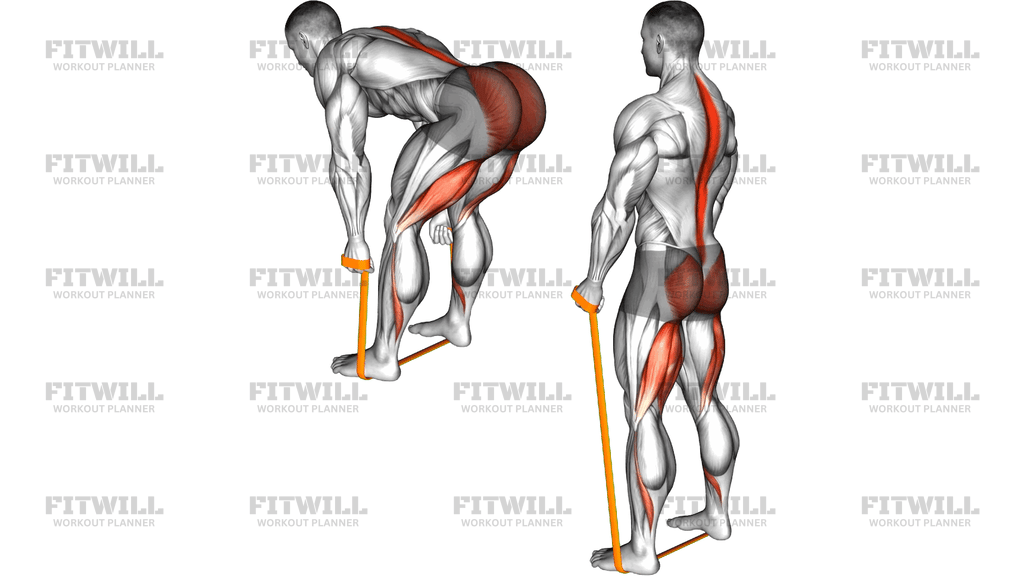
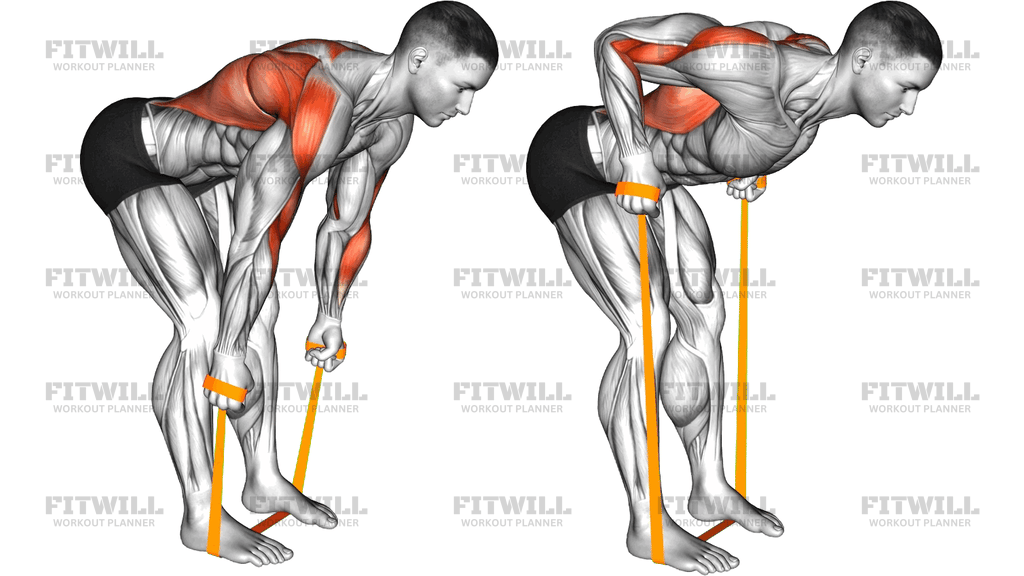
The image shows a classic two-handed bent-over row with the band anchored under the feet, so the working range should feel consistent from the bottom stretch to the top squeeze. Neutral grip keeps the wrists in a comfortable position and usually makes it easier to keep the elbows close enough to the body for a lat-focused pull. The primary emphasis is the lats, with the upper back, biceps, forearms, and rear shoulder muscles helping to stabilize and finish the rep. In anatomy terms, that lines up with the latissimus dorsi, rhomboids, biceps brachii, and forearm flexors.
A clean rep begins before the pull: stand tall on the band, hinge at the hips, and set the torso at roughly a 30 to 45 degree angle with the chest open and the neck neutral. From there, row by driving the elbows back toward the ribs, not by yanking the hands upward. The handles should travel close to the thighs and lower torso, then return under control until the arms are straight again. If the torso rises, the shoulders shrug, or the low back starts to work hard, the band is probably too heavy or the hinge is too deep.
This exercise fits well on a pull day, in a home workout, or as accessory volume when you want a simple back movement with little setup. It is especially useful when you need a row that can be loaded progressively with band tension while still keeping joint stress modest. Keep the effort smooth, stop short of any painful range, and use just enough momentum to keep the band moving without losing the hinge position. The best results come from repeatable reps that keep tension on the back from the first pull to the final return.
[ Workout Log & Planner ]
Put your next workout in Fitwill
Keep your plan and training log ready when you are.


Instructions
- Stand on the middle of the resistance band with both feet about hip-width apart and hold one handle or end in each hand with a neutral grip, palms facing in.
- Hinge at the hips until your torso is roughly 30 to 45 degrees forward, keep a soft bend in the knees, and let the arms hang straight under the shoulders.
- Keep the spine long, chest open, and neck neutral while the band stays under light tension at the bottom.
- Set the shoulders down and away from the ears, then brace your midsection before the first pull.
- Pull the elbows back toward your lower ribs, keeping the hands close to the sides of your thighs as the band shortens.
- Squeeze the upper back and lats at the top without leaning farther forward or arching the lower back.
- Lower the handles slowly until the arms are straight again and the band tension is controlled, not snapped back.
- Reset your hinge and breathing before the next rep, then repeat for the planned number of repetitions.
Tips & Tricks
- Think about driving the elbows behind you, not lifting the hands, so the pull stays in the back instead of turning into a curl.
- Keep the hinge fixed through the set; if your torso keeps coming upright, shorten the range or use less band tension.
- Let the band stretch only as far as you can keep the shoulders level and the ribs from flaring.
- A neutral wrist should stay stacked over the forearm; bent wrists waste tension and can make the grip fatigue early.
- Pause briefly at the top so the shoulder blades finish the row instead of bouncing off momentum.
- If the lower back feels overworked, reduce the hinge depth and soften the knees a little more.
- Keep the handles traveling close to the body so the band lines up with the lats and upper back.
- Stop the set when the last reps turn into torso swing, because that usually means the band is too heavy for strict rowing.
Frequently Asked Questions
What muscles does the Resistance Band Bent-Over Neutral Grip Row work most?
The main targets are the lats and upper back, with the biceps, forearms, and rear shoulders assisting the pull.
Why use a neutral grip on this row?
A neutral grip usually keeps the wrists comfortable and makes it easier to row with the elbows tucked close to the torso.
How bent over should I be for the setup?
A torso angle around 30 to 45 degrees forward is a good target as long as you can keep the spine long and the hips back.
Should my elbows stay close to my sides?
Yes. Keeping the elbows near the ribs helps direct tension into the lats and keeps the row from turning into a wide, shruggy pull.
Can beginners do this exercise?
Yes. Start with a light band and a smaller hinge so you can keep the torso stable through every rep.
What should I do if my lower back starts taking over?
Shorten the range, lighten the band, and keep the chest open while the hips stay back instead of letting the torso rise during the row.
Where should the handles travel?
Pull them toward the lower ribs or upper waist, staying close to the body rather than letting them swing out in front of you.
What is the biggest form mistake to avoid?
The most common issue is jerking the band by standing up out of the hinge, which shifts the work away from the back and into body swing.