Potty Squat
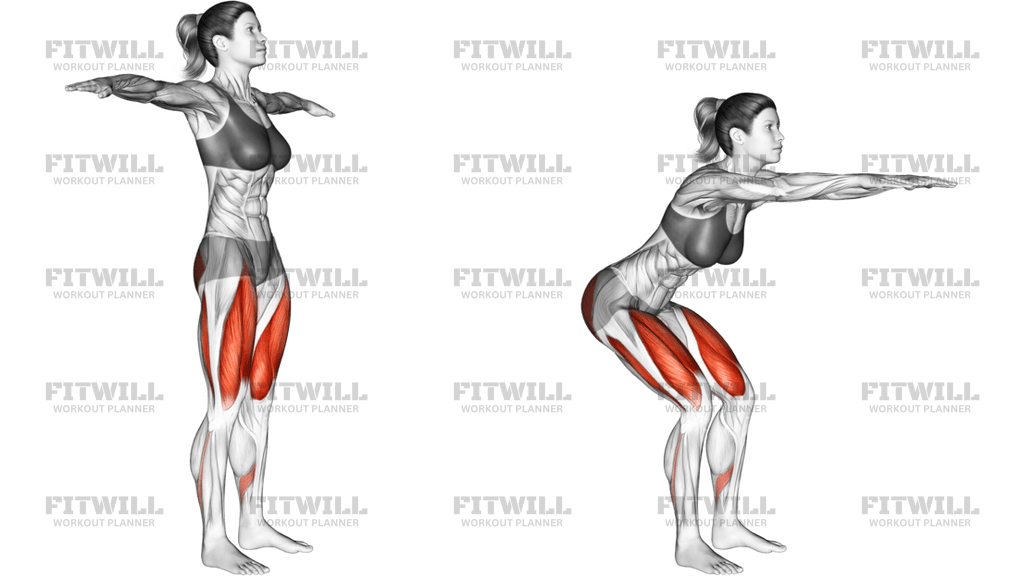
Potty Squat is a bodyweight squat variation performed with the arms held straight in front for balance and torso control. The image shows a controlled descent into a deep squat and a steady return to standing, so the exercise should be coached as a lower-body pattern first and a balance-and-bracing drill second. It is useful when you want to train squat mechanics without adding external load, especially if you are refining depth, foot pressure, knee tracking, and posture.
Even though the record tags the waist and core, the visible work is driven mostly by the legs and hips. The quadriceps, glutes, adductors, and calves produce the squat, while the trunk, obliques, and deep abdominal muscles keep the torso stacked over the pelvis. The forward reach changes the feel of the movement by shifting balance slightly ahead of the body, which can help counterbalance the hips moving back during the descent.
The setup matters because this version can fall apart quickly if the feet are too narrow, the heels lift, or the chest collapses. Start with feet about shoulder width, toes turned slightly out, ribs stacked over the pelvis, and arms extended at shoulder height. From there, sit between the hips instead of folding at the waist, and keep the knees moving in line with the toes as you lower. The goal is a smooth squat that looks controlled from the first inch to the last.
On the way down, keep pressure through the whole foot and let the hips and knees bend together. In the bottom position, keep the heels rooted and the spine long rather than rounding into a tuck. Drive back up by pushing the floor away, maintaining the same stance width and arm position until you are fully upright. Breathe in as you descend and exhale as you stand, so the trunk stays organized without losing tension.
Potty Squat works well in warm-ups, bodyweight circuits, home workouts, and conditioning blocks where clean repetitions matter more than heavy loading. It is also a good regression when barbell squatting is not appropriate yet, or a useful accessory when you want more squat volume without spinal loading. Stop short of any painful depth, and if the heels repeatedly rise or the knees cave inward, shorten the range and slow the tempo until the pattern is stable again.
[ Workout Log & Planner ]
Put your next workout in Fitwill
Keep your plan and training log ready when you are.


Instructions
- Stand with your feet about shoulder-width apart, toes slightly turned out, and your arms stretched straight forward at shoulder height.
- Keep your chest up, ribs stacked over your pelvis, and your weight spread across the whole foot before you start the descent.
- Inhale and brace lightly, then sit your hips back and down as your knees bend and travel in line with your toes.
- Lower until your thighs reach the depth you can control without the heels lifting or the low back rounding.
- Pause briefly in the bottom position if you can stay balanced and keep the spine long.
- Drive through the midfoot and heels to stand back up, keeping the knees from collapsing inward.
- Finish tall with the arms still forward and the glutes fully extended before the next rep.
- Repeat for the planned repetitions at a pace that keeps every squat smooth and identical.
Tips & Tricks
- Keep the arms level with the shoulders; dropping them early usually shifts the torso forward and makes the squat harder to control.
- Think about sitting between your heels, not reaching your chest toward the floor.
- If your heels pop up, widen the stance slightly or shorten the depth until the whole foot stays planted.
- Let the knees travel forward, but keep them tracking over the middle toes instead of caving inward.
- Use a slower lowering phase when the movement feels unstable; that exposes balance problems before they become sloppy reps.
- A small pause at the bottom is useful only if you can keep the spine neutral and the feet flat.
- Do not force depth by tucking the pelvis under; stop where your hips can still move cleanly.
- Exhale as you stand so the trunk stays braced without holding unnecessary tension in the neck.
Frequently Asked Questions
What muscles does Potty Squat work most?
It mainly trains the quadriceps and glutes, with the adductors, calves, and core helping control the squat.
Why are the arms held straight in front?
The forward reach helps counterbalance the hips moving back and makes it easier to stay upright through the squat.
How low should I squat?
Go only as low as you can while keeping both heels down, the knees tracking over the toes, and the low back from rounding.
Can beginners use this exercise?
Yes. It is a good bodyweight squat regression as long as the depth, balance, and knee tracking stay controlled.
What is the most common mistake?
The usual problem is letting the chest fall forward and the heels lift, which turns the squat into a shaky hinge.
Where should I feel the exercise?
You should feel the thighs and glutes doing most of the work, with the trunk staying tight and stable rather than burning out early.
Is a pause at the bottom helpful?
Yes, if you can hold the bottom position without losing foot contact or letting the pelvis tuck under.
How can I make Potty Squat harder?
Slow the lowering phase, add a brief pause, or increase the range only if you can keep the squat pattern clean.