Resistance Band Seated Shoulder Press
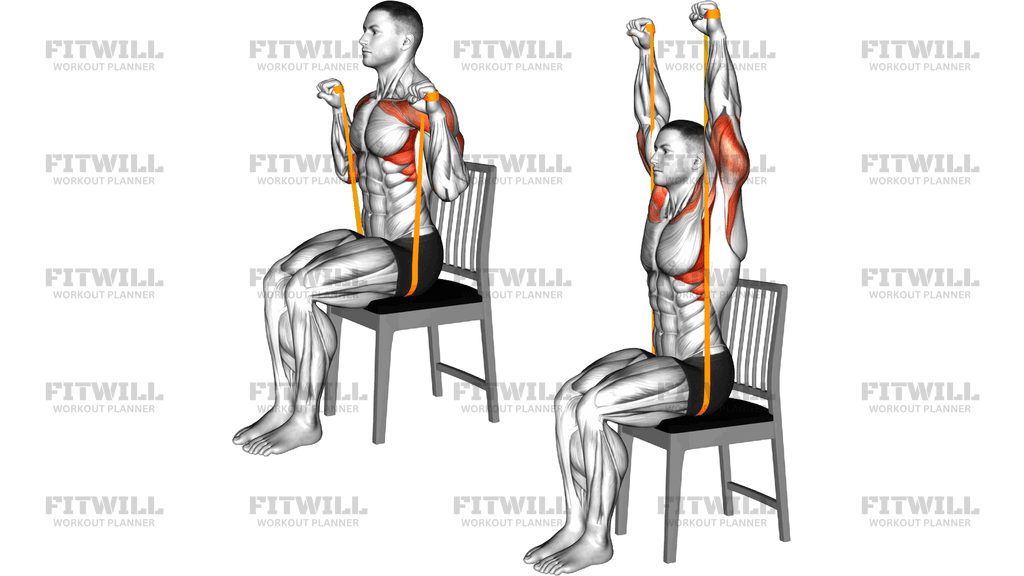
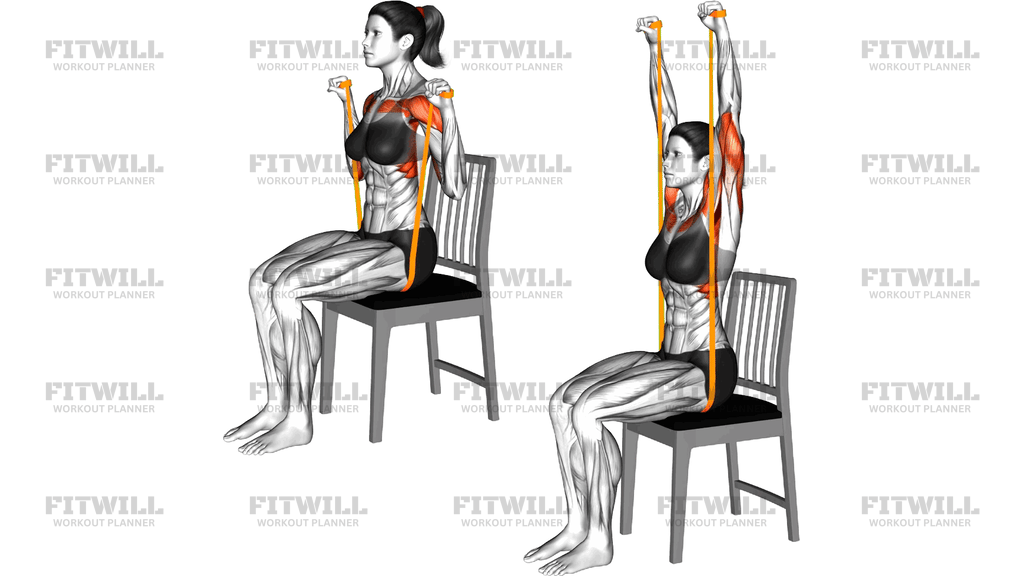
Resistance Band Seated Shoulder Press is a seated vertical press that trains the shoulders through a smooth, band-loaded path. With the band pinned under the seat and the handles starting beside the shoulders, the resistance rises as the hands move overhead, so the top of the rep demands the most control. That makes the exercise useful for building deltoid strength, pressing stamina, and cleaner shoulder mechanics without needing a machine or heavy dumbbells.
The main target is the delts, with the triceps helping finish the press and the upper back working to keep the rib cage, shoulder blades, and head position organized. In anatomy terms, the movement is centered on the Deltoids, with help from Trapezius, Rhomboids, and Triceps brachii. Because the band pulls from below, the setup matters: if you sit unevenly or let one handle drift forward, the press quickly turns into a crooked rep that loads one shoulder more than the other.
Use a flat bench or sturdy seat and sit tall with both feet planted. Pin the band securely under both sit bones, hold a handle in each hand, and start with elbows bent and wrists stacked over the elbows. The first part of the rep should feel like a controlled drive straight up rather than a lean-back heave. Keep the ribs down, press until the arms are overhead without shrugging hard, and lower the handles back to shoulder height under control.
This exercise works well in shoulder-focused sessions, upper-body accessories, warmups, and home workouts where you want pressing volume with lighter equipment. It is also useful when you want to train overhead pressing while staying seated and limiting leg drive. Beginners can use it safely with a light band as long as the shoulders stay level and the motion stays smooth. Choose a band tension that lets you repeat the same path on every rep instead of turning the set into a fight for range.
A good set feels stable, symmetrical, and repeatable from start to finish. If the band starts to twist, the seat shifts, or your lower back arches to finish the press, the load is too much or the setup needs to be reset. Stay patient on the way down, keep the neck relaxed, and stop the set when the handles can no longer travel overhead without compensation.
[ Workout Log & Planner ]
Put your next workout in Fitwill
Keep your plan and training log ready when you are.


Instructions
- Sit on a flat bench or sturdy seat with your feet flat, then pin the resistance band securely under both sit bones.
- Hold one handle in each hand and raise your hands to shoulder height with your elbows bent and your wrists stacked over your elbows.
- Sit tall with your chest open, ribs slightly tucked down, and your head staying centered over your torso.
- Brace your midsection before the first rep so your torso does not lean back when the band gets tighter.
- Press both handles upward in a smooth line until your arms are fully extended overhead or just short of lockout.
- Keep the handles level and avoid letting one arm drift forward or outward as you press.
- Pause briefly at the top if you can stay stacked without shrugging or arching your lower back.
- Lower the handles back to shoulder height under control, keeping tension in the band the whole way down.
- Inhale on the lowering phase and exhale as you press each rep overhead.
- Reset the band and your posture if the seat shifts, the band twists, or the reps become uneven.
Tips & Tricks
- Pin the band evenly under both sit bones so one side does not feel noticeably heavier than the other.
- Keep your forearms close to vertical at the start; if your elbows flare far behind you, the first press will feel unstable.
- A slight neutral grip is usually easier on the shoulders than forcing the palms straight forward.
- Do not lean back to finish the rep; if the lower ribs pop up, the press is turning into a back-assisted movement.
- Stop just short of a hard shrug at the top so the shoulders do not take over from the delts and triceps.
- Lower slowly enough that the band does not snap your hands back to shoulder height.
- Use a band that lets you keep both handles at the same height through the whole set, not just the first few reps.
- Keep your neck long and your chin neutral so the band does not pull your head forward on the way up.
- If one wrist keeps bending back, lighten the band and re-stack the handle directly over the forearm.
- This is a better shoulder press choice for smooth tension and high-rep work than for maximal loading.
Frequently Asked Questions
What muscles does Resistance Band Seated Shoulder Press work most?
The deltoids do most of the work, with the triceps helping finish the press and the upper back stabilizing the torso and shoulder position.
How should I set up the band for this press?
Sit on the band so it is pinned evenly under both sit bones, then start with one handle in each hand at shoulder height before pressing overhead.
Should my back arch during the press?
No. A small rib flare usually means you are using your lower back to help the press, which makes the rep less strict and less shoulder-focused.
Is a neutral grip or palm-forward grip better?
A slightly neutral grip is often easier to control and can feel friendlier on the shoulders, especially with a tighter band.
Can beginners use this exercise?
Yes. Start with a light band and smooth reps, and stop the set before the shoulders start shrugging or the torso starts leaning back.
Why does the top of the rep feel harder?
Band resistance increases as the handles rise, so the final part of the press usually feels hardest even though the movement looks simple.
What is the most common form mistake?
The most common mistake is turning the press into a lean-back, shrug-heavy rep instead of keeping the torso stacked and the handles level.
How do I make this exercise harder?
Use a thicker band, add reps, or slow the lowering phase while keeping the same seated position and clean overhead path.