Bar Band Bent-Over Rear Delt Fly
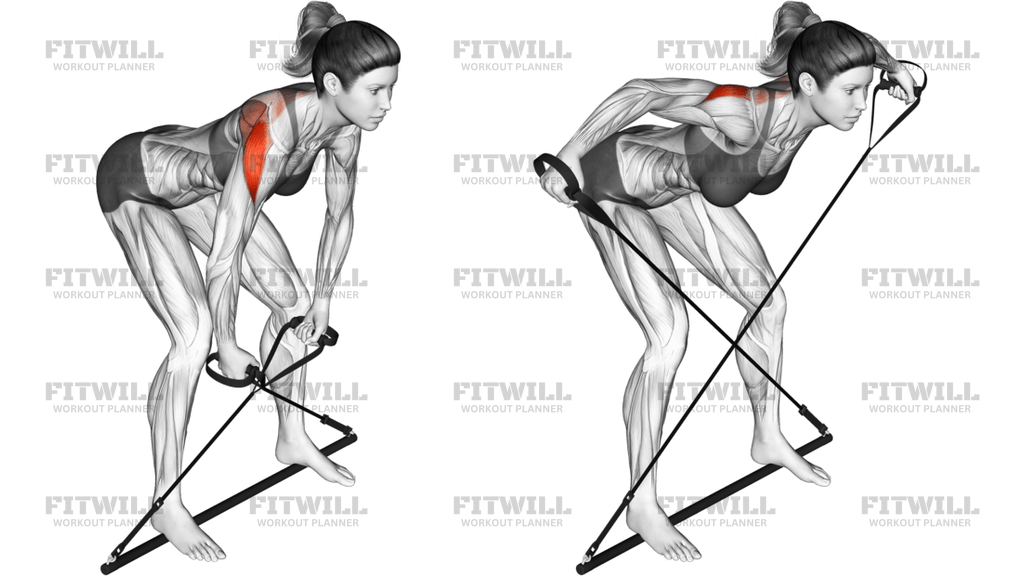
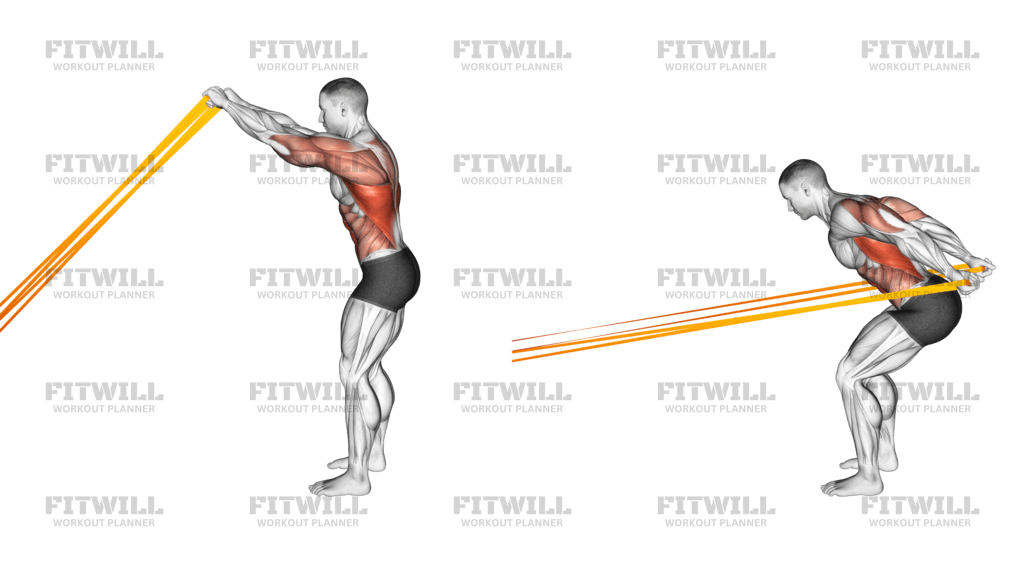
Bar Band Bent-Over Rear Delt Fly is a band-loaded shoulder isolation movement performed from a hip hinge. It is built to train the rear delts with a long, smooth resistance curve while also asking the upper back to keep the shoulder blades organized. The exercise is most useful when you want direct work for the back of the shoulders without needing a machine or heavy external load.
The setup matters more here than on many other shoulder exercises. Stand on the band so the resistance is centered under both feet, then hinge until your torso is nearly parallel to the floor with a soft bend in the knees. Hold the handles or straight bar attachment in front of the shins, keep the neck long, and let the arms hang under the shoulders before you start the first rep. If the torso is too upright, the rear delt work turns into a shrugging motion; if the hinge collapses, the low back usually takes over.
On each repetition, the arms travel in a wide arc out and slightly back. The elbows stay softly bent, but they lead the movement rather than the hands. Raise until the upper arms line up with the torso or just below it, then lower slowly and keep the band under control all the way back to the start. A brief squeeze at the top is useful, but only if the shoulders stay down and the movement stays smooth.
This exercise fits well in accessory work, shoulder-focused sessions, upper-back training, or warmups that need lighter pulling volume. It is especially useful when pressing work or desk posture has left the rear delts undertrained. Because the band creates constant tension, lighter resistance is usually enough to expose mistakes in posture, range, or tempo. The goal is not to throw the arms higher; it is to keep the hinge solid and make the rear delts do the work.
Use a load that allows the torso to stay fixed and the scapulae to move without jerking. If the neck tightens, the low back starts to extend, or the band pulls you upright, the resistance is too heavy or the stance is too narrow. Done well, Bar Band Bent-Over Rear Delt Fly is a clean, repeatable way to build shoulder balance and rear-delt control with very little setup.
[ Workout Log & Planner ]
Put your next workout in Fitwill
Keep your plan and training log ready when you are.


Instructions
- Stand on the band with both feet about hip width apart and hold the handles or straight bar attachment in front of your shins.
- Hinge at the hips until your torso is close to parallel with the floor, keeping a soft bend in the knees and a long neutral spine.
- Let your arms hang under your shoulders with elbows slightly bent and palms facing each other or slightly inward.
- Set your shoulders down away from your ears and brace your torso before starting the first rep.
- Lift the arms out and slightly back in a wide arc, leading with the elbows instead of the hands.
- Raise until the upper arms are in line with the torso or just below it, then squeeze the rear delts without shrugging.
- Lower the band slowly until the hands return under the shoulders and the tension builds back under control.
- Reset the hinge if your chest rises, your back rounds, or the band starts pulling you upright.
Tips & Tricks
- Keep most of your weight through the midfoot and heel so the hinge does not drift into the toes.
- Think about moving the elbows out and back; if the hands lead, the rear delts usually lose tension.
- Stop the rep when the upper arms match the torso instead of trying to force the band higher.
- Use a lighter band if your shoulders shrug at the top or your torso starts to rise with each rep.
- Keep the neck aligned with the spine and look slightly ahead of the floor instead of cranking the head up.
- Pause for a beat at the top only if you can hold the shoulder blades down and back.
- Lower slowly enough that the band never snaps your hands back under the shoulders.
- If your forearms fail before your rear delts, shorten the set or change to a setup with easier grips.
Frequently Asked Questions
What muscle does Bar Band Bent Over Rear Delt Fly target most?
The rear delts are the main target, with the upper back helping to stabilize and guide the shoulder blades.
Can beginners perform this exercise?
Yes. Beginners usually do best with a light band, a solid hip hinge, and a smaller range of motion until the movement feels smooth.
Where should the handles or bar be at the start?
They should hang in front of the shins with your arms under the shoulders and the band tension already set from standing on it.
How far should I lift my arms?
Lift until the upper arms line up with the torso or slightly below it. Going higher usually turns the rep into a shrug.
Why does my lower back feel this more than my shoulders?
That usually means the hinge is collapsing or the band is too heavy. Keep the torso fixed and reduce resistance until the rear delts can do the work.
Should my elbows stay locked straight?
No. Keep a small bend in the elbows and hold that angle steady so the movement stays centered on the rear delts.
Can I use a straight bar attachment instead of handles?
Yes. A straight bar or similar attachment can make the setup feel more stable as long as the band stays centered under both feet.
How do I progress this exercise over time?
Use a stronger band, create more stretch at the bottom, or add a brief pause at the top while keeping the hinge and shoulder position unchanged.