Standing Lateral Raise With Band
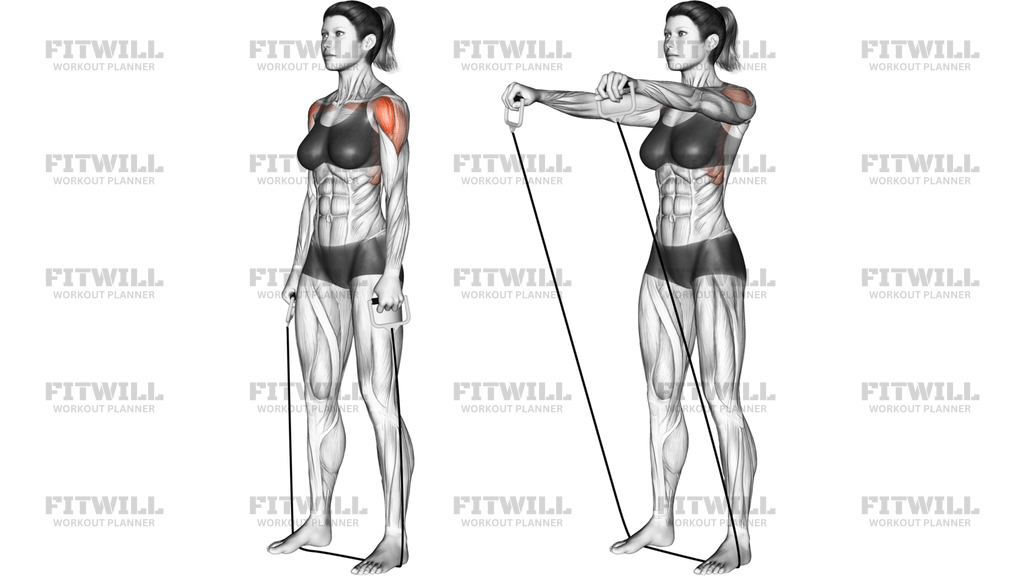
Standing Lateral Raise With Band is a standing shoulder isolation exercise that uses a resistance band anchored under both feet to load the side delts through a long, controlled arc. The movement is simple on paper, but the setup matters: the band tension, stance width, and arm path all decide whether the shoulders do the work or the reps turn into a shrugging, swinging pattern.
This variation places the primary demand on the deltoids, especially the middle fibers that create shoulder width, while the upper traps, rhomboids, and triceps help steady the shoulder girdle and keep the elbows organized. Because the resistance increases as the band stretches, the top half of the raise usually feels the hardest. That makes this a useful choice for hypertrophy work, warmups, accessory volume, or joint-friendly shoulder training when you want continuous tension without heavy external loading.
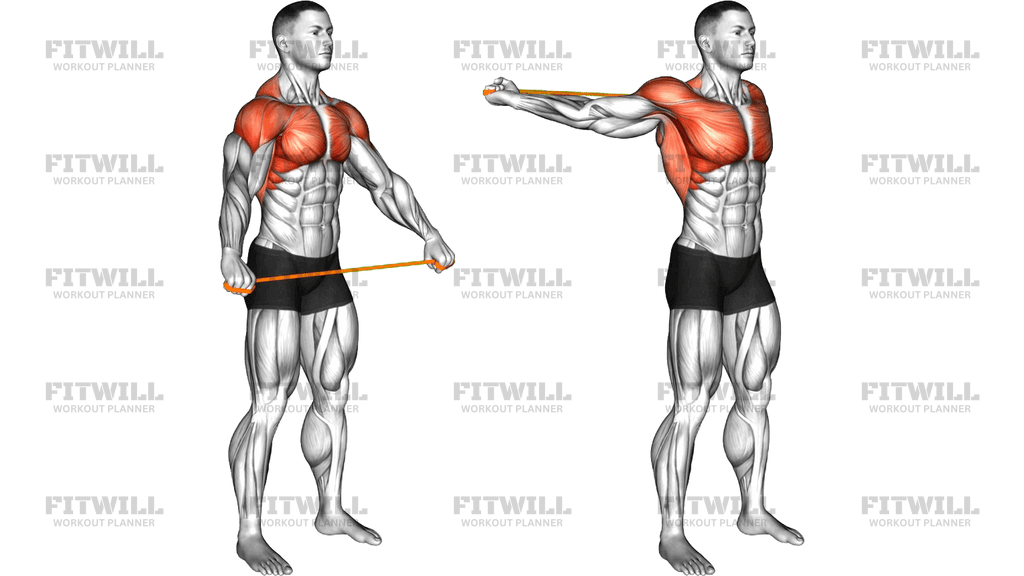
Set the band evenly under both feet and hold a handle in each hand with the arms resting by your sides. Keep the wrists neutral, the ribs stacked over the pelvis, and the elbows slightly soft. From there, raise the arms out and slightly forward in the scapular plane until they reach about shoulder height or just below if that feels cleaner. The goal is to lift with the side delts, not to yank the shoulders upward or lean the torso to help the band move.
A good rep stays smooth from bottom to top and back down. The ascent should be controlled enough that the handles do not drift or twist, and the descent should resist the band instead of collapsing into the start. If you need to shorten the range a little to keep the neck quiet and the shoulders level, that is usually the better choice. The band is most useful when it keeps tension on the delts without forcing you to cheat.
Use this exercise when you want a straightforward standing shoulder raise that is easy to set up and easy to scale with band tension. It fits well after compound pressing or as a dedicated shoulder accessory. Beginners can use it successfully with a light band and strict form, but the exercise rewards patient reps more than aggressive loading. If the movement turns into a shrug, a swing, or a side bend, the band is too heavy or the range is too large for the current set.
[ Workout Log & Planner ]
Put your next workout in Fitwill
Keep your plan and training log ready when you are.


Instructions
- Stand on the middle of the band with both feet and hold a handle in each hand at your thighs.
- Set your feet about hip width apart and keep your weight balanced over the whole foot.
- Let the arms hang with a slight bend in the elbows and the palms facing in toward your thighs.
- Brace your trunk, keep the ribs stacked, and keep the shoulders down before the first rep.
- Raise both arms out to the sides in a smooth arc until the hands reach shoulder height or just below.
- Keep the elbows slightly higher than the hands and avoid turning the movement into a shrug.
- Lower the handles slowly back to your sides while keeping tension on the band.
- Reset your posture at the bottom and repeat for the planned number of reps.
Tips & Tricks
- Choose a band that lets you reach shoulder height without leaning back or shrugging hard at the top.
- Keep the hands slightly in front of the body instead of directly out to the side if that feels smoother on the shoulders.
- Do not let the wrists break back; a neutral wrist keeps the handle from pulling the forearms out of line.
- Start each rep from dead still, because a little swing from the bottom turns this into a momentum drill.
- Think about leading the lift with the elbows while keeping the shoulders away from the ears.
- Pause briefly near shoulder height to remove bounce and keep the side delts under tension.
- Lower the handles under control for at least as long as the lift; the eccentric is where the band can pull you off position.
- If the band gets too heavy near the top, shorten the range slightly instead of forcing the traps to finish the rep.
Frequently Asked Questions
What does Standing Lateral Raise With Band train most?
It primarily targets the side delts, with the upper traps and upper back helping stabilize the shoulder position.
Where should the band and handles start?
Stand on the middle of the band with one handle in each hand, letting the hands rest near the thighs before you lift.
How high should I raise my arms?
Bring the hands to shoulder height or slightly below if that keeps the neck relaxed and the shoulders from shrugging.
Should my palms face down at the top?
No. Keep the wrists neutral and let the thumbs point slightly up or forward so the shoulder stays in a safer line.
Is it normal to feel this in my traps?
Some trap involvement is normal for shoulder stability, but the set should not turn into a shrug-dominant movement.
Can beginners use this band variation?
Yes. Start with a light band, a shorter range if needed, and a smooth tempo so the handles do not yank your shoulders.
What is the most common mistake with this exercise?
Leaning, swinging, or shrugging to get the handles higher is the main issue. The rep should stay strict and upright.
How do I make the band lateral raise harder without changing the exercise?
Use a thicker band, step wider on the band for more starting tension, or slow the lowering phase while keeping the same arm path.