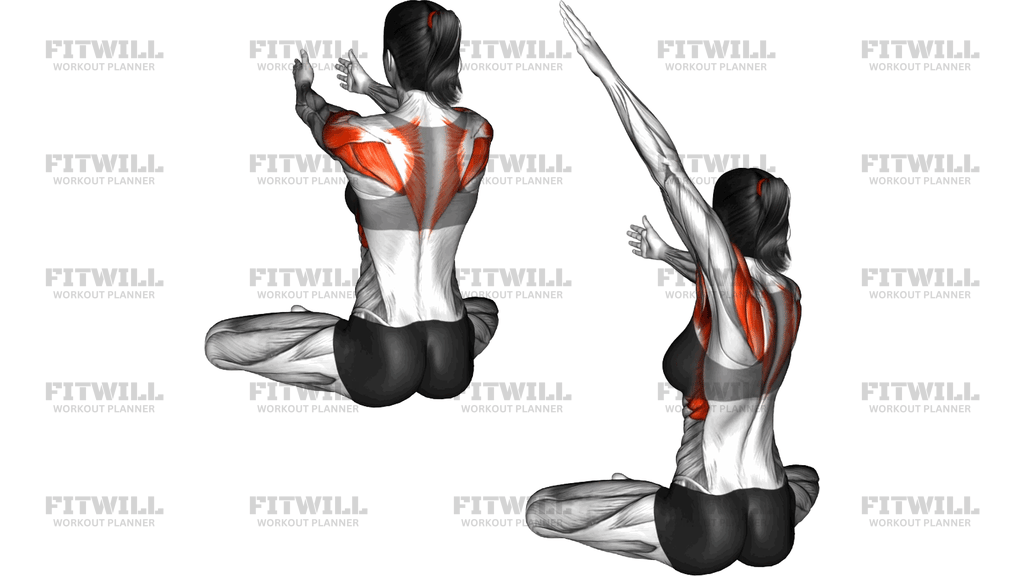
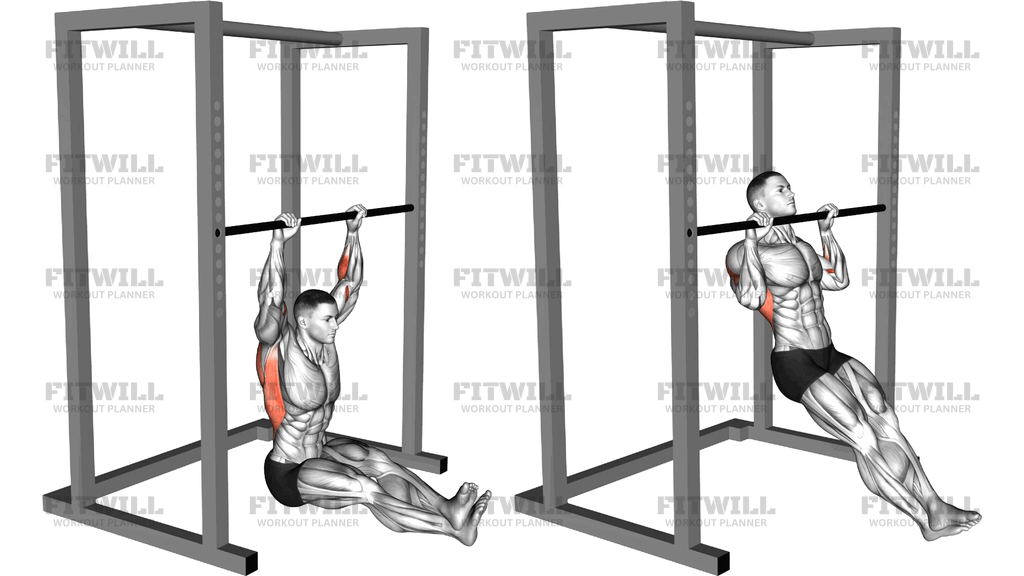
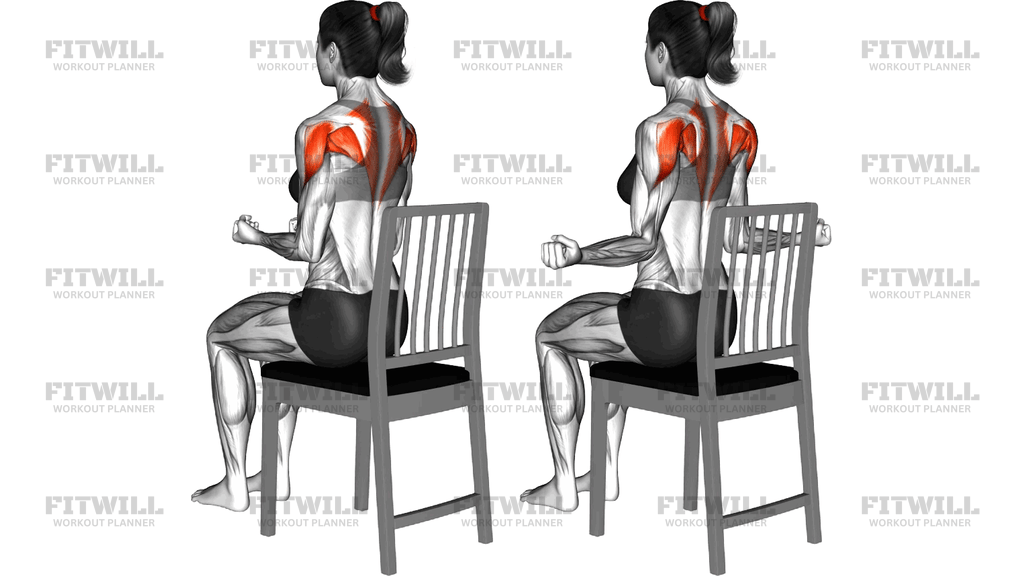
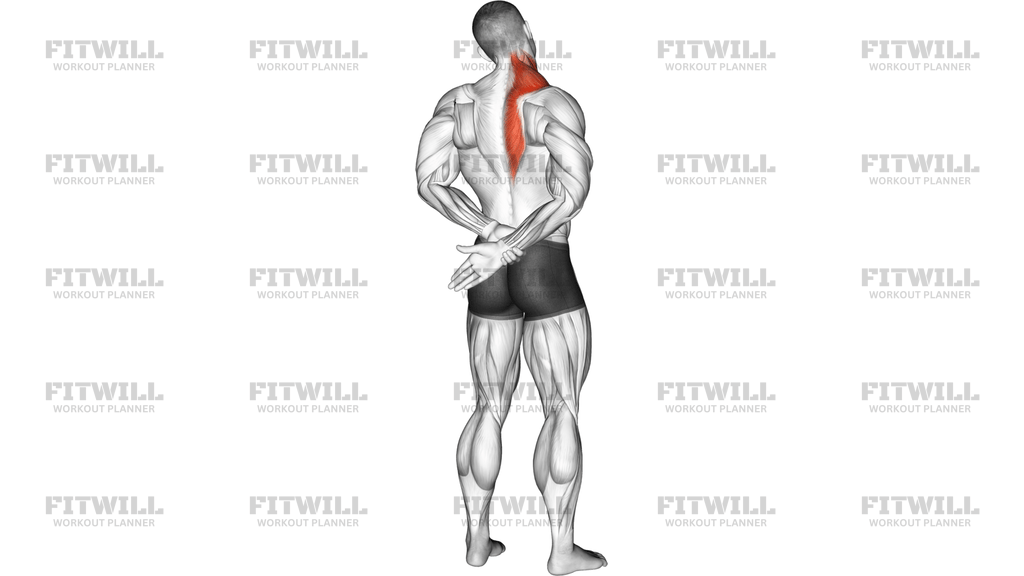
Bodyweight Standing Row With Towel
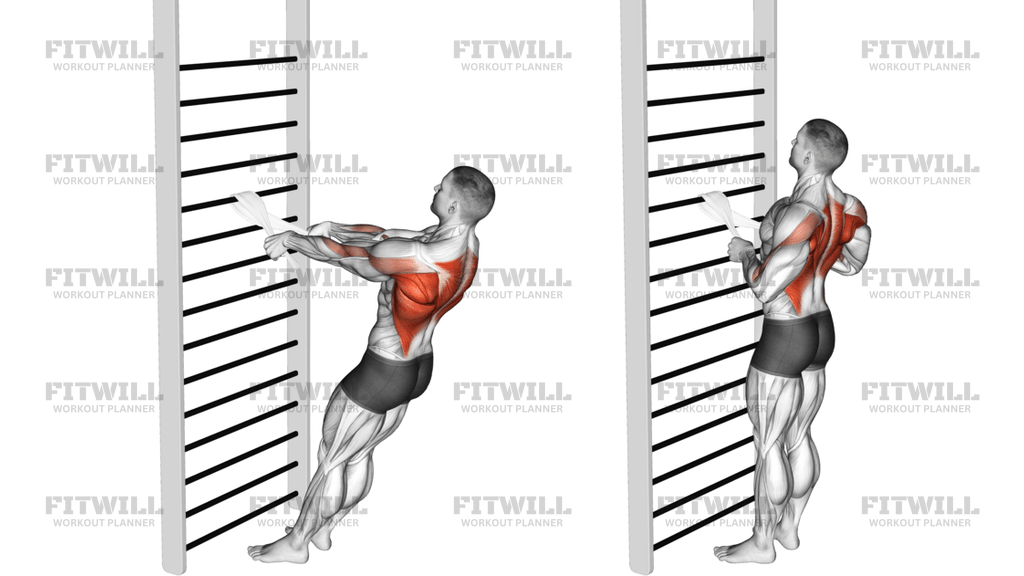
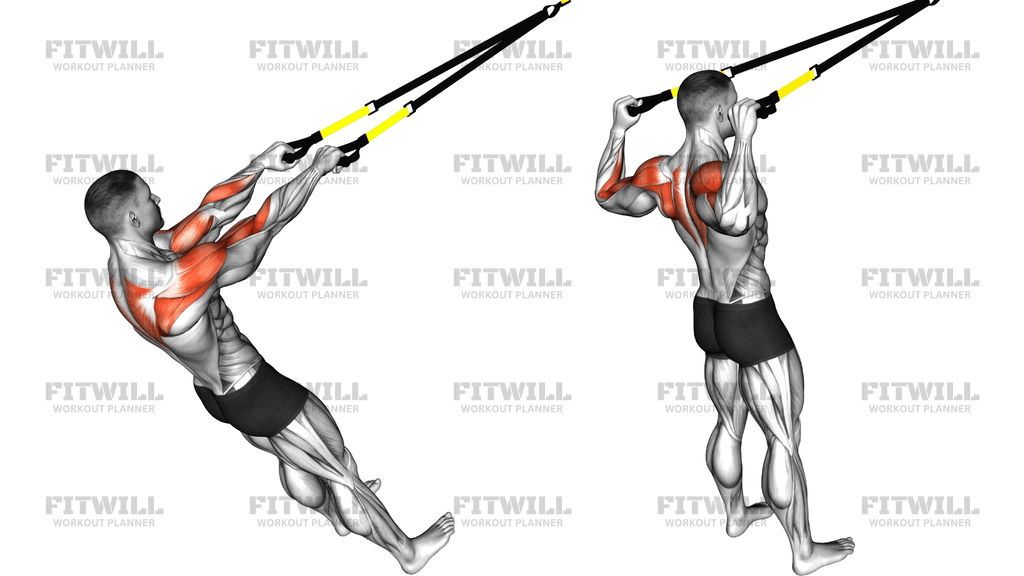
Bodyweight Standing Row With Towel is a standing bodyweight pulling exercise that trains the upper back through a long-to-short shoulder motion. By leaning back from a fixed towel anchor and rowing your chest toward your hands, you create a practical horizontal pull without needing a machine or dumbbells. It is useful when you want to build back strength, improve scapular control, or practice cleaner rowing mechanics with only a stable anchor and your own body weight.
The main emphasis is on the traps, with the upper back, lats, and biceps helping to control the pull and the return. In anatomy terms, the movement centers on the trapezius, with support from the rhomboids, latissimus dorsi, and biceps brachii. Because the towel changes how your hands are positioned and how the force reaches your torso, grip quality and anchor stability matter just as much as pulling strength.
A good repetition starts before the pull begins. Step back far enough that your arms start straight, your body is slightly leaned back, and your feet are planted so you can resist the pull without losing balance. Keep your ribs stacked over your pelvis, then draw your shoulder blades back and down as you row. The goal is not to yank your chest forward, but to pull the handles or towel toward you while keeping the torso firm and the neck relaxed.
At the top of the rep, squeeze the upper back without shrugging into the ears. The elbows should travel back in line with the torso, and the towel should stay under control so the anchor does not jerk or slip. Return slowly to the start and let the arms lengthen fully before the next rep. That controlled return is important because it keeps tension on the back and makes the exercise useful for both strength and posture work.
Bodyweight Standing Row With Towel fits well in warmups, home workouts, accessory blocks, or conditioning circuits where you need a horizontal pull but do not have a row machine. It can be scaled by changing how far you lean back: more upright makes it easier, while a longer lean increases the demand on the back and arms. Because the towel and anchor are part of the exercise, safety depends on using a secure attachment point and a grip that feels stable for every repetition.
[ Workout Log & Planner ]
Put your next workout in Fitwill
Keep your plan and training log ready when you are.


Instructions
- Loop a towel around a sturdy fixed support at chest height and grasp both ends with a neutral grip.
- Walk your feet forward and lean your body back so your arms are straight and your body forms a rigid line from head to heels.
- Plant your feet shoulder-width apart, brace your midsection, and keep your shoulders down away from your ears.
- Start the pull by drawing your shoulder blades back and pulling your chest toward the towel.
- Drive your elbows back alongside your torso until your hands reach the sides of your chest or upper ribs.
- Squeeze your upper back for a brief pause at the top without craning your neck or shrugging.
- Lower yourself back under control until your arms are fully extended and the towel is taut again.
- Keep breathing steady, exhaling as you row and inhaling as you return.
- Reset your feet and body angle if the towel shifts or your lower back starts to overextend between reps.
Tips & Tricks
- If the towel feels slippery, shorten the lever by standing a little closer to the anchor and keep your hands stacked evenly.
- Do not turn the row into a biceps curl; the elbows should travel back while the wrists stay quiet.
- Keep your chest tall but avoid flaring the ribs hard, which usually turns the rep into a lower-back arch.
- A small pause with the shoulder blades squeezed in the top position makes the upper back do more of the work.
- If your shoulders shrug during the pull, lower the angle of your body and repeat with less bodyweight hanging from the towel.
- Let the arms reach long at the bottom, but do not relax the shoulders so much that they roll forward and lose tension.
- The set should feel hardest when your body is most leaned back; if it is easy, increase the lean instead of speeding up the reps.
- Keep the anchor point fixed at the same height for every set so the line of pull stays consistent.
Frequently Asked Questions
What muscles does Bodyweight Standing Row With Towel work?
It mainly targets the upper back and traps, with help from the rhomboids, lats, and biceps during the pull and return.
How do I set up the towel for Bodyweight Standing Row With Towel?
Loop it around a sturdy fixed support at about chest height, grab both ends firmly, and step back until your arms are straight and your body is leaned back under tension.
How do I make Bodyweight Standing Row With Towel harder?
Increase the body angle by walking your feet farther forward, so more of your body weight has to be controlled by the pull.
What is the biggest mistake in this row?
Shrugging the shoulders and yanking with the arms instead of pulling the chest toward the towel with the upper back.
Is Bodyweight Standing Row With Towel suitable for beginners?
Yes, as long as the anchor is secure and the body angle is kept fairly upright until the movement feels stable.
Where should the towel touch my body?
The towel itself stays in your hands; your chest should travel toward your hands, and the elbows should finish close to the sides of the torso.
What should my feet do during the set?
Keep them planted and unchanged unless you need to adjust the angle, because foot movement usually means you are losing tension or balance.
Can I use this as a substitute for a row machine?
Yes, it works well as a simple horizontal pull substitute when you need a back exercise without a machine or cable stack.