Semi Squat Jump
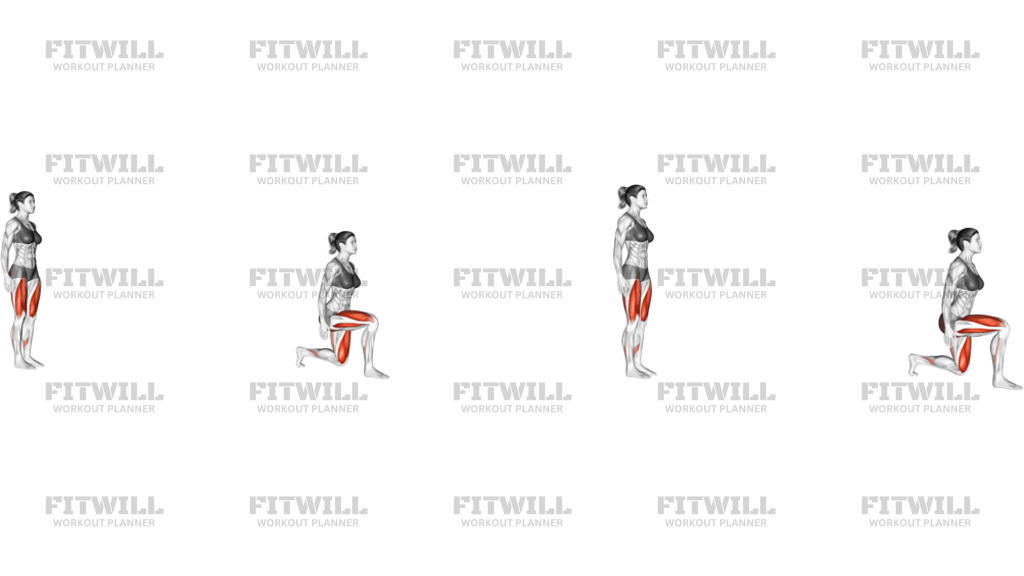
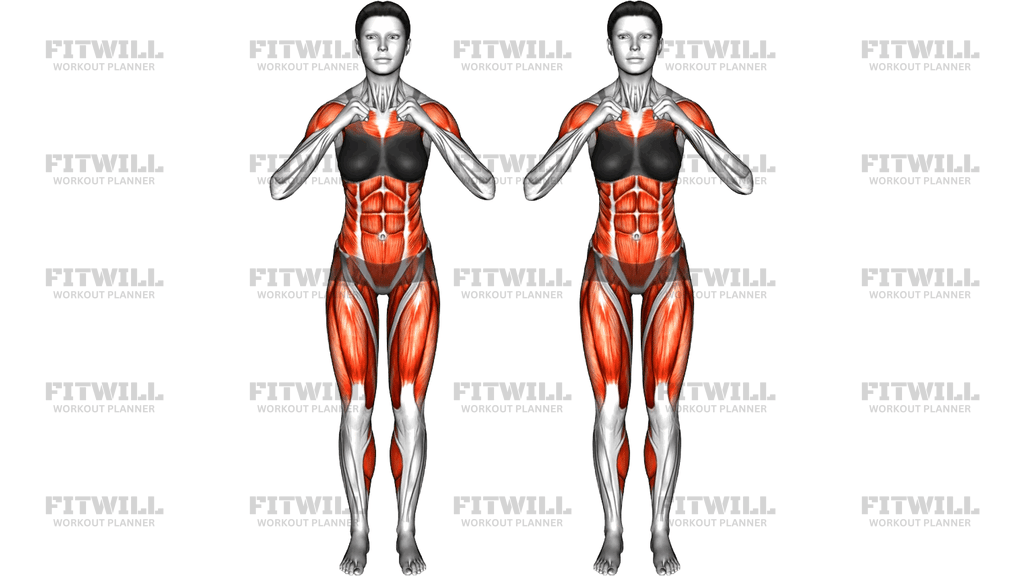
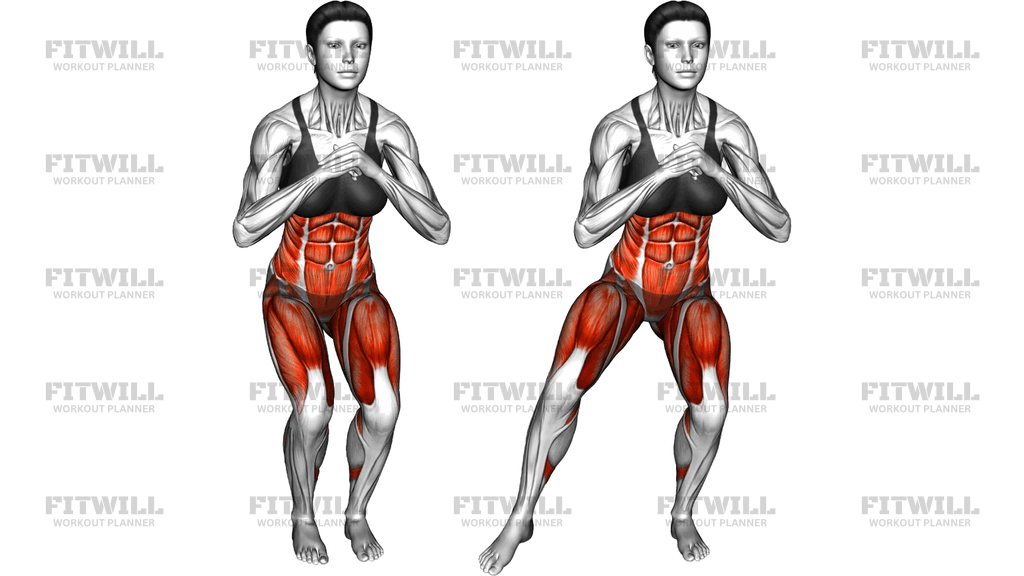
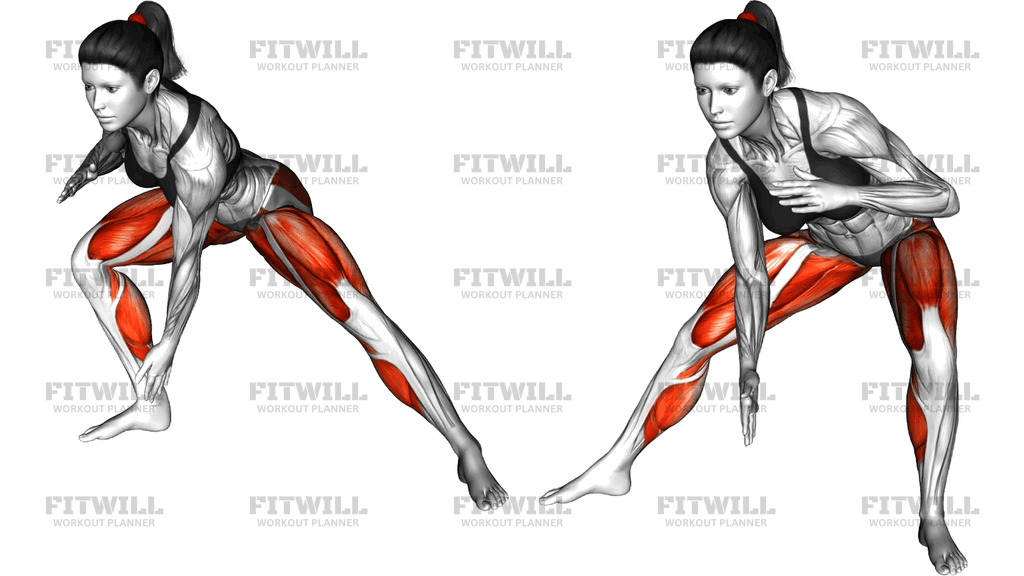
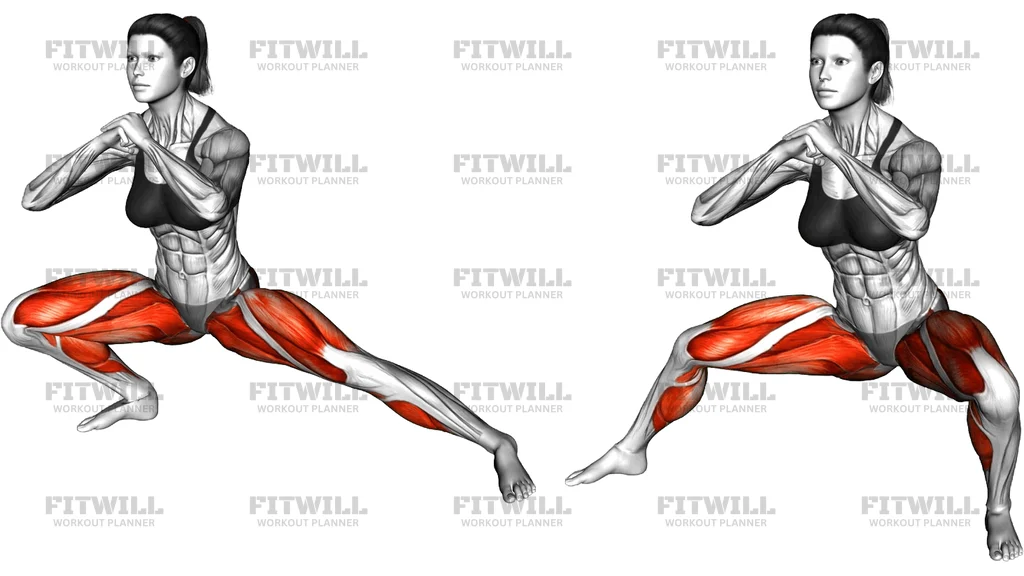
Semi Squat Jump is a bodyweight plyometric drill that starts from a shallow squat and finishes with a quick, vertical jump. The shorter dip keeps the movement fast and explosive, which makes it useful for developing lower-body power, coordination, and the ability to absorb force on landing. The image shows a compact squat-to-jump pattern rather than a full depth squat, so the emphasis is on a crisp takeoff and a controlled reset.
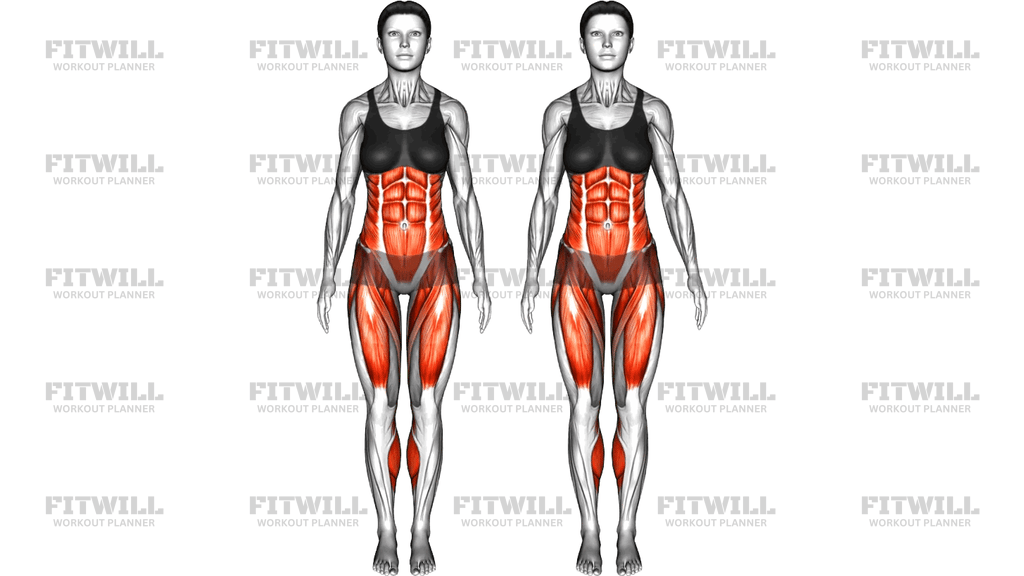
The main drivers are the quads and glutes, with the calves helping finish the jump and the core stabilizing the trunk so you do not fold forward or twist on the way up. Because there is no external load, the quality of the repetition depends on how well you manage body position: feet planted evenly, knees tracking over the toes, chest lifted, and hips sitting back just enough to load the legs without turning the jump into a deep fatigue squat.
Set the stance first, because the takeoff starts before your feet leave the floor. Stand with feet about shoulder width apart, soften the knees, and lower into a semi squat with your weight balanced through the whole foot. From there, brace lightly, drive through the floor, and extend the ankles, knees, and hips in one quick sequence. Keep the jump vertical rather than throwing the chest forward, and land quietly with the knees and hips bent so you can absorb the force instead of crashing into the floor.
This exercise is a good fit for warm-ups, power blocks, athletic circuits, or conditioning sessions where you want repeated explosive efforts without heavy equipment. It also works well as a teaching drill for jump mechanics because the shorter dip is easier to control than a maximal squat jump. The key is to stay springy and repeatable; if the landing gets loud, the torso starts pitching forward, or the knees cave inward, the set is already too fatigued.
Use Semi Squat Jump when you want speed, coordination, and leg power in a simple bodyweight format. It is not the best choice for grinding through fatigue or chasing the highest possible jump height at all costs. Keep the reps sharp, stop before the mechanics fall apart, and give the joints enough space to land softly and reset for the next jump.
[ Workout Log & Planner ]
Put your next workout in Fitwill
Keep your plan and training log ready when you are.


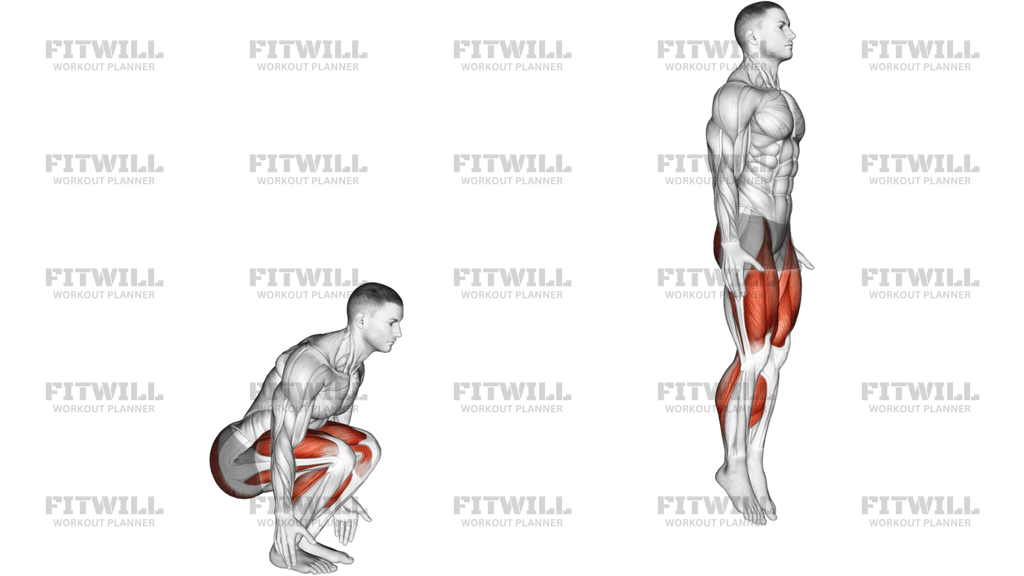
Instructions
- Stand with feet about shoulder-width apart, toes slightly turned out, and your arms relaxed by your sides or held in front for balance.
- Lower into a semi squat by sending the hips back and bending the knees until you are in a shallow athletic position, not a deep squat.
- Keep your chest lifted, spine long, and weight centered through the whole foot before you jump.
- Brace your trunk lightly so your torso stays steady as you prepare to explode upward.
- Drive hard through the floor and jump straight up by extending the ankles, knees, and hips together.
- Keep the takeoff vertical and avoid pitching the torso forward or letting the knees cave inward.
- Land softly on the balls of your feet, then let the heels settle as you absorb the impact back into a semi squat.
- Reset your balance after each rep or flow into the next jump only if you can keep the landings quiet and controlled.
Tips & Tricks
- Use a shallow dip; if you sink too low, the jump usually turns into a slow squat and power drops off.
- Land quietly. A noisy landing usually means the knees are stiff and the hips are not absorbing enough force.
- Keep the knees tracking in line with the toes so the legs do not collapse inward on takeoff or landing.
- Think "floor away" on the jump cue so the effort stays vertical instead of drifting forward.
- Let the arms help only as much as needed for rhythm; wild arm swing usually throws off balance.
- Choose low rep counts for power work and stop the set when jump height or landing quality drops.
- Wear stable trainers and use a flat, non-slip surface so you can push and land with confidence.
- If your calves or Achilles start taking over, reduce the jump height and tighten the landing mechanics.
Frequently Asked Questions
What muscles does Semi Squat Jump work most?
It mainly trains the quads and glutes, with the calves and core helping during takeoff and landing.
Is the semi squat jump different from a full squat jump?
Yes. The semi squat starts from a shorter dip, which makes the jump quicker and more power-focused than a deep squat jump.
Should my heels stay on the floor during the jump?
Your heels may lift as you explode upward, but you should still push through the whole foot and land with control.
How low should I squat before each jump?
Only as low as you can keep the movement quick and controlled. A shallow athletic squat is the goal, not a deep fatigue squat.
Can beginners do this exercise safely?
Yes, if they keep the jump small, land softly, and stop before the knees or torso start losing position.
What is the biggest form mistake to avoid?
The most common error is letting the knees cave inward or landing stiff-legged instead of absorbing the impact.
How should I breathe during the rep?
Take a small breath and brace before the jump, then exhale as you explode upward and reset your breath on the landing.
What is this exercise best used for?
It works well for warm-ups, athletic conditioning, and lower-body power work where you want repeated explosive reps.