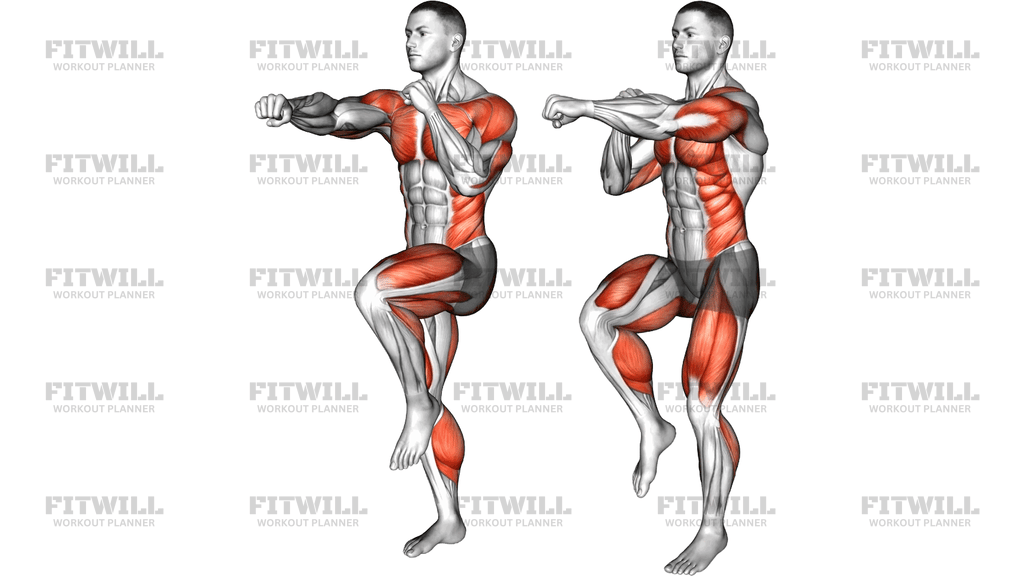
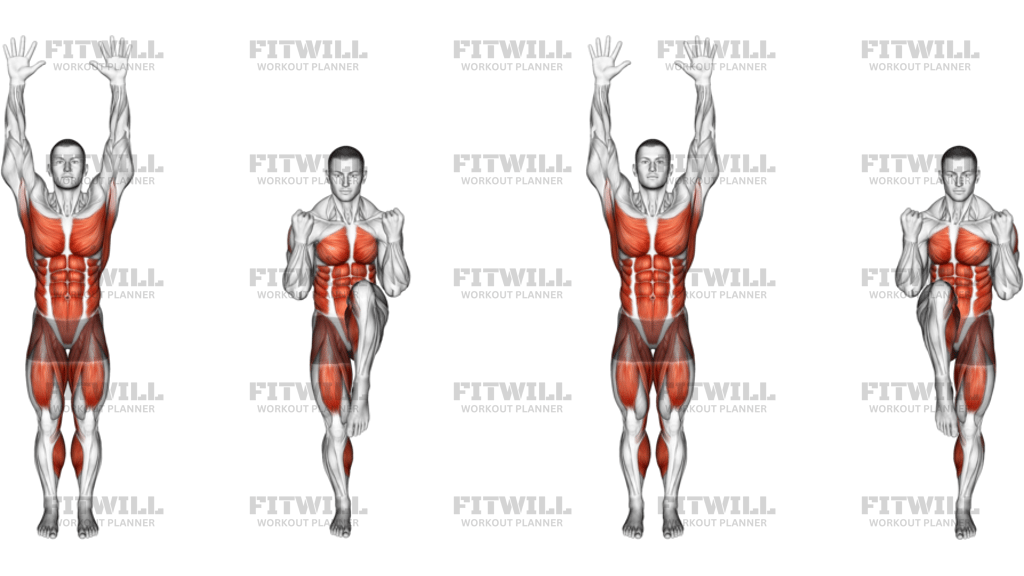
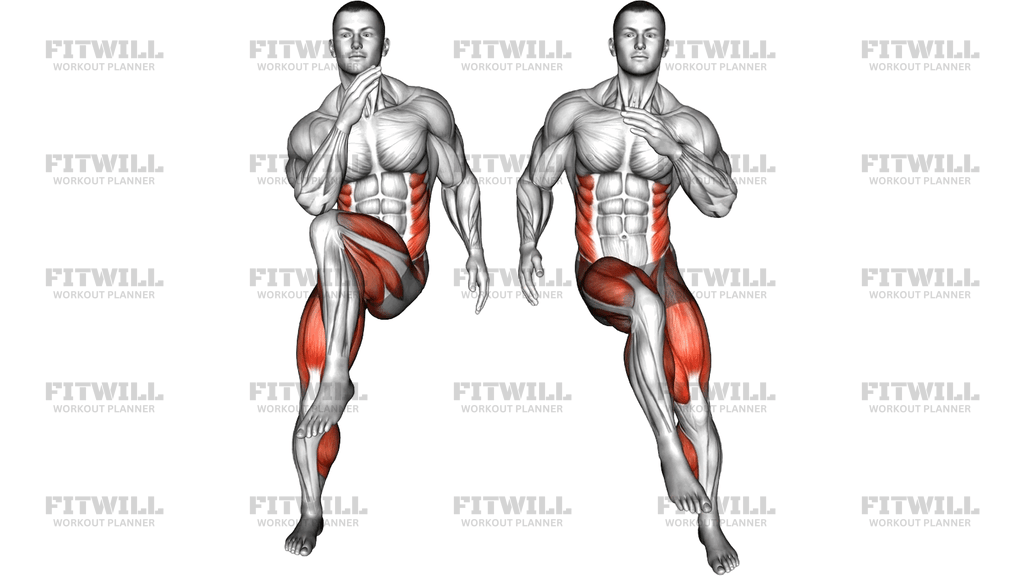
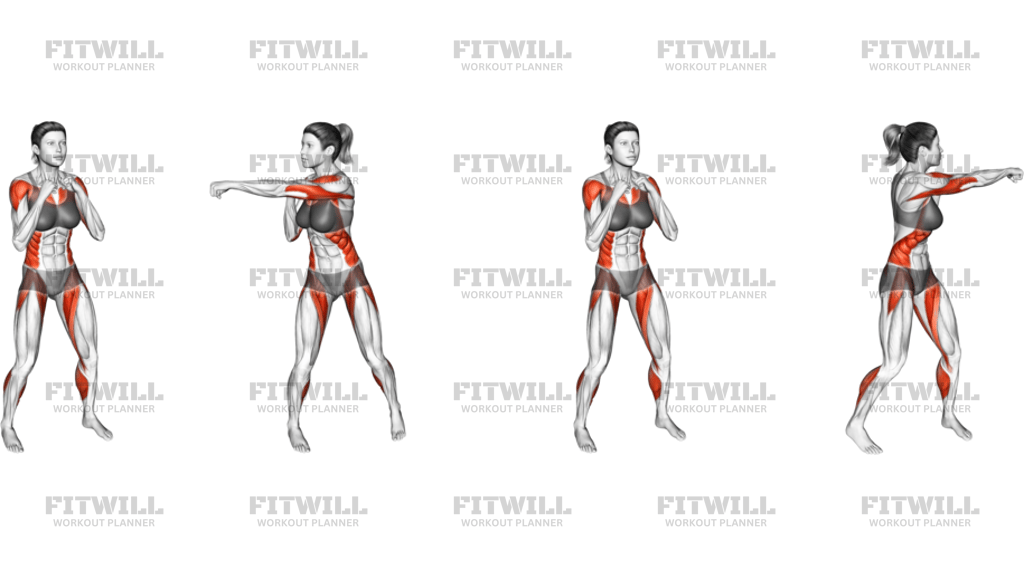
Lateral Speed Step
Lateral Speed Step is a body-weight plyometric drill built to improve lateral quickness, deceleration, and single-leg control. It looks simple, but the value comes from how cleanly you shift from one side to the other while staying low, balanced, and ready to change direction again. That makes it useful for athletes, warmups, and conditioning blocks where the goal is fast feet without sloppy landings.
The drill places a lot of work on the glutes, quads, calves, inner thighs, and core as you stabilize each landing. The outside leg takes most of the load, while the opposite leg stays light and active so the transition can happen quickly. If the landing knee caves inward or the torso drifts too far, the movement stops being a speed drill and turns into a balance problem, so the setup and posture matter as much as the step itself.
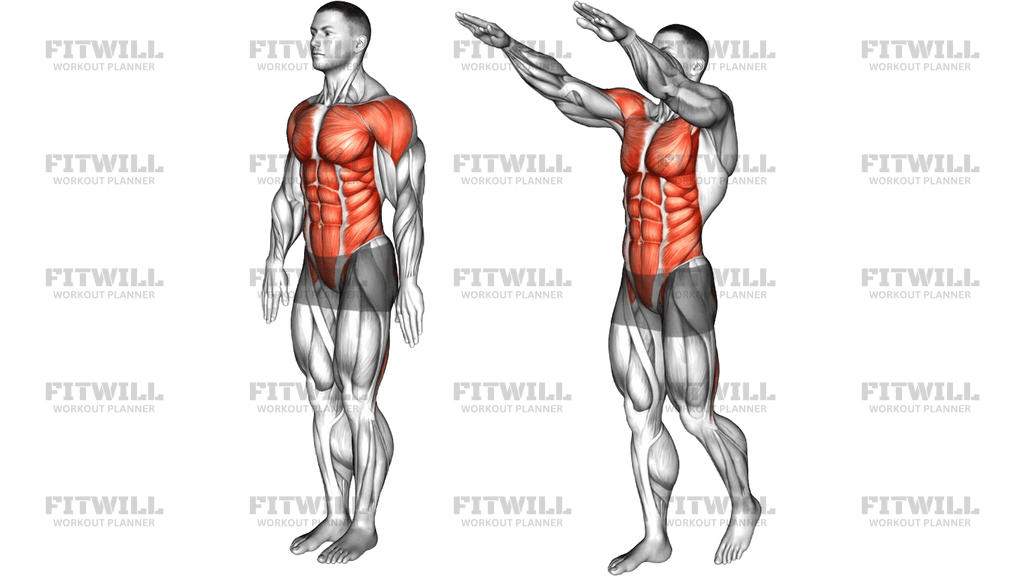
Start from an athletic stance with soft knees, a slight hip hinge, and your arms bent as if you were sprinting. Each rep should feel like a short, explosive side step or light hop rather than a big leap. Push off the loaded leg, land quietly on the other side, and absorb the force through the hip and knee before immediately driving back across.
Because the contacts are short, the exercise teaches you to produce force and then control it just as quickly. That makes it a strong choice for prep work before running, court sports, field work, or any session that needs sharper footwork. It can also be used as conditioning when you keep the pace brisk, but only if your landings stay crisp and your hips stay level.
Keep the range and speed honest. If the feet start crossing too much, the steps become noisy, or the torso starts rocking side to side, shorten the distance and clean up the mechanics before adding more speed. The best repetitions look springy and controlled at the same time, with stable knees, quiet feet, and a quick return to the starting position ready for the next step.
[ Workout Log & Planner ]
Put your next workout in Fitwill
Keep your plan and training log ready when you are.


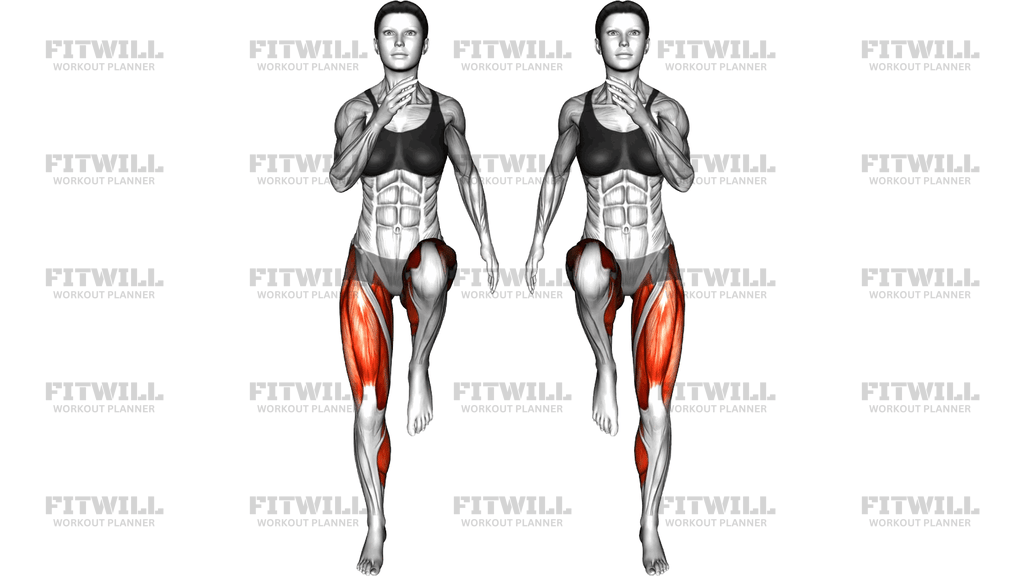
Instructions
- Stand in an athletic stance with your feet about hip-width apart, knees softly bent, chest up, and your arms bent at about 90 degrees.
- Sit your hips slightly back and load your weight into one leg so that knee tracks over the middle of your foot.
- Push forcefully off the loaded leg and step or lightly hop laterally to the other side.
- Land on the outside foot first, keeping the whole foot down or landing through the midfoot before settling the heel.
- Let the inside leg trail lightly behind or close to the landing leg without letting it swing wildly across your body.
- Absorb the landing with a bent knee and hip, keeping your torso tall and your knee aligned with your toes.
- Drive the opposite arm forward as soon as you land so the upper body helps the lateral rhythm.
- Rebound quickly back across with short ground contact, keeping the movement low and springy.
- Continue alternating sides for the planned reps, then slow down and reset in a balanced stance.
Tips & Tricks
- Treat Lateral Speed Step as a quick-change drill, not a broad jump. Short, sharp contacts are more useful than covering extra distance.
- The landing foot should own the rep. If the trailing leg is taking over, you are stepping too far or losing balance.
- Keep the hips level instead of swaying from side to side. A small shift is fine; a big lean usually means you are chasing speed too early.
- If the knee caves inward on landing, shorten the step and think about driving the knee over the second toe.
- Quiet feet are a good sign. Loud slaps usually mean you are dropping into the landing instead of absorbing it.
- Pump the arms like a sprint. The opposite arm should help you load and unload each side step.
- Stay low enough to reload quickly, but do not fold at the waist. A long spine helps you keep the drill athletic.
- Use a smaller range if your feet start crossing awkwardly or your ankles feel like they are fighting the floor.
- Stop the set when your ground contacts slow down. Once the steps become heavy, the speed-quality benefit drops fast.
Frequently Asked Questions
What does Lateral Speed Step train?
It mainly trains lateral quickness, deceleration, and single-leg stability, with the glutes, quads, calves, inner thighs, and core helping to control each landing.
Is Lateral Speed Step beginner-friendly?
Yes, if you keep the step short and stay in a controlled athletic stance. Beginners should start with quick side steps before trying any bigger hop or faster rhythm.
Should I hop or just step side to side?
Either version can work, but the movement should always stay light and reactive. If your landings are noisy or unstable, use a step instead of a hop until control improves.
How low should I stay during Lateral Speed Step?
Low enough to absorb force and push back quickly, but not so low that your torso collapses forward. Think athletic and springy, not a deep squat.
What is the most common mistake with this drill?
Most people reach too far and lose control of the landing knee. A shorter step with cleaner foot placement is usually better than a bigger, sloppier one.
Where should my arms go?
Keep your arms bent and drive them like a sprint, with the opposite arm moving forward as each leg loads. That rhythm helps you stay fast without twisting the torso.
Can I use Lateral Speed Step as a warmup?
Yes. It works well before running, court sports, or lower-body training because it wakes up the hips, ankles, and landing mechanics without needing equipment.
How do I make Lateral Speed Step harder?
Increase speed only after the landings stay quiet and controlled. You can also cover a little more distance or add more continuous reps, but keep the mechanics clean first.