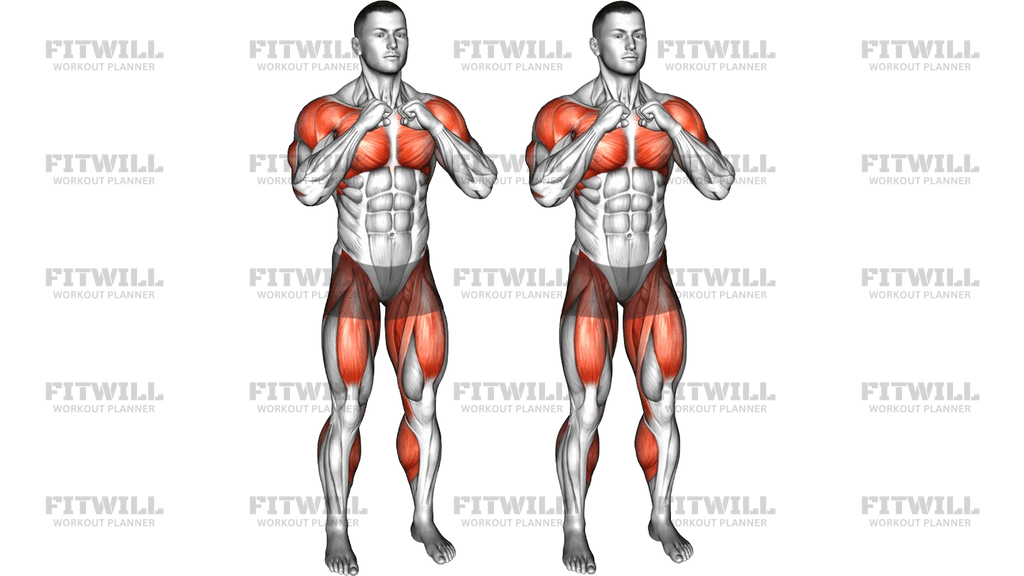
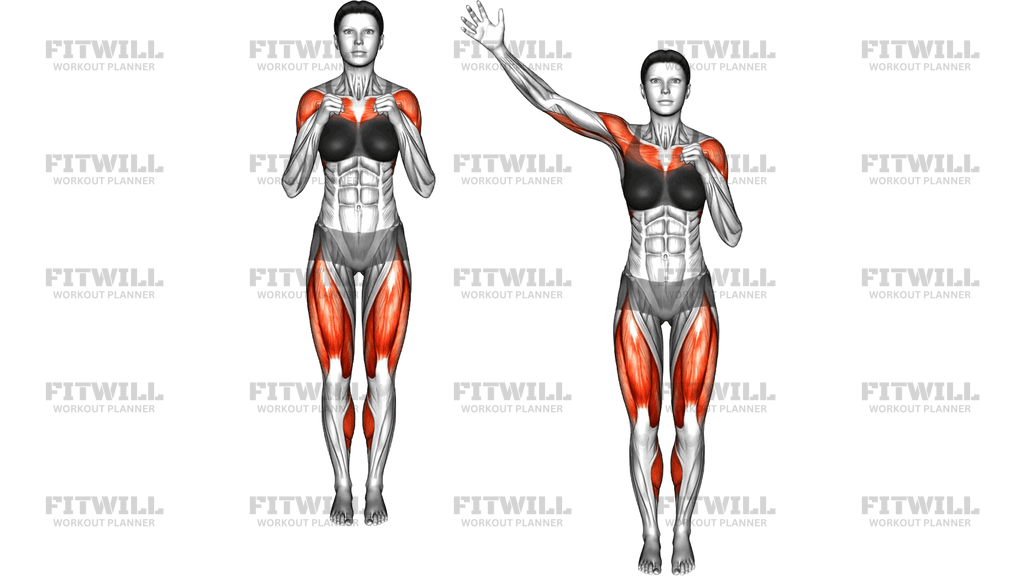
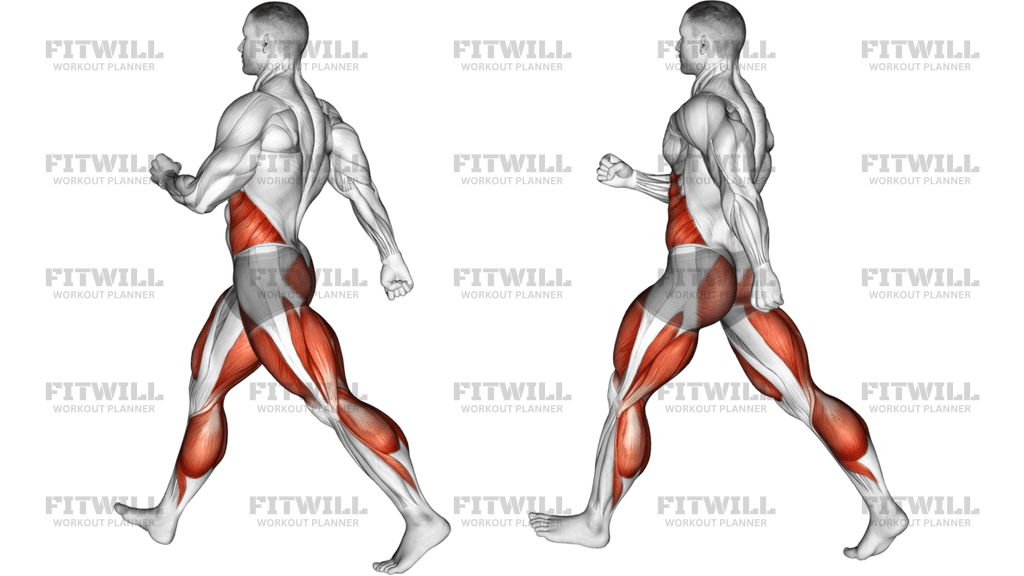
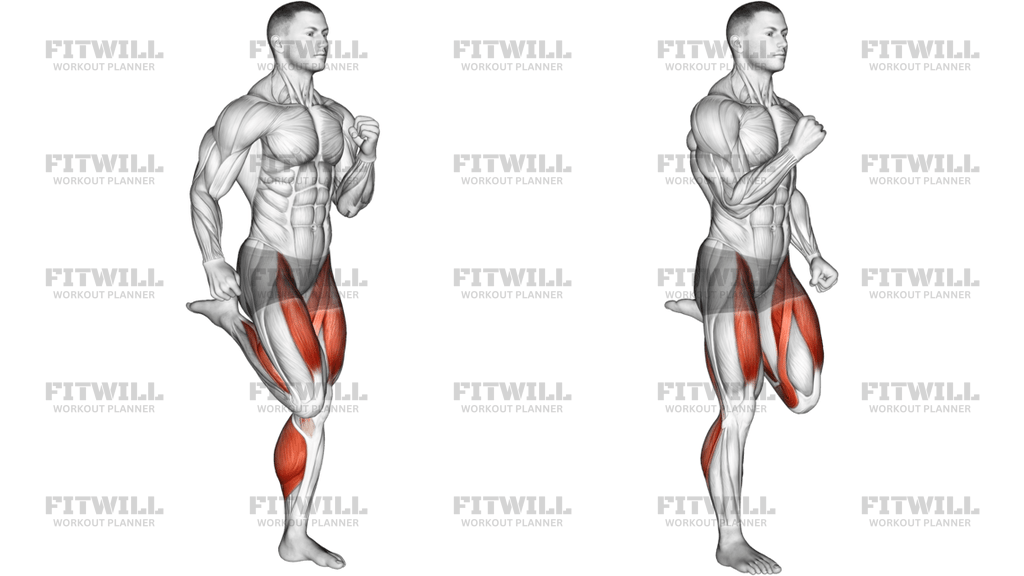
Skips
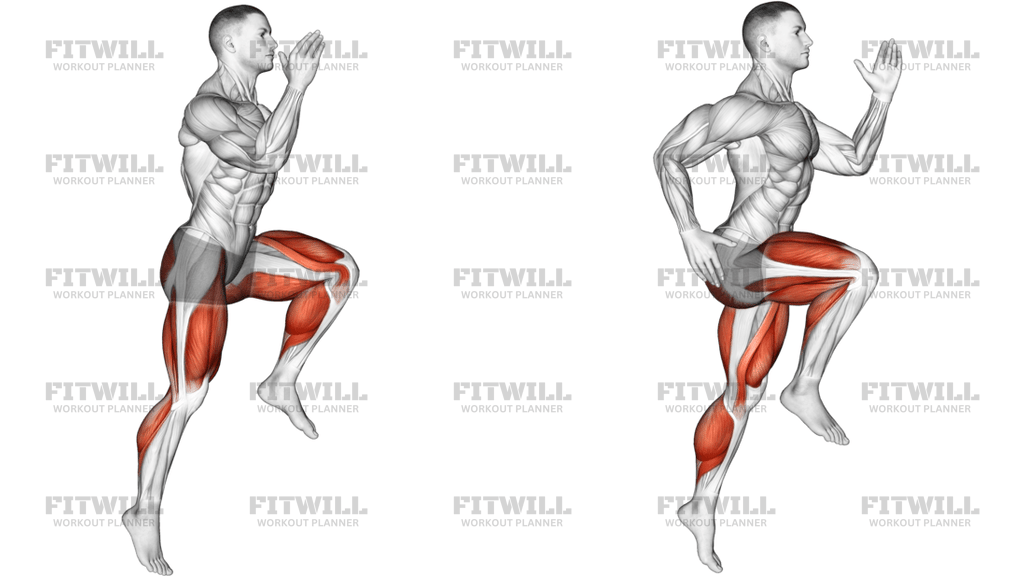
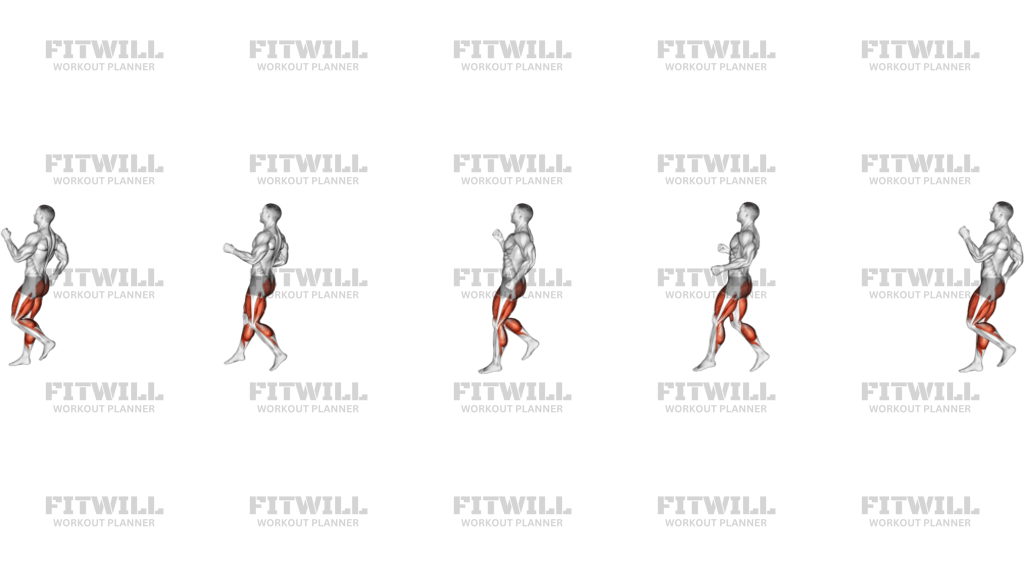
Skips are a rhythmic bodyweight conditioning drill that combines a light hop, an alternating knee drive, and a coordinated arm swing. This version is performed upright and in place or while traveling, so the focus is not on brute force but on timing, posture, and clean foot contacts. It is commonly used as a running warm-up, a sprint drill, or a low-equipment cardio movement when you want to raise heart rate without grinding through heavy impact.
The main training value comes from how Skips link the lower body and upper body together. One leg leaves the floor while the other supports the body, so the calves, quads, glutes, hip flexors, and trunk all have to work in a coordinated rhythm. That makes the drill useful for improving running mechanics, single-leg coordination, ankle stiffness, and the ability to keep the torso tall while the legs cycle quickly.
Setup matters because sloppy posture turns the drill into a bounce instead of a skip. Stand tall with the ribs stacked over the pelvis, eyes forward, and the shoulders relaxed. As one knee drives upward, the opposite arm swings forward and the support foot gives a quick, springy push off the floor. The hop should feel elastic, not heavy, and the landing should be quiet through the ball of the foot.
A clean rep has a clear rhythm: drive, hop, switch, and repeat. Keep the lifted knee active rather than letting it drift out in front of the body, and avoid leaning back as the thigh rises. If you are traveling, keep the steps short and springy so the movement stays controlled. If you are doing Skips in place, think of creating height from the ankle and hip together rather than reaching forward with the foot.
Skips fit well in warm-ups, sprint prep, conditioning circuits, and field or court training because they wake up the lower body without needing equipment. They also scale well: beginners can keep the bounce small and the knee drive low, while more experienced lifters and runners can make the rhythm sharper and the knee lift more aggressive. Keep the motion crisp enough to stay coordinated, but smooth enough that you could repeat it for multiple intervals without the torso collapsing or the feet getting noisy.
[ Workout Log & Planner ]
Put your next workout in Fitwill
Keep your plan and training log ready when you are.


Instructions
- Stand tall with your feet under your hips, chest lifted, and arms relaxed at your sides.
- Shift your weight onto one foot and prepare the other knee to drive upward in a skipping pattern.
- Brace lightly through your midsection so your ribs stay stacked over your pelvis.
- Drive one knee up toward hip height while the opposite arm swings forward.
- Push off the standing foot with a quick, springy hop as the lifted leg cycles through.
- Land softly on the ball of the opposite foot and keep the bounce light and quiet.
- Alternate sides in a smooth rhythm, letting the arms and legs switch together.
- Keep your gaze forward and your torso upright as you repeat for the planned distance or time.
- Slow the cadence and step out of the drill if the landings get heavy or your posture starts to collapse.
Tips & Tricks
- Think of the drill as elastic, not explosive: the goal is a quick rebound, not a jump as high as possible.
- Let the opposite arm punch forward naturally; stiff or frozen arms usually make the skip feel clunky.
- Keep the knee drive in front of the hip instead of swinging the thigh outward or twisting the pelvis.
- If your foot slaps the floor, shorten the hop and land more on the forefoot with a quicker rebound.
- A slight forward travel is fine, but avoid lunging so far that the skip turns into a running step.
- Use shorter, faster contacts when you want a conditioning effect and a more relaxed rhythm when you are warming up.
- Keep the chin level and eyes ahead; looking down often makes the chest fold and the stride shorten.
- If your calves or shins fatigue first, reduce the bounce and keep the drill more rhythmic than forceful.
- On treadmill-style warm-ups or tight spaces, do small in-place skips instead of trying to cover distance.
- Stop the set when the arm swing and knee drive stop matching, because that is usually the first sign the drill has turned sloppy.
Frequently Asked Questions
What muscles do Skips work most?
Skips mainly train the calves, quads, glutes, hip flexors, and core, with the arms helping drive the rhythm.
Are Skips good for beginners?
Yes, if the bounce stays small and the tempo stays controlled. Beginners should focus on posture and coordination before trying to travel far or move fast.
Should Skips be done in place or moving forward?
Either works. In-place skips are easier to control in a warm-up, while traveling skips are useful when you want a running drill or a more dynamic conditioning pattern.
How high should the knee come up during Skips?
Aim for an active knee drive around hip height, but do not force it higher if that makes you lean back or lose the rhythm.
What is the biggest mistake in Skips?
Usually it is turning the drill into a heavy bounce. The contacts should be quick and springy, not loud or stompy.
Do Skips help with running form?
Yes. The drill reinforces arm-leg coordination, upright posture, and quick ground contacts, which all carry over well to running and sprint work.
What should my arms do during Skips?
The opposite arm should swing forward as the knee rises. That cross-pattern timing helps keep the drill coordinated and more closely matched to running mechanics.
How can I make Skips harder?
Increase the travel distance, sharpen the knee drive, or use longer intervals. Just keep the landings quiet and the torso upright.