Stalder Press
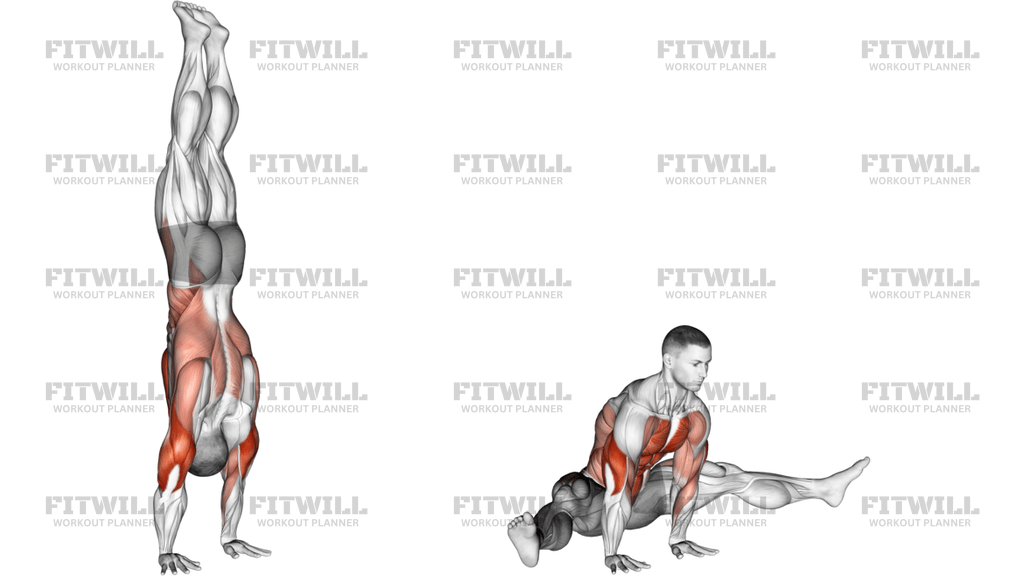
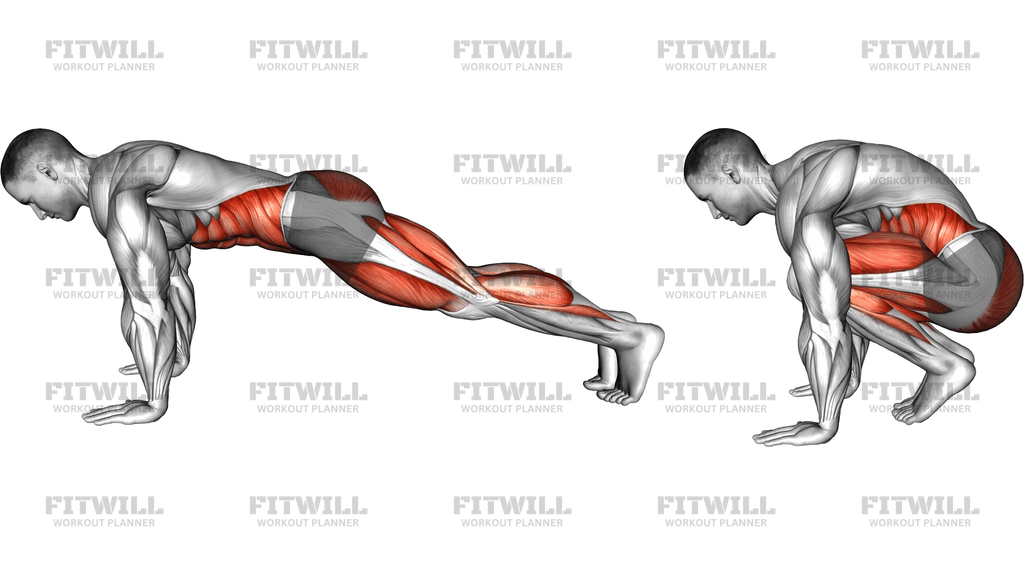
Stalder Press is an advanced gymnastics press-to-handstand variation built around compression strength, shoulder elevation, and strict body control. In most setups you place your hands on the floor, parallettes, or low bars, then use a wide straddle and a strong forward lean to lift the hips and legs without any kick. The goal is not speed. It is to move your center of mass from a compressed support into an inverted support while the elbows stay straight and the shoulders keep pushing tall.
The exercise challenges the upper arms, forearms, shoulders, and trunk together, with the shoulders and core doing most of the work to keep the body organized as the legs travel upward. Because the lever is long and the body position is awkward, small losses in wrist pressure, elbow lock, or hip compression can stop the press immediately. That is why the setup matters: the hands need a stable base, the head should stay neutral, and the straddle should be wide enough to give the hips room to travel between the arms.
A good stalder press looks smooth because the athlete keeps folding at the hips while simultaneously lifting through the shoulders. The legs stay active and straddled, the toes reach long, and the pelvis rises on a controlled arc rather than swinging. If the movement is done well, the body feels like it is climbing over the hands instead of kicking upward. On the way down, reverse the same path under control so the shoulders and wrists absorb the load safely.
This movement is useful for advanced calisthenics, gymnastics, and handstand work because it builds compression strength, straight-arm shoulder endurance, and overhead control in a way that carries over to press handstands, handstand presses, and other bodyweight inversion drills. It also exposes weak links quickly, especially tight hamstrings, limited shoulder flexion, or poor scapular elevation. Treat it as a precision strength skill and use only the range you can own cleanly.
For most athletes the best version is the one that can be repeated with identical shape. Elevated hands, parallettes, or a reduced range can make the press more accessible, while a floor version demands more compression and mobility. Either way, keep the elbows locked, the shoulders active, and the breathing calm so the press stays organized from the first inch of lift to the final handstand line.
[ Workout Log & Planner ]
Put your next workout in Fitwill
Keep your plan and training log ready when you are.


Instructions
- Place your hands on the floor, parallettes, or low bars slightly in front of your hips and set your grip shoulder-width.
- Sit in a wide straddle with your weight over your hands, arms straight, elbows locked, and fingers spread for a stable base.
- Push the floor away so the shoulders elevate and the upper back stays active before you try to lift anything.
- Lean the shoulders forward over the hands and keep your chest close to your thighs as you prepare to press.
- Keep the legs straight and straddled, then begin lifting the hips by folding deeper at the waist instead of kicking.
- Exhale as the hips leave the support, keep the rib cage from flaring, and let the toes stay pointed as you sweep the legs upward on a controlled arc.
- Continue pressing until the shoulders stack over the hands and the pelvis rises above the shoulders in a clean inversion.
- Hold briefly if you have a stable finish, then lower with the same straddle path under control and reset before the next rep.
Tips & Tricks
- Use parallettes or a small hand elevation if tight hamstrings keep you from getting your shoulders far enough forward.
- Keep the elbows locked from start to finish; bent arms turn this into a cheat and reduce the straight-arm strength demand.
- The press starts with compression in the hips, not with a leg swing or a jump.
- A wide straddle shortens the lever and gives the hips room to travel between the arms.
- Keep pressure through the fingertips so you can lean forward without dumping into the wrists.
- If the low back arches, bring the ribs down and think about lifting the sit bones toward the ceiling.
- Point the toes and keep the knees straight so the legs do not drop and stall the lift.
- Stop the set when the shoulders stop elevating or the wrists feel unstable; sloppy partial reps do not carry over well.
Frequently Asked Questions
What muscles does the Stalder Press work?
It heavily challenges the shoulders, upper arms, forearms, and core, with the hip flexors and adductors helping during the compression phase.
Is the Stalder Press beginner-friendly?
Not really. It is an advanced press variation, so most beginners should build pike compression, handstand support, and hollow body control first.
What equipment do I need for the hands?
A floor, parallettes, or low bars can work, but the key is a stable hand base that lets you keep the shoulders forward and the arms straight.
How wide should my straddle be?
Wide enough for the hips to travel between the arms without the thighs blocking the path, but not so wide that you lose compression control.
Should I bend my elbows during the press?
No. Keep the arms straight and let the shoulders and core do the work.
What is the most common mistake on the hands or shoulders?
Letting the shoulders collapse back instead of leaning forward and staying tall through the scapulae.
Can I regress this movement?
Yes. Use a higher hand platform, a shorter range, or partial press negatives before attempting a full stalder press.
How is this different from a pike press?
The straddle position gives more room for the hips to travel and changes the compression demands compared with a pike stance.