Front Lever Reps
Front Lever Reps is a bodyweight strength exercise built around a strict front lever pattern on a lever station or high bar. The body stays long and rigid while the arms, lats, core, and shoulder girdle work together to keep the torso parallel to the floor. It is an advanced calisthenics drill, but the real value is not just looking horizontal for a second. The value is learning how to keep the whole body connected while the shoulders stay packed and the trunk does not break shape.
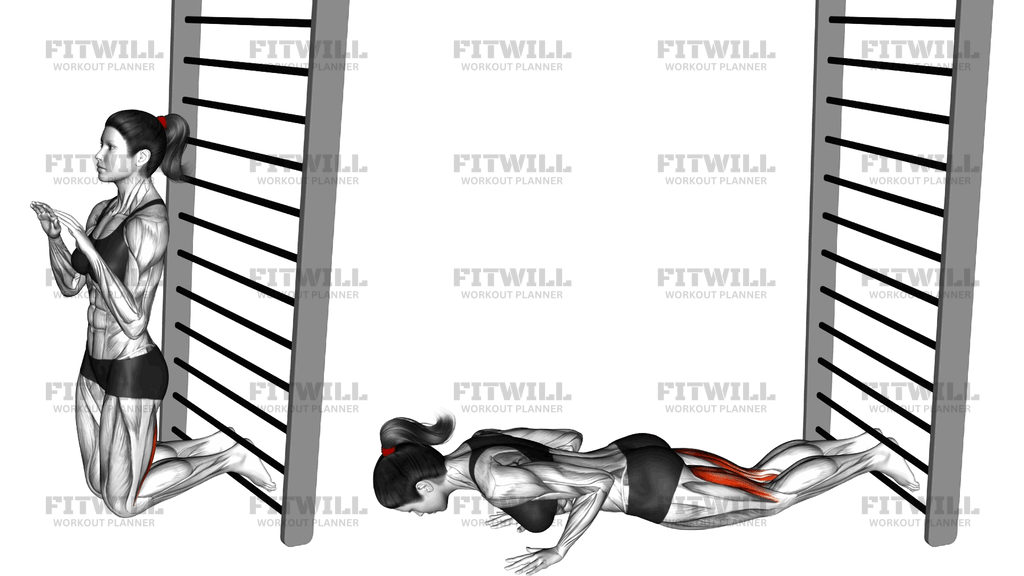
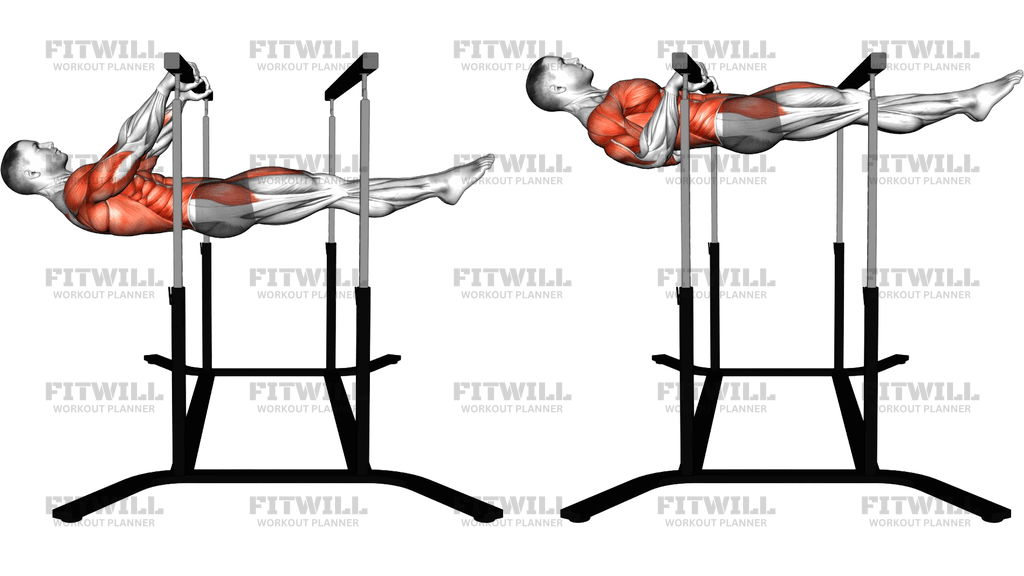
The image shows a straight-body lever with the hands fixed on the station and the torso held out in front of the support. That setup matters because the lever is only as good as the body line. If the ribs flare, the hips sag, or the shoulders shrug toward the ears, the rep stops being a true front lever rep and becomes a loose swing with a shortened range. A clean rep should feel like one coordinated line from the shoulders through the ankles, with the scapulae controlled and the glutes and abs doing their share of the work.
Use this exercise as a high-skill pulling drill, a core-strength accessory, or a progression toward full front lever holds and front lever pulls. The repetition should start from a tight hang or supported lever position, move into a solid horizontal body line, and then return under control. That controlled lowering is important because it teaches the lats and trunk to resist extension when the lever gets longer and harder. A slow descent also makes it easier to keep the shoulders set instead of dumping into the bottom position.
Because front lever work is demanding on the shoulders, elbows, and wrists, the safest version is the one you can hold without pain or compensation. Tuck lever, advanced tuck, one-leg, or band-assisted variations are all valid ways to build toward the full rep. Keep the neck neutral, avoid jerking into position, and stop the set as soon as the body line starts to break. With good setup and strict control, Front Lever Reps become a powerful test of posterior-chain tension, scapular control, and whole-body bracing.
Fitwill
Log Workouts, Track Progress & Build Strength.
Achieve more with Fitwill: explore over 9600 exercises with images and videos, access built-in and custom workouts, perfect for both gym and home sessions, and see real results.
Start your journey. Download today!




Instructions
- Grip the lever station or high bar with straight arms and let your body hang long beneath it.
- Bring your legs together, squeeze your glutes, and pull your ribs down so your lower back does not arch.
- Set the shoulders by depressing and controlling the scapulae before the first rep.
- Pull your body into a straight front lever line until your torso and legs are as close to parallel with the floor as you can keep them.
- Keep the elbows locked or only slightly bent if the variation you are using allows it.
- Hold the horizontal position briefly without letting the hips drop or the chest collapse.
- Lower yourself under control along the same path until you are back in the starting hang or support.
- Breathe out as you pull or lift, then inhale on the controlled return.
- Stop the set when you can no longer keep the body line rigid and repeat for the planned reps.
Tips & Tricks
- Use the hardest front lever variation that lets you keep a flat body line from shoulders to ankles.
- Think about pulling your shoulders down away from your ears instead of yanking with the arms.
- Keep your ribs tucked and pelvis slightly posteriorly tilted so the lower back does not overextend.
- A small amount of upper-back rounding is better than a big lumbar arch in this lift.
- If your elbows bend early, reduce the progression because the lever is already too heavy for strict reps.
- Lower for three to five seconds if you want more time under tension and better position control.
- Keep the feet together and pointed to help maintain a single rigid line.
- Use chalk or a firm grip if the handles feel slippery, because grip loss usually ends the set before the core does.
Frequently Asked Questions
What muscles do Front Lever Reps work most?
They heavily train the lats, abs, serratus, lower traps, glutes, and forearms, with the shoulders and biceps helping to stabilize the position.
Is this exercise beginner friendly?
Not as a full version. Most people should start with tuck, advanced tuck, one-leg, or band-assisted front lever work before trying strict reps.
Should my elbows stay straight during the rep?
Yes for a strict front lever rep. If the elbows bend a lot, the movement is drifting into a pull or row instead of a clean lever.
Why does my lower back arch when I try this?
Usually the ribs are flaring and the pelvis is tipping forward. Tighten the abs, squeeze the glutes, and keep the body in one long line.
What is the best regression if I cannot hold the full lever?
Use a tuck front lever first, then progress to advanced tuck, one-leg, straddle, or band-assisted reps as your line gets stronger.
How low should I lower between reps?
Lower only as far as you can keep the shoulders set and the torso rigid. A partial but strict rep is better than a deeper rep with a broken line.
What usually causes a failed front lever rep?
Grip loss, shoulder shrugging, bent elbows, or a sagging hip line are the usual limiters before the core itself gives out.
Can I use this in a regular strength program?
Yes. It works well as an advanced pulling accessory, a core drill, or a skill movement placed early in the session when you are fresh.